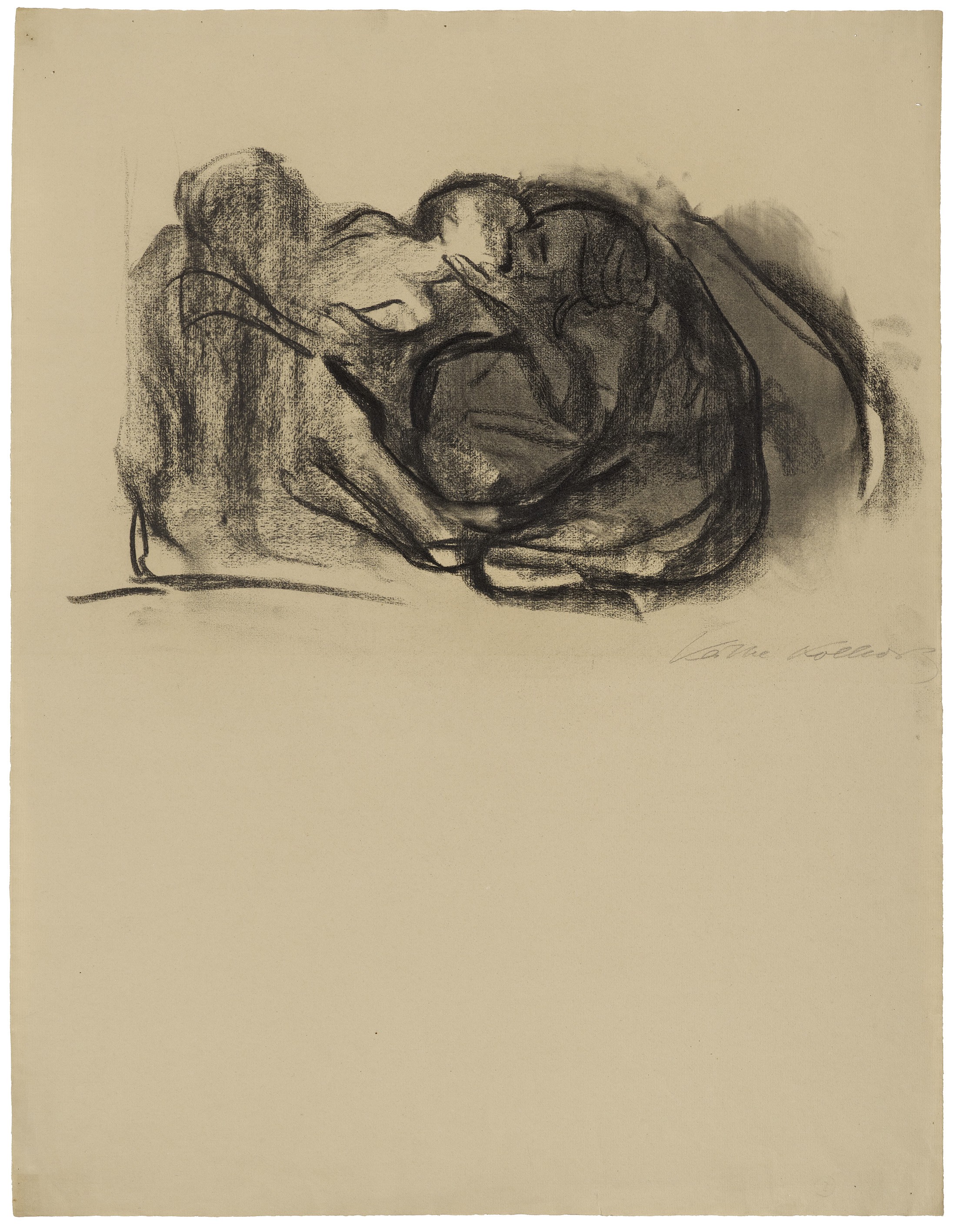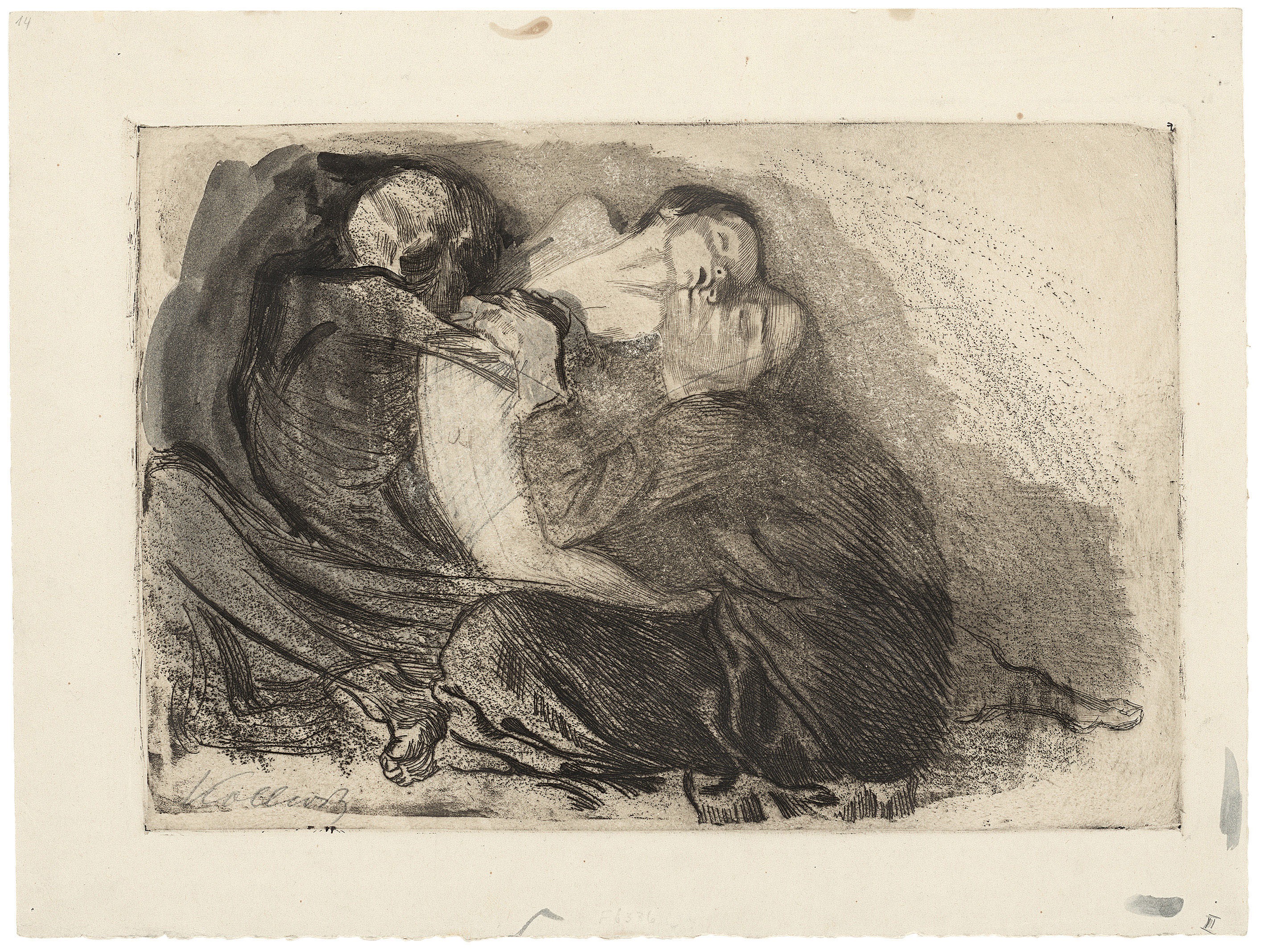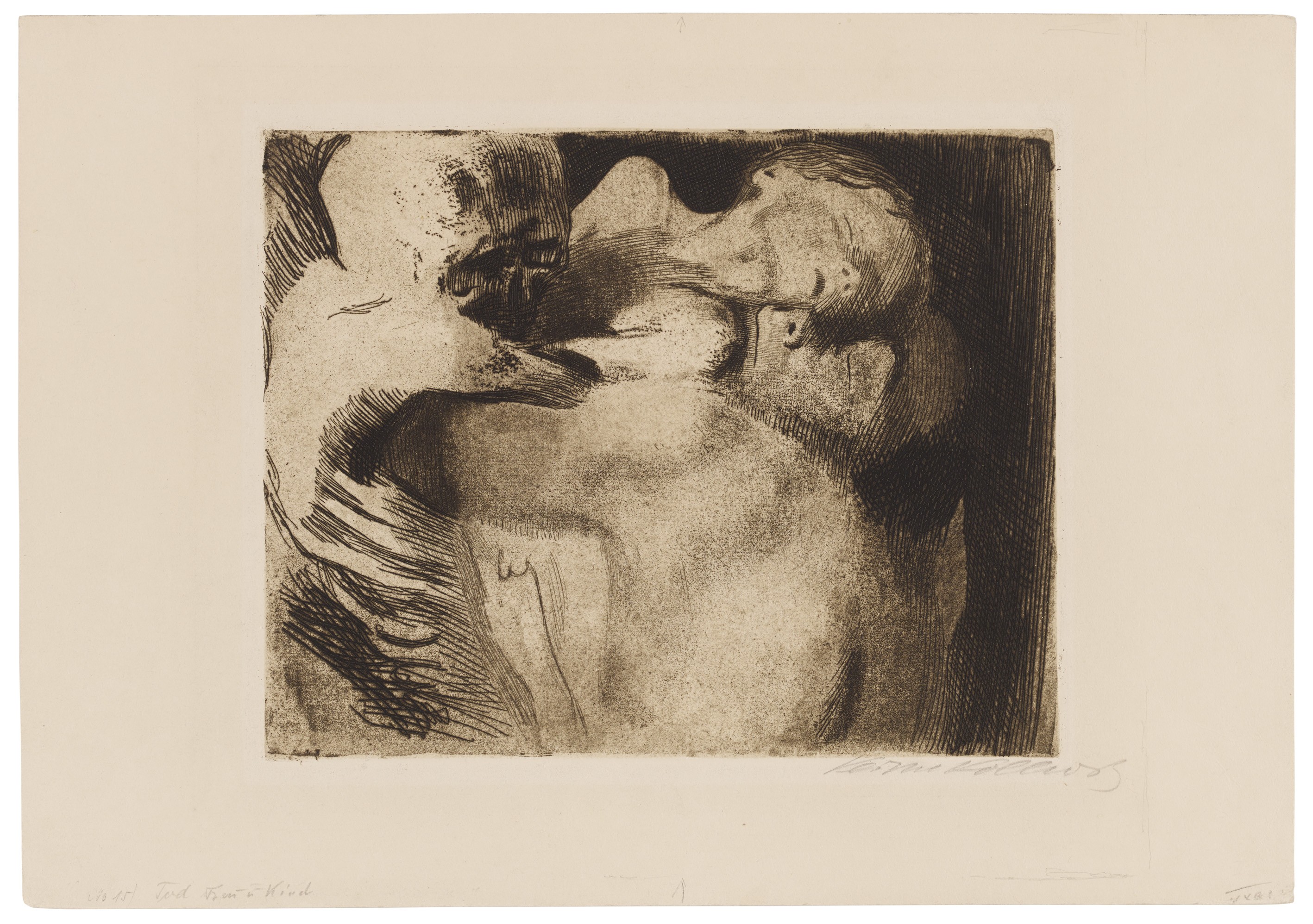
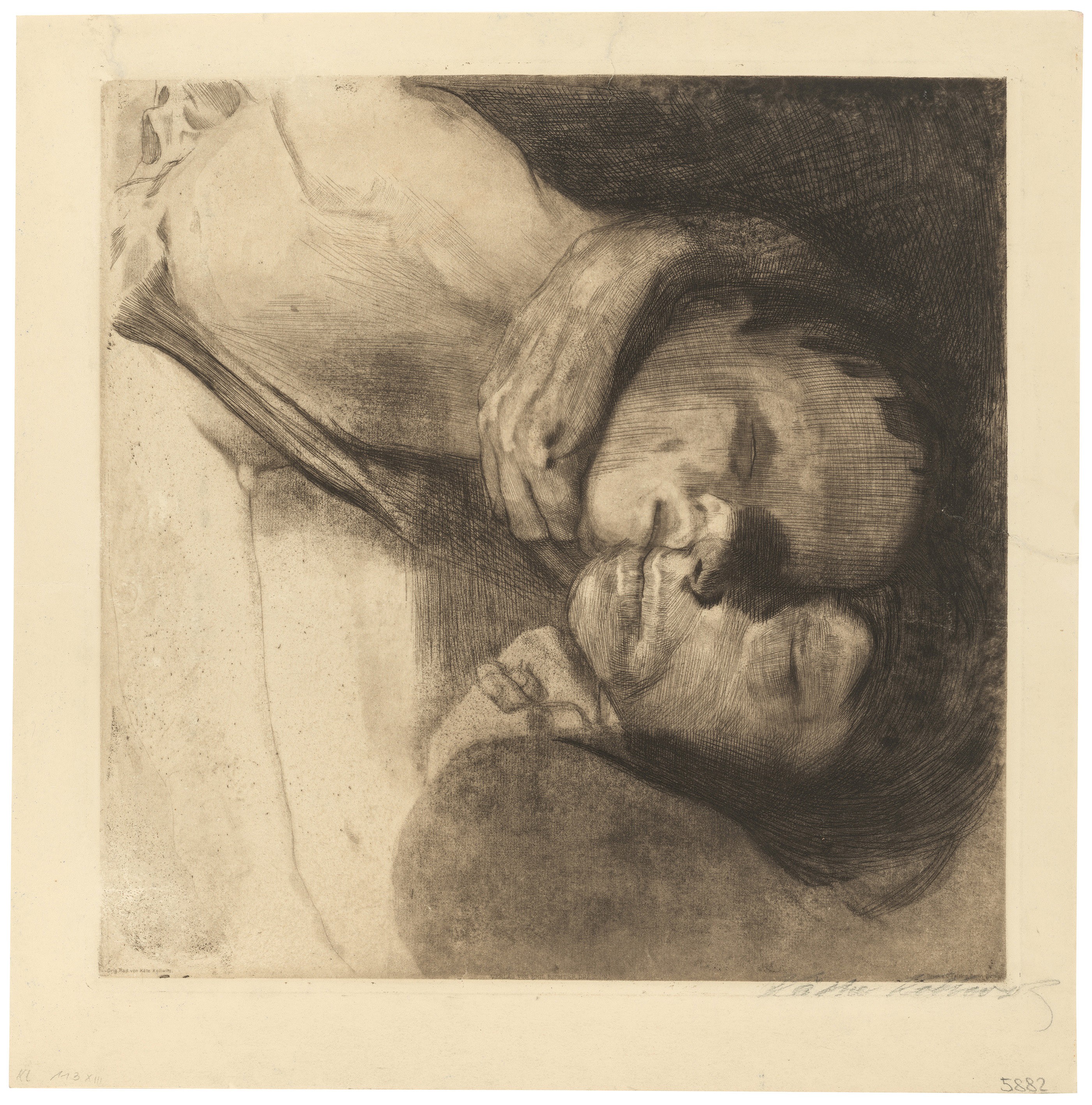
In several works that were created in connection with Hans' diphtheria infection in 1908, the figure of the mother has some features of the artist herself, such as in this etching. It is, however, striking that the child – despite the autobiographical connection – is clearly younger than the artist’s son Hans who was born in 1892. Yet, there is often a direct influence of Käthe Kollwitz’ personal sensibility with regard to children on her work:
Her diary – and also her artistic work – reveals how strongly she was defined by creatureliness, passion, symbiosis, holding on and not being able to let go, an urge to fight against any power that tried to take her children away from her.«
Unlike in later etchings on this theme, in which Death is more clearly shown wrestling with the mother for her child (Kn 119, Kn 121), in this work mother and child, resting cheek to cheek, appear almost lost in reverie. The woman firmly holds the boy’s head and his left hand. In a poignant gesture of love, the heads nestle softly together in a horizontal position.
On the left, the legs and lower body of the naked boy are sketched in thin, light strokes. A skeletal arm reaches under his stomach and in the left-hand corner at the top appears Death’s skull. The figure of Death, hardly discernible, has been pushed towards the very edge of the composition. The sheet is dominated by the haunting mother-child configuration.