Open today: 11.00 – 21.00

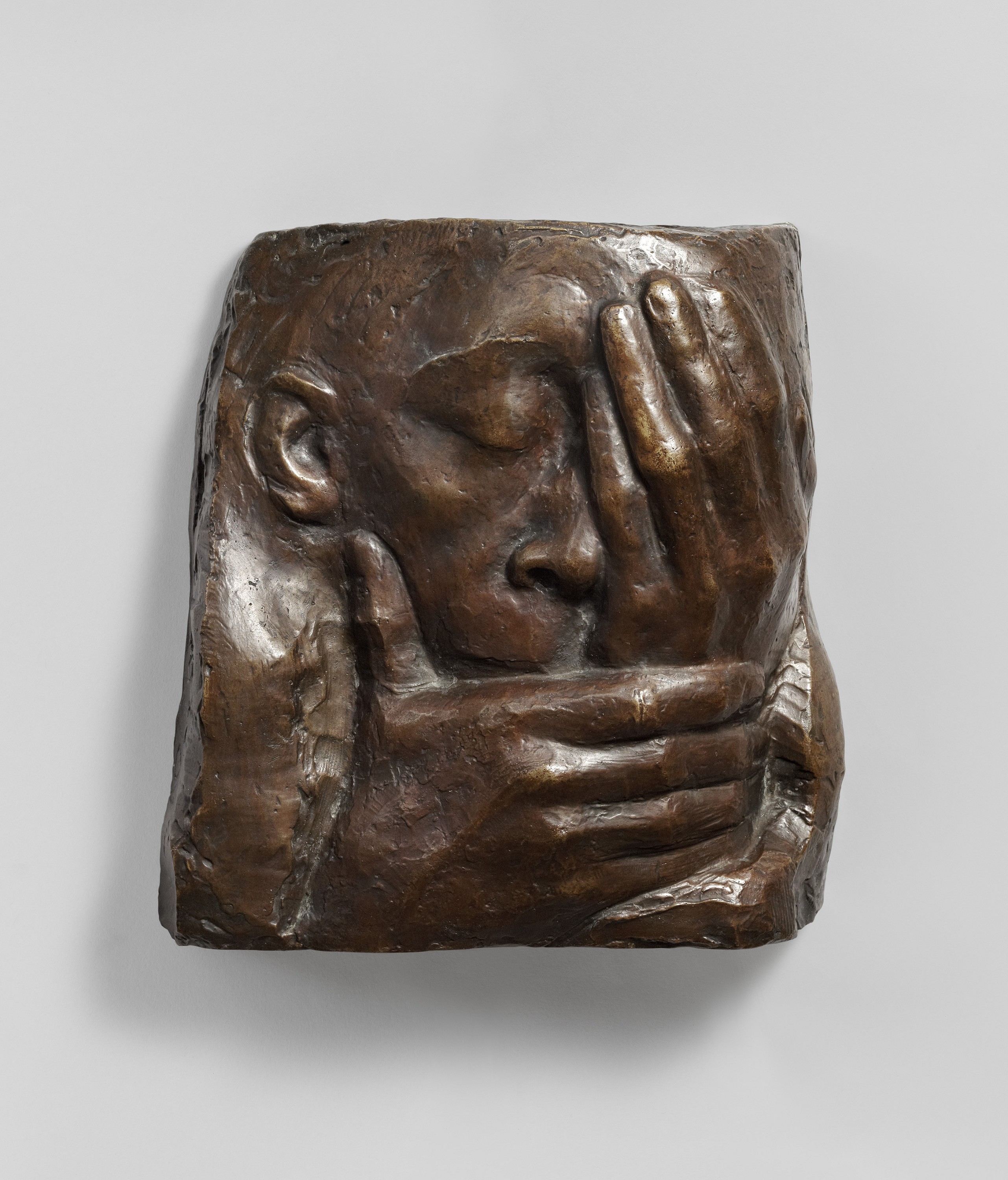
Lamentation,
1938–41

Käthe Kollwitz, Lamentation, model begun 1938, probably completed 1941, cast perhaps before 1945, at the latest probably 1946, bronze, 272 x 259 x 96 mm, Seeler 38 I.B.3., Kollwitz Museum Köln, Inv. Nr. 70100/86002 © Kollwitz Museum Köln, ph. Goldberg/Fuis. 

Ernst Barlach and Käthe Kollwitz are often mentioned in the same breath. Their mutual respect and artistic inspiration for one another are evident. She traveled to Güstrow for his funeral in October 1938. The month after the funeral, she reflected in her diary that she sometimes felt as if the late Barlach had left her his blessing—that she was able to work well.

It was the relief Lamentation that she sculpted during this time. The grieving face depicted there, hidden behind her hands, bears the features of the artist herself.

In a letter from 1941, Käthe Kollwitz comments on this and refers to the Nazi regime, which had declared Barlach’s work to be »degenerate art«:

When I was making the Lamentation I was affected by Barlach’s death and the terrible injustice that he had suffered. This terrible injustice that people do to each other has continued during the three years [since Barlach’s death] and it is still going on …« 
Käthe Kollwitz, Letters of Friendship, to Trude Bernhard, 1941

Contextual Works

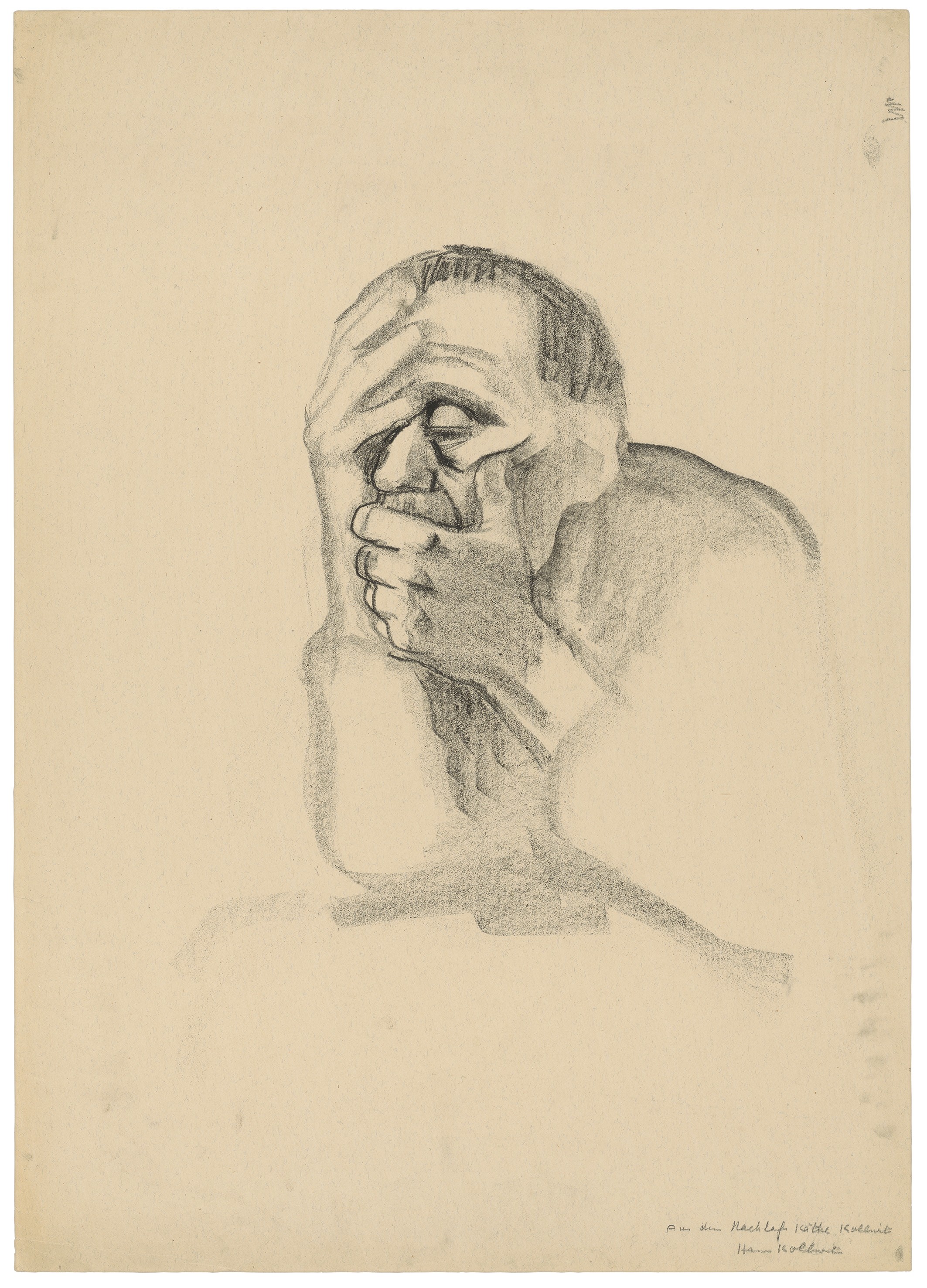
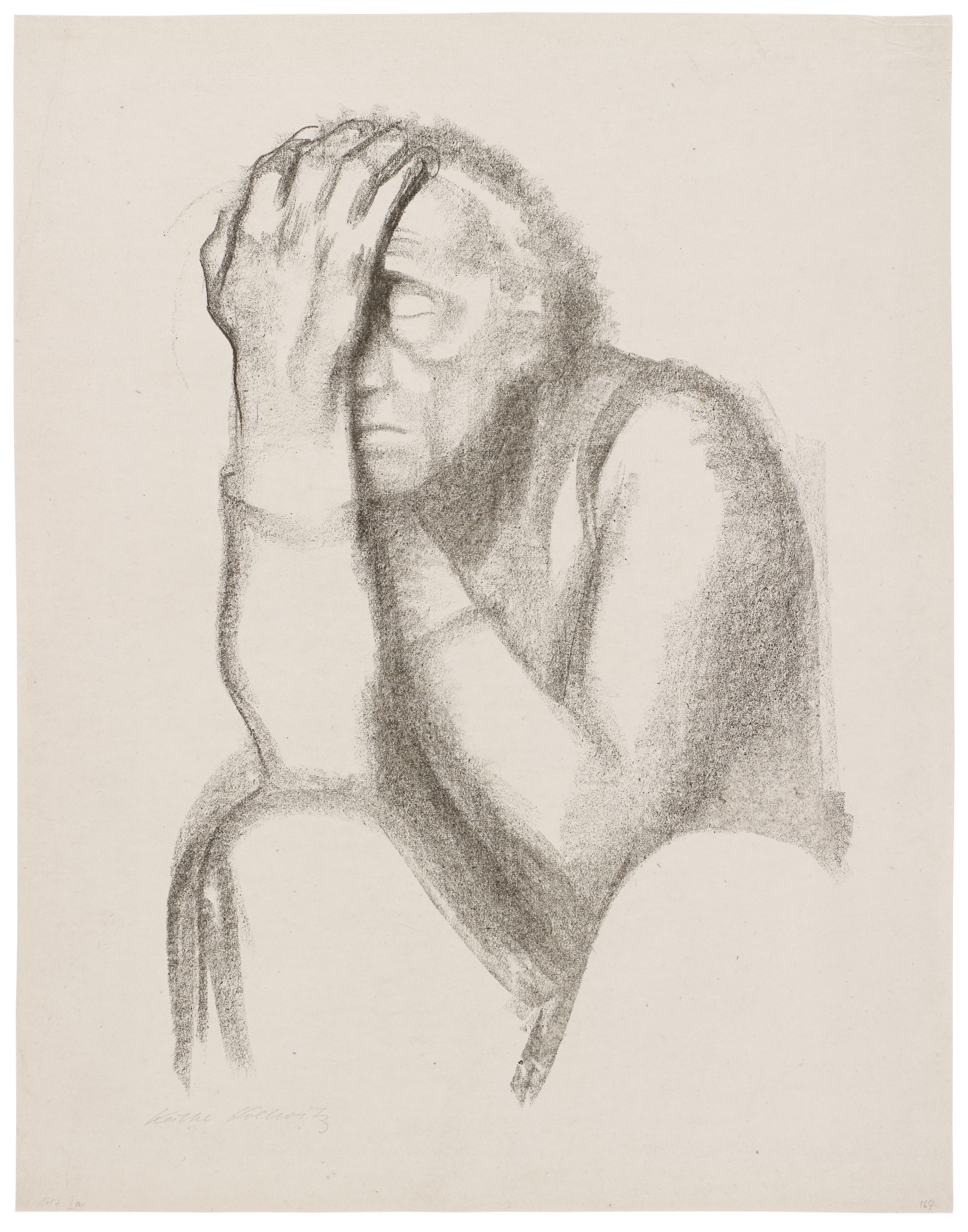
Käthe Kollwitz, Woman Deep in Thought, 1920, lithograph, 540 x 375 mm, Kn 160 I, Kollwitz Museum Köln, Inv. Nr. 70300/99006.
Käthe Kollwitz, Woman Deep in Thought, 1920, black crayon, 701 x 497 mm, NT 867, Kollwitz Museum Köln, Inv. Nr. 70200/83032.