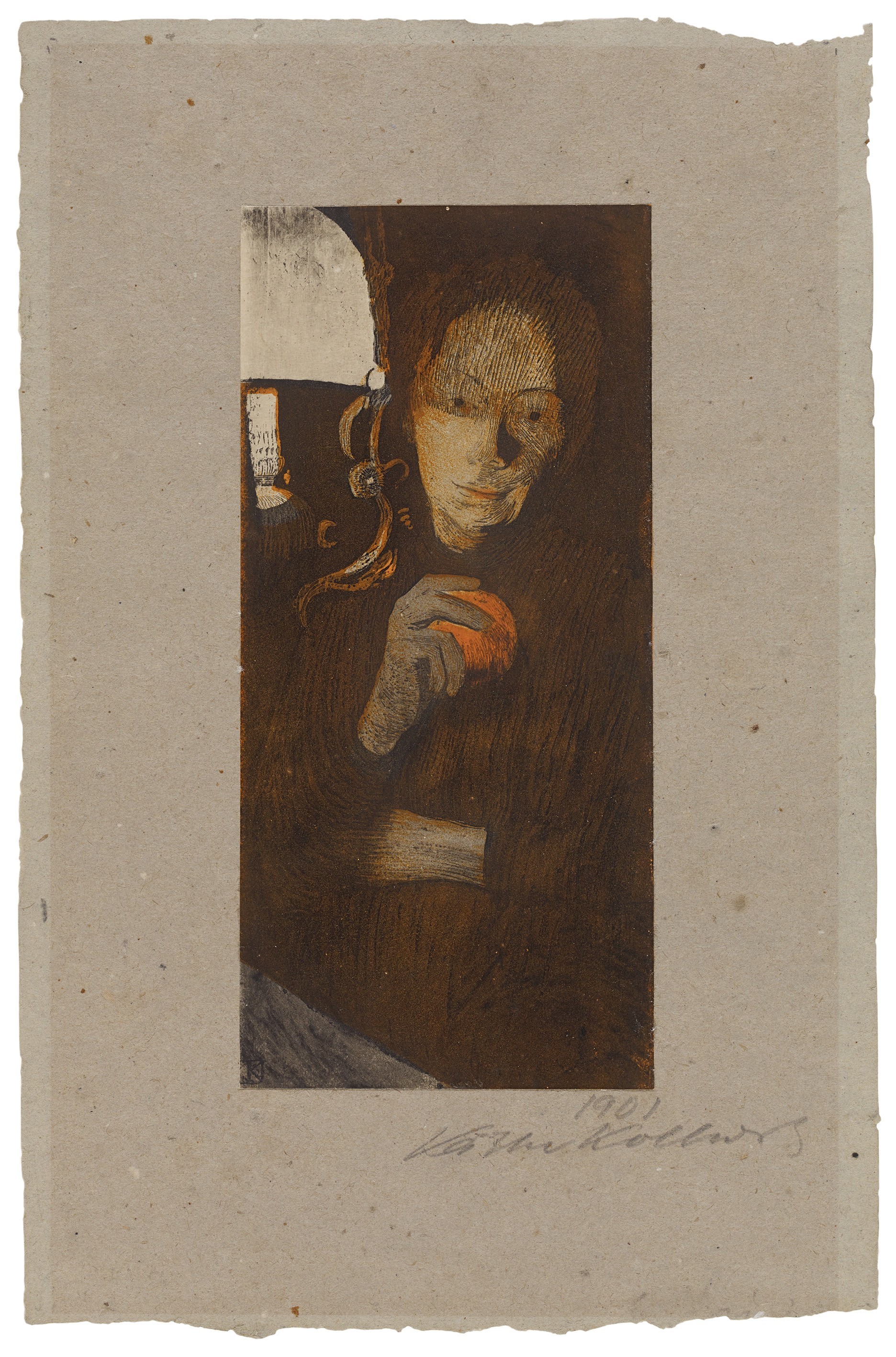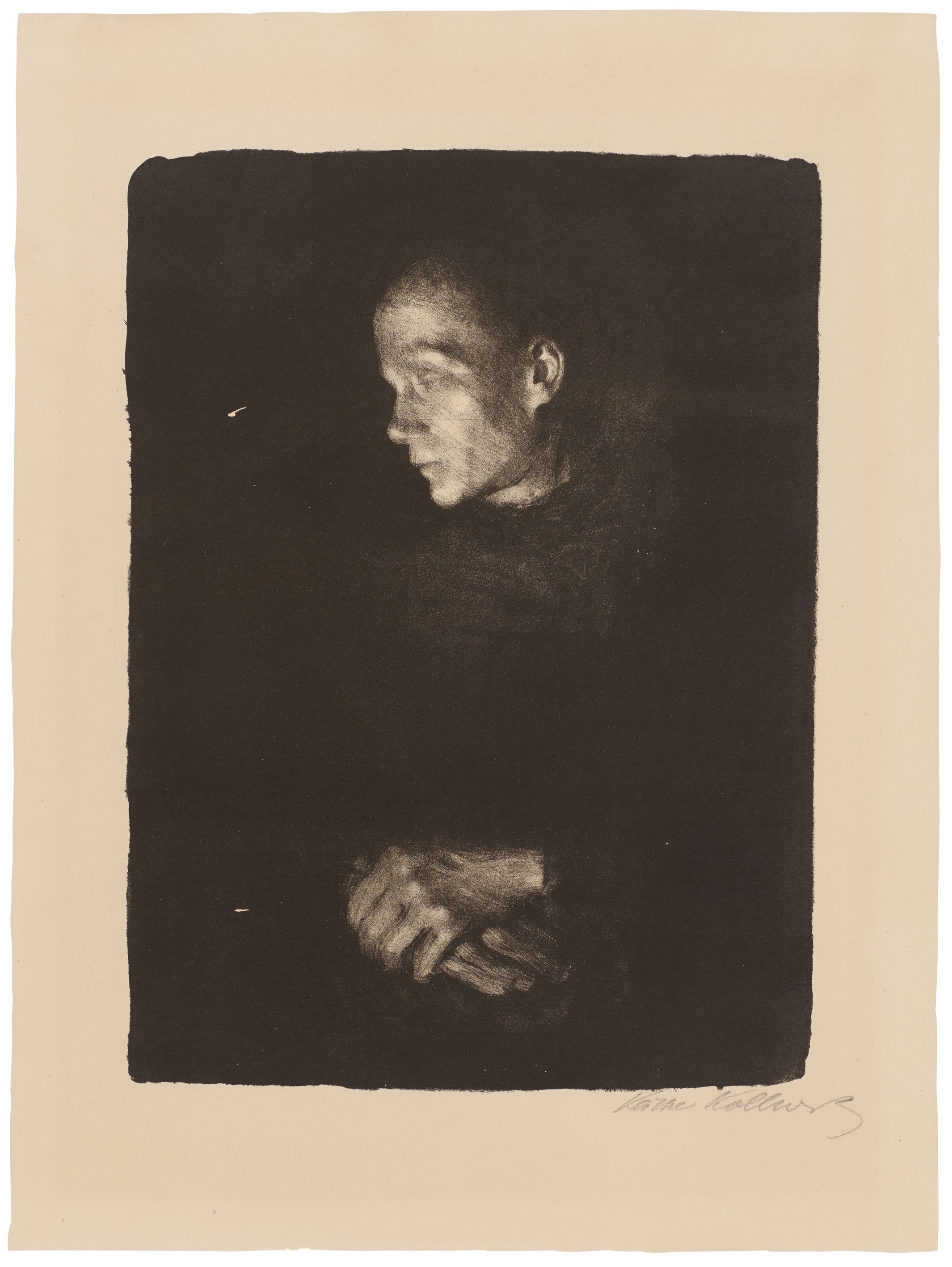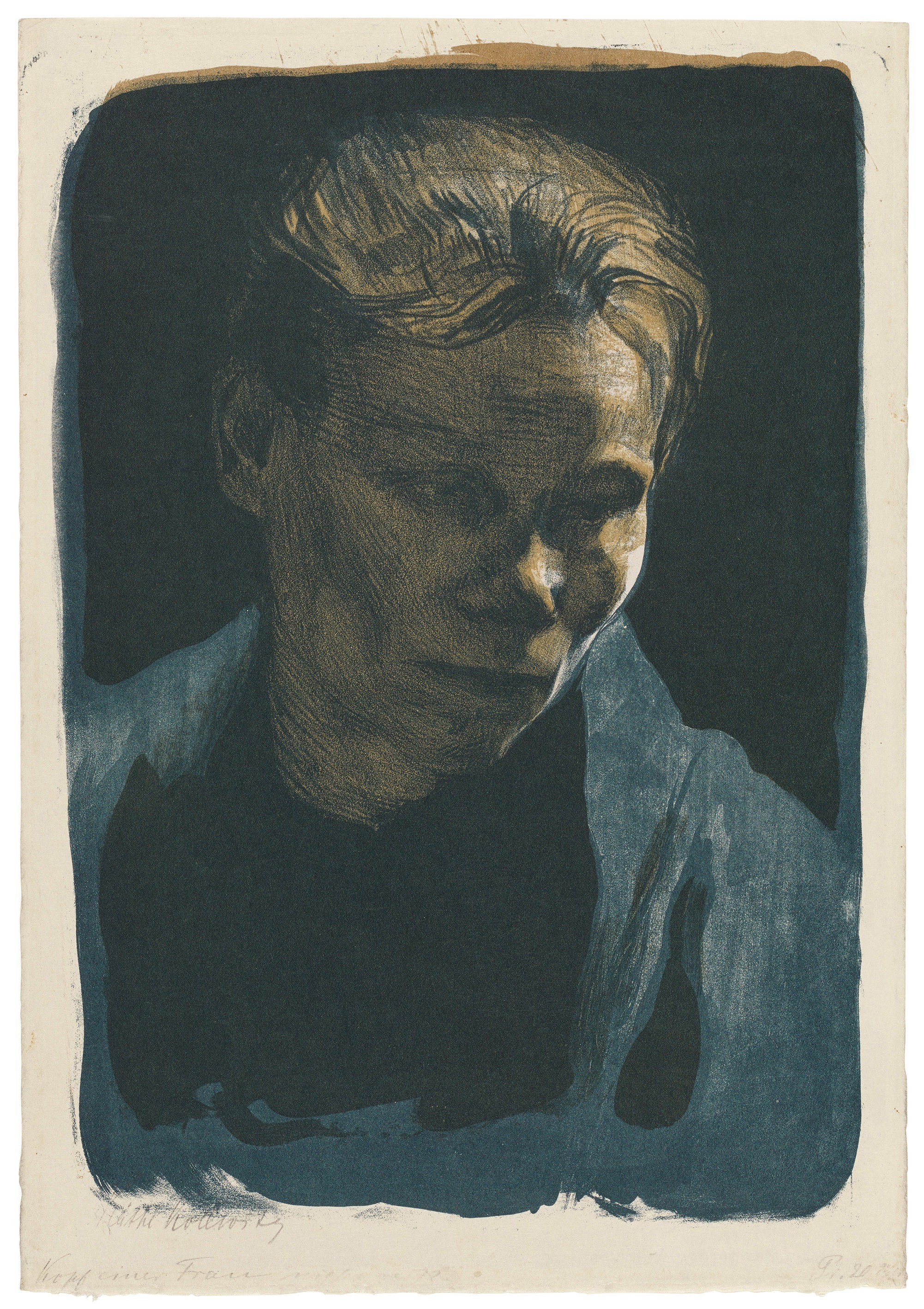
My life between thirty and forty was very happy in every respect. We had sufficient to live on; the children were growing up and healthy; we went traveling. During these years I went to Paris twice. … Paris enchanted me.«
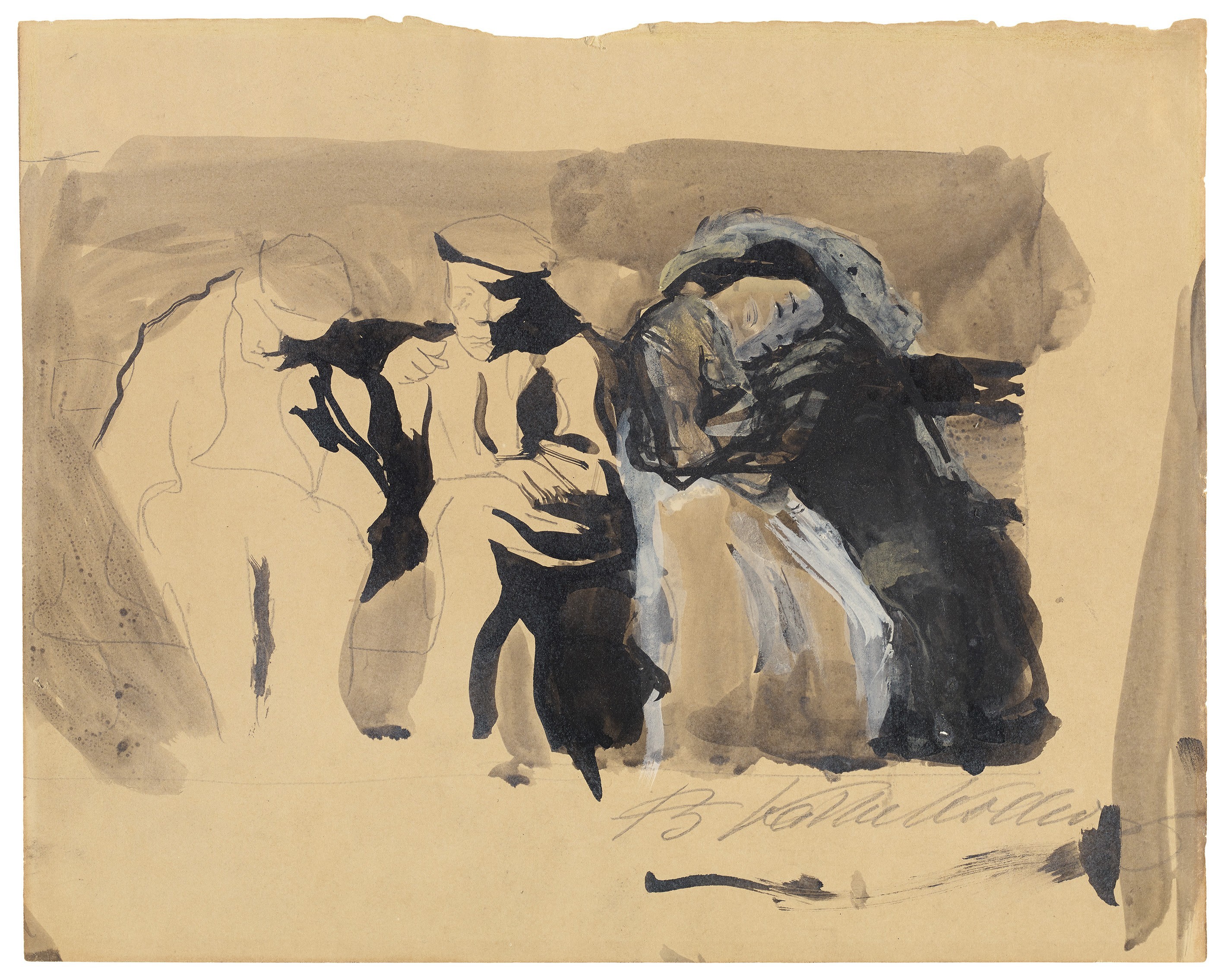
On two occasions, in 1901 and 1904, Kollwitz visited the French capital of art — and was »enchanted«. Paris was also the place where she found inspiration for her experimental, colour-dominated graphic art period.
In Paris she moved in the inspirational circle of her fellow student Maria Slavona’s bohemian friends that included famous artists such as Camille Pissarro and the art critic and writer Julius Meier-Graefe. She strolled through private galleries and acquired an early pastel by Pablo Picasso and saw the works of the Neo-Impressionists and Nabis at the great art exhibitions.
Twice, she visited Auguste Rodin whom she admired. In a personal letter of recommendation, Hugo von Tschudi, director of the Berlin Nationalgalerie, had asked Rodin to receive the young German artist as a visitor. In this letter, he praised her talent and pointed out that she could be regarded as one of the best artists.
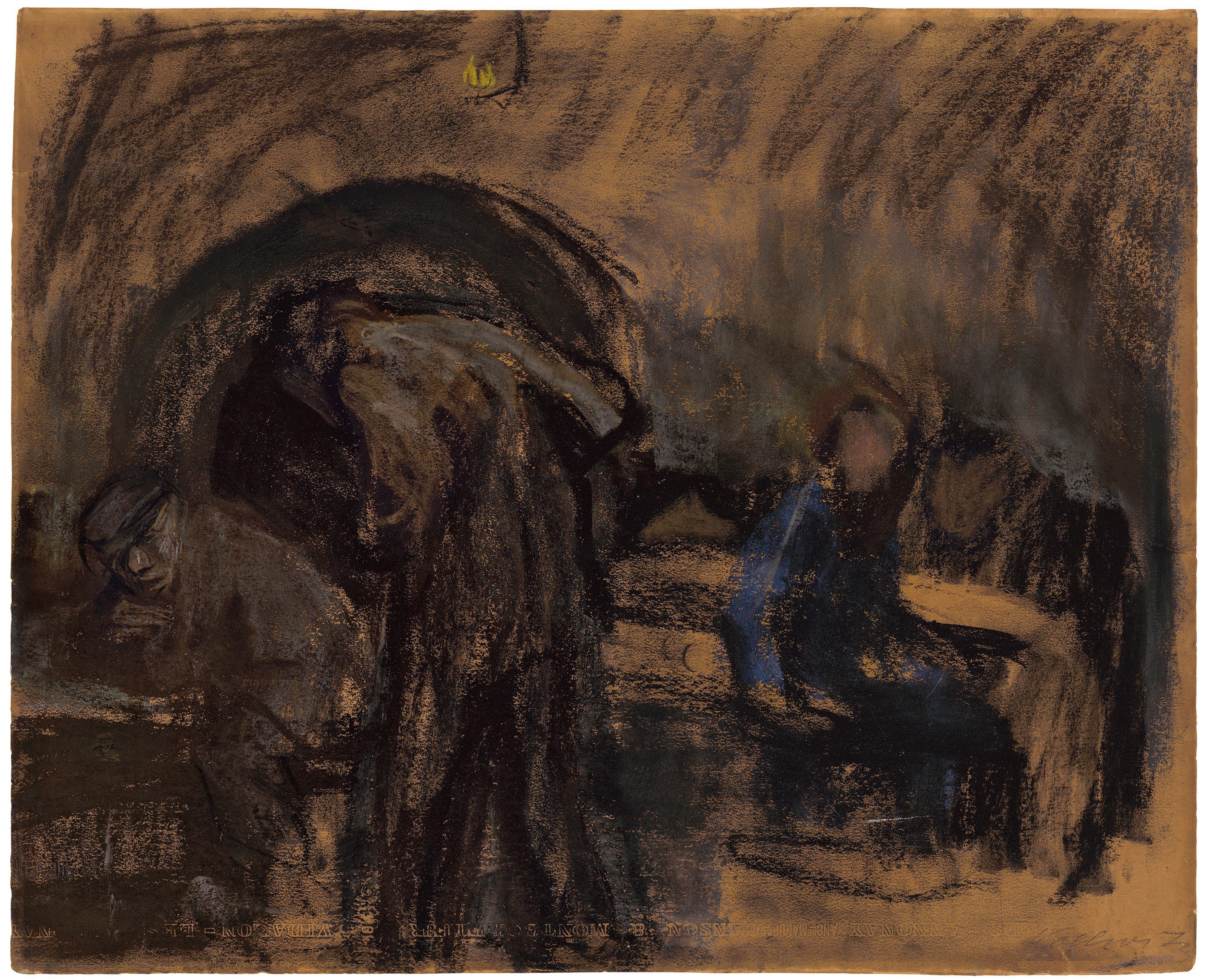
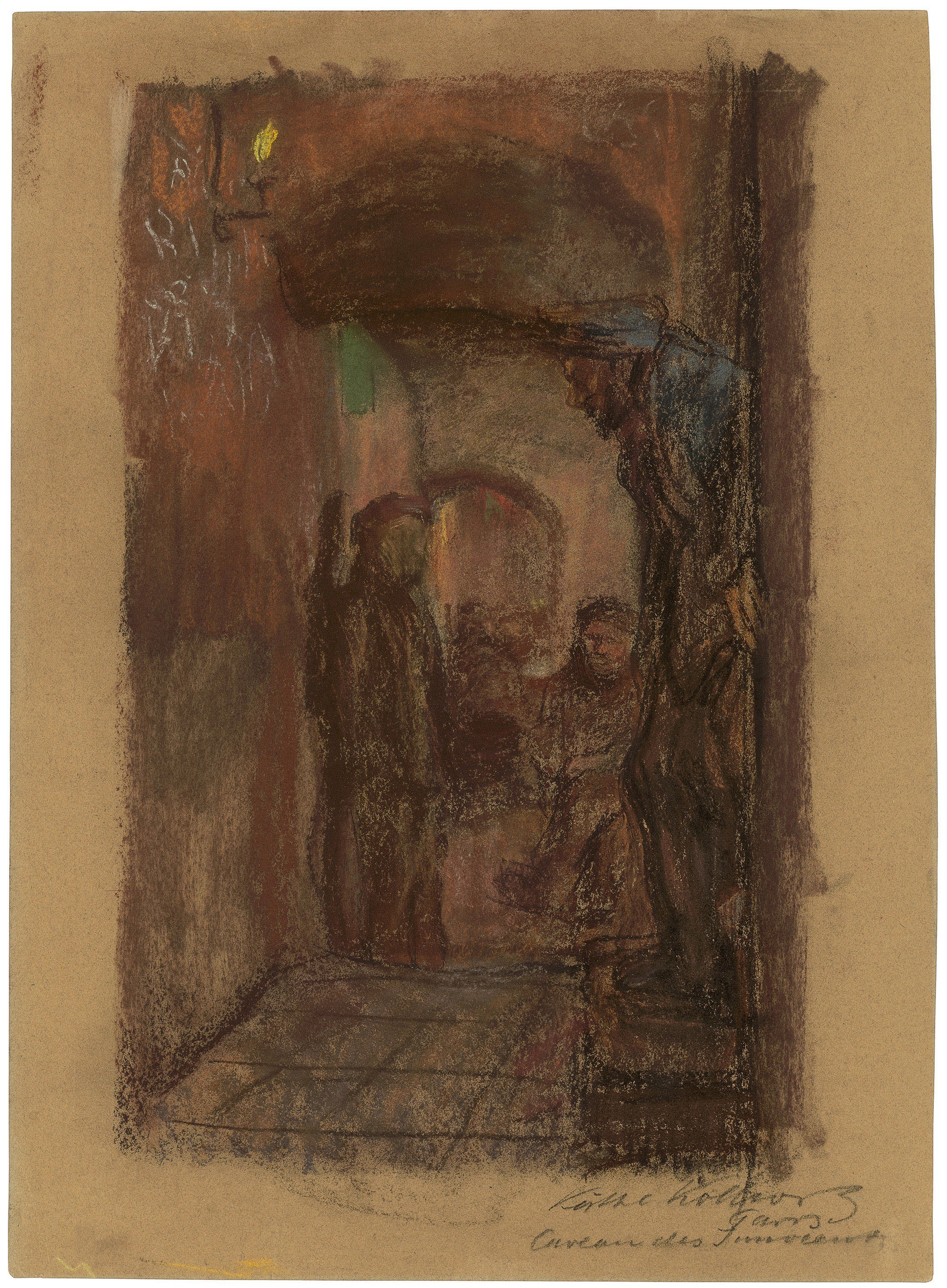
During her two-month stay in 1904, Kollwitz worked in the class for sculpting at the Académie Julian during the day, while visiting – like many other artists – the places of amusement and the infamous taverns below the Parisian market halls. The drawings of the Caveaux des Innocents are among the most impressive works from that period.