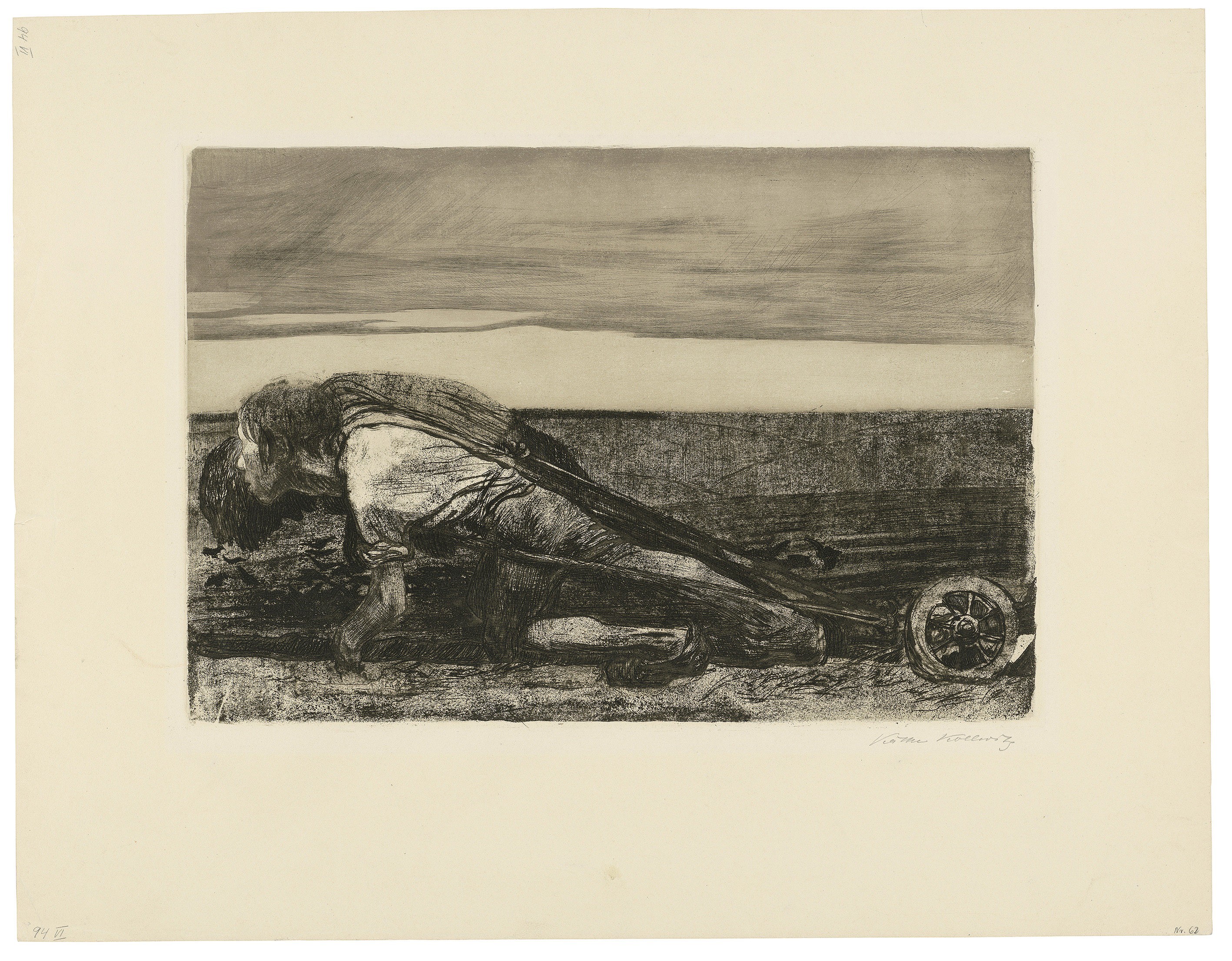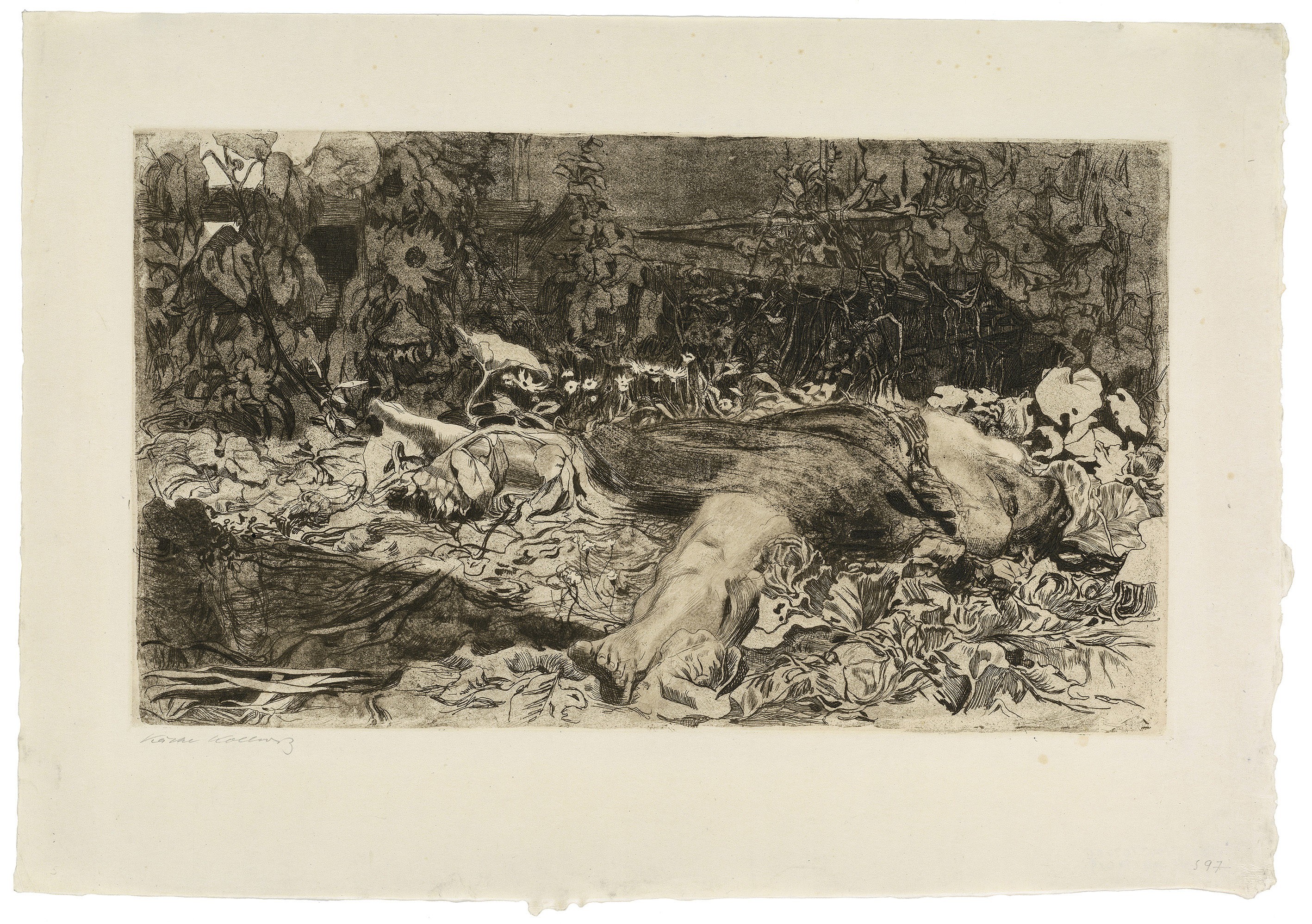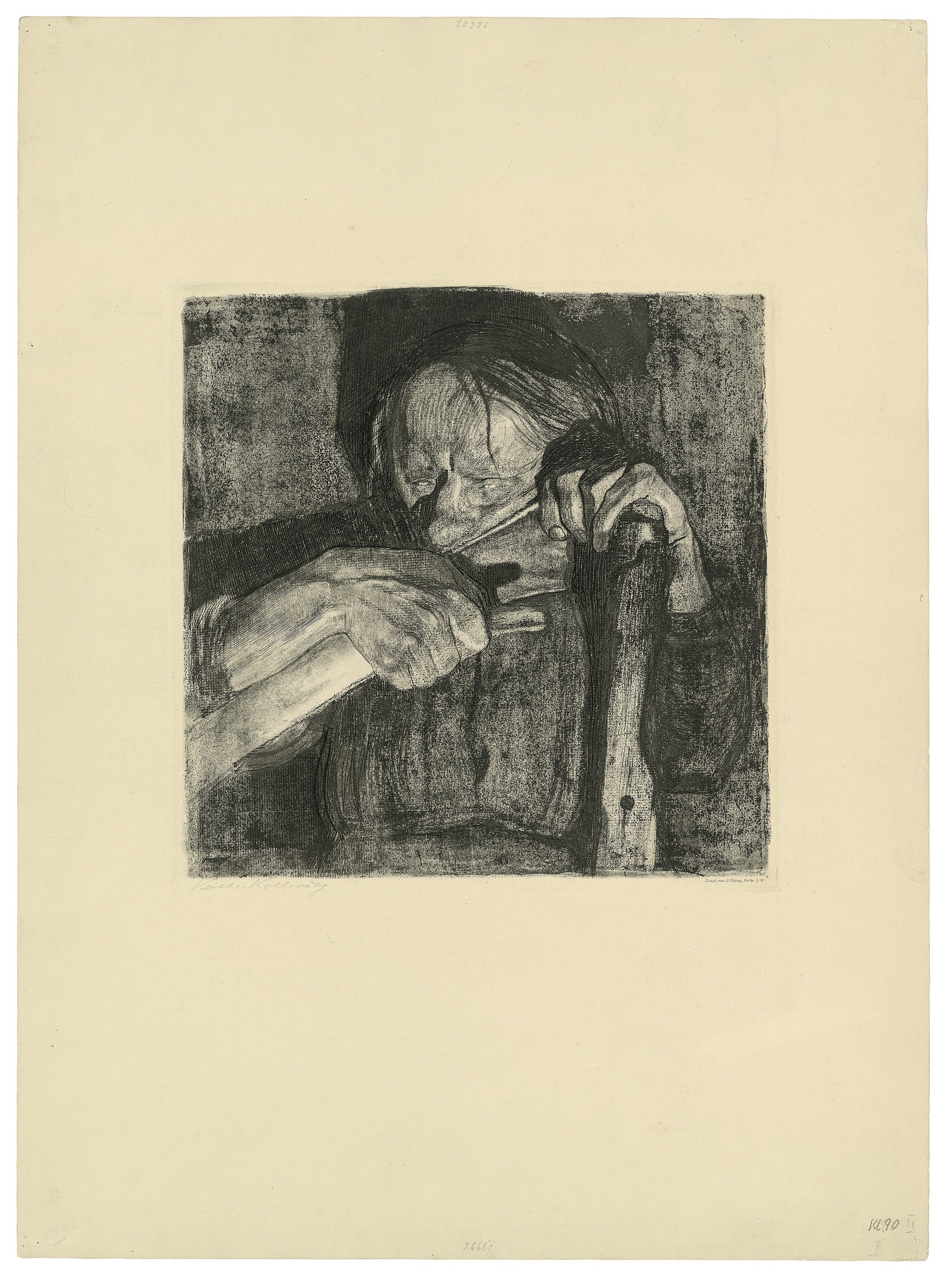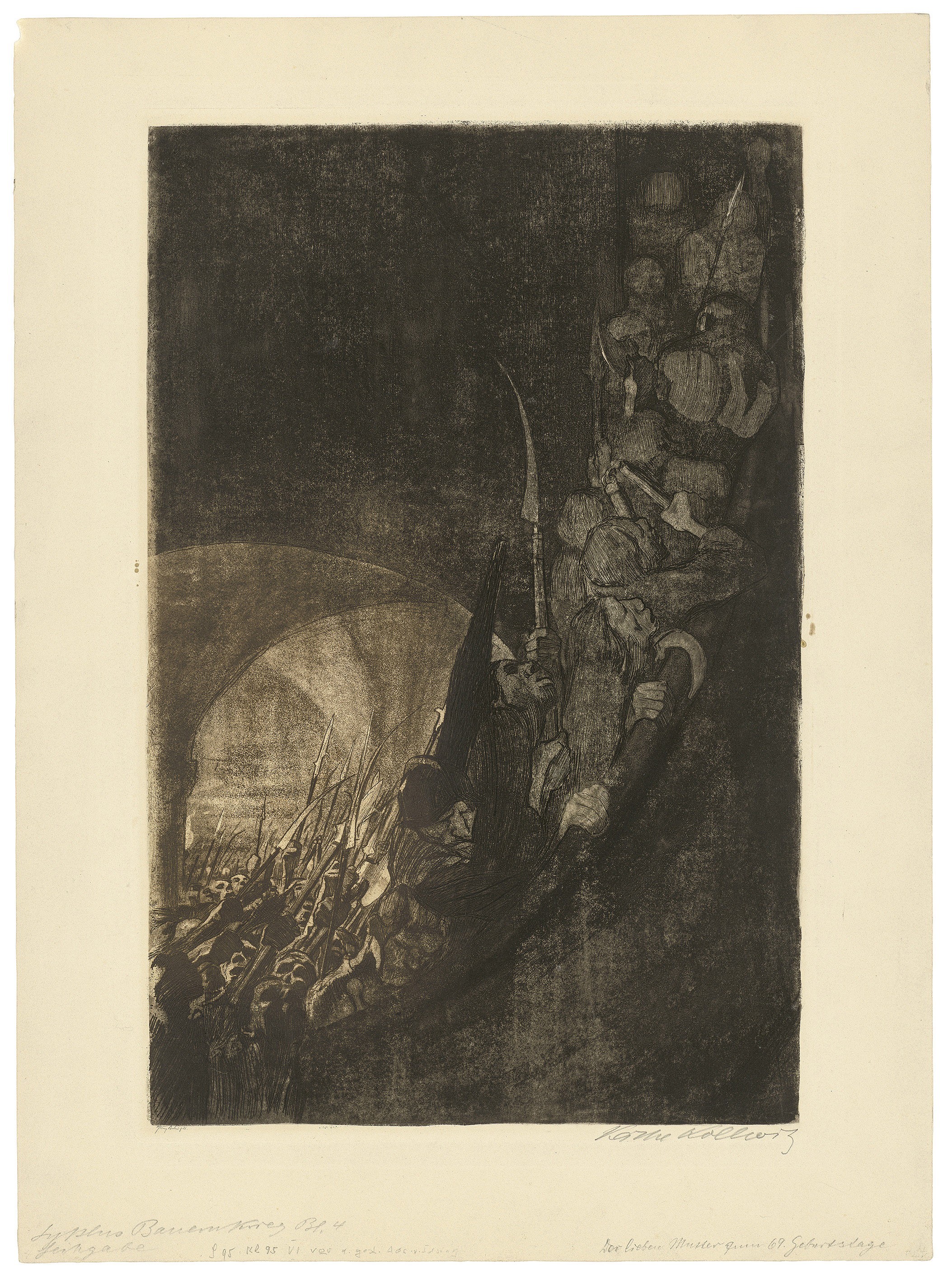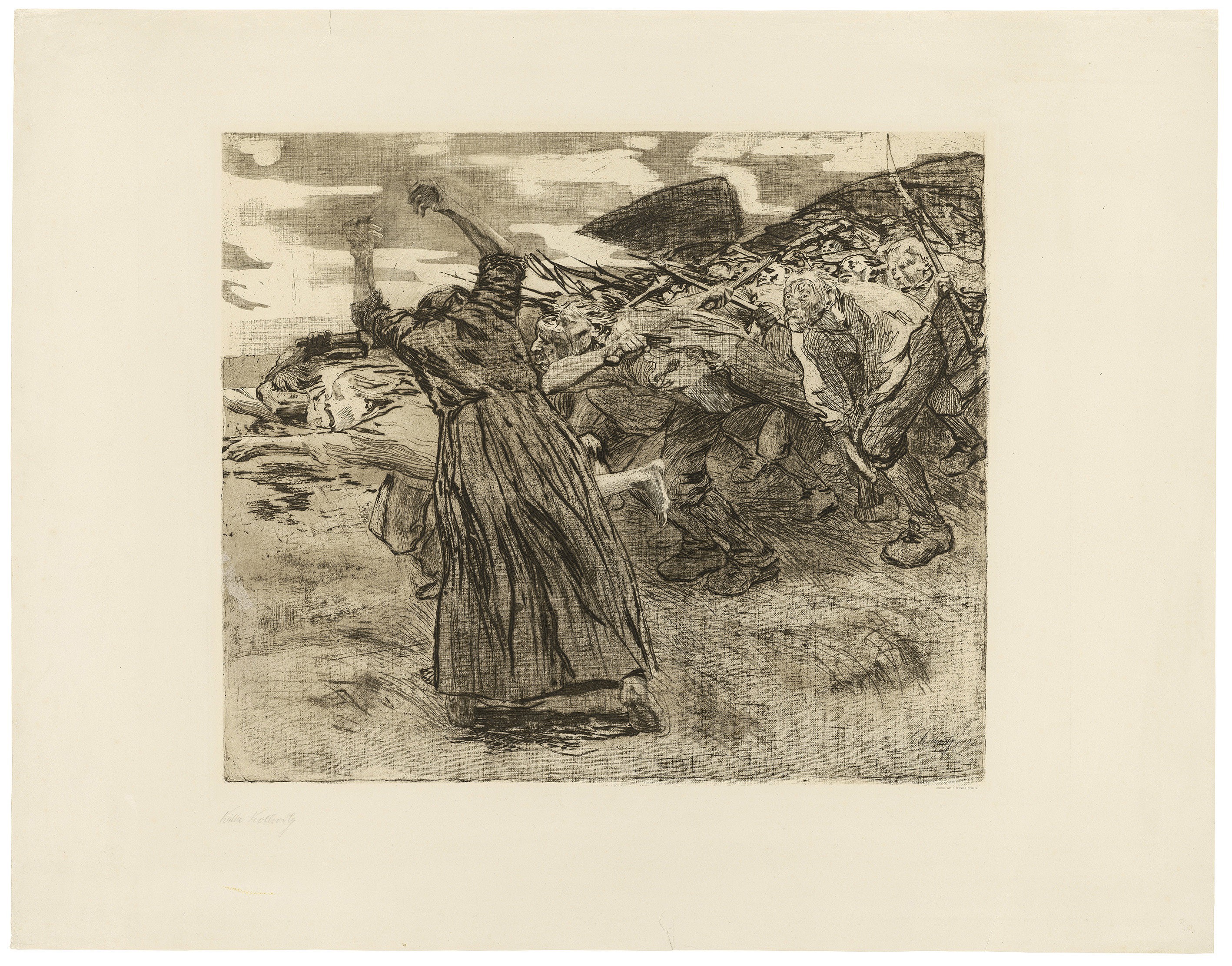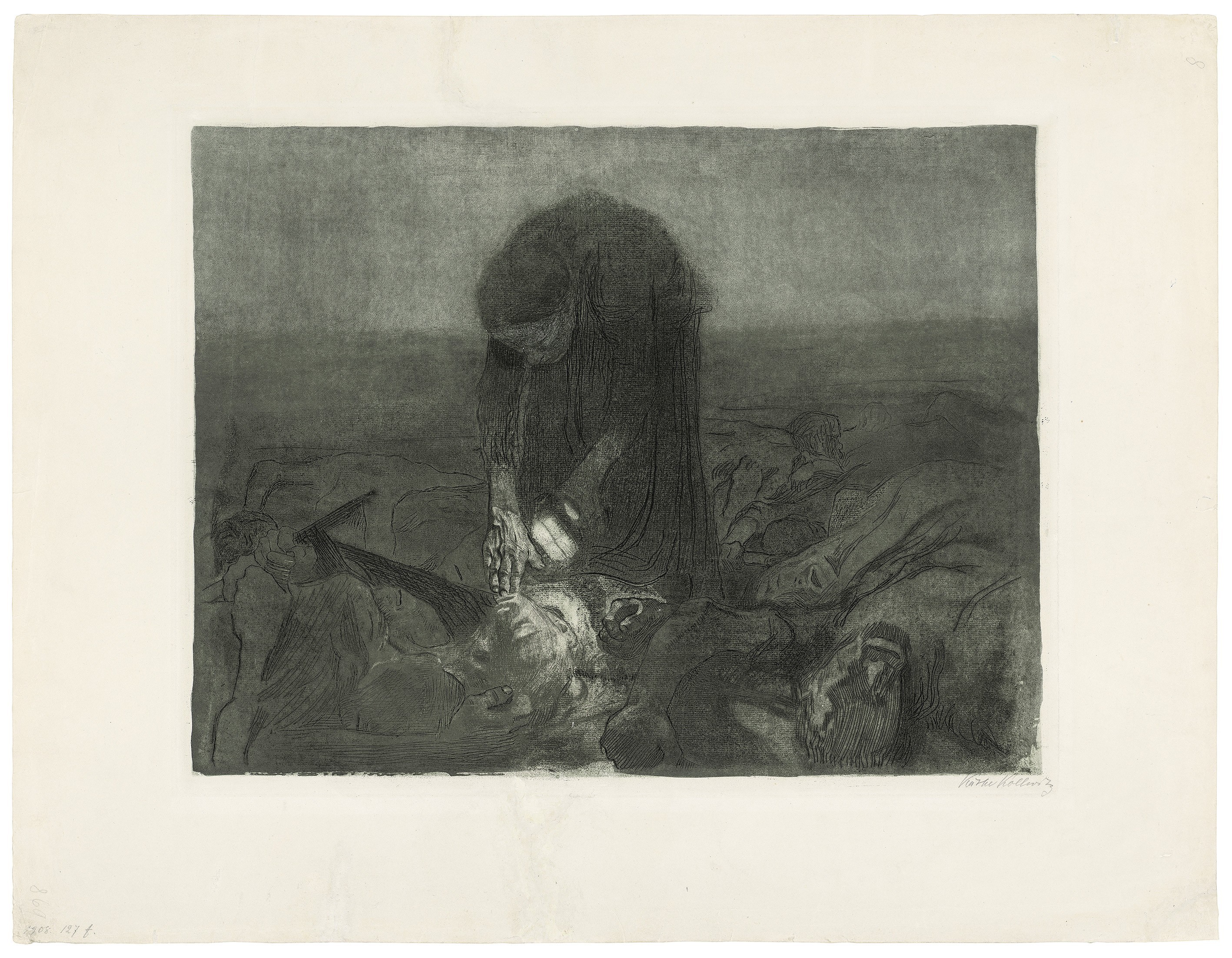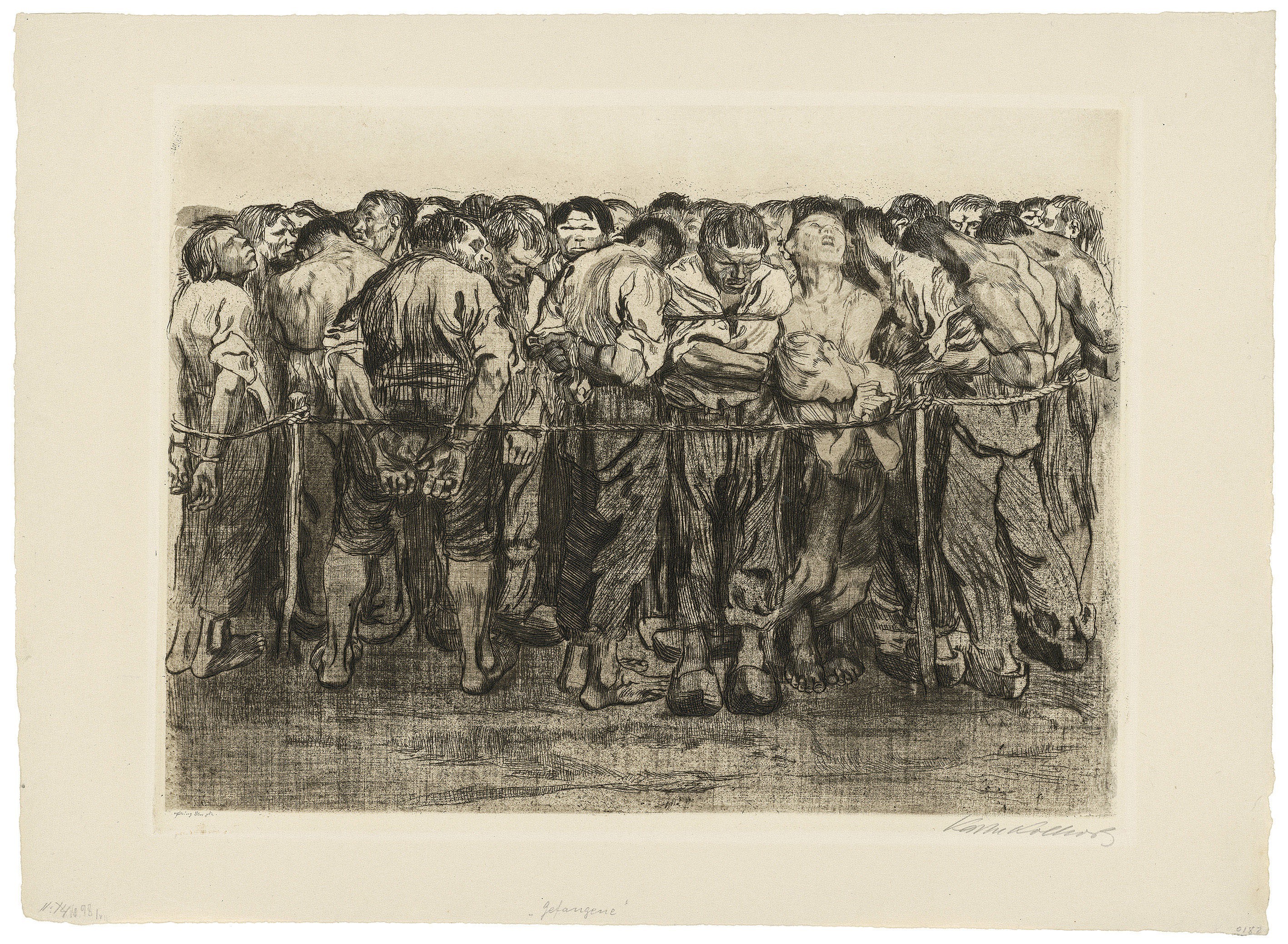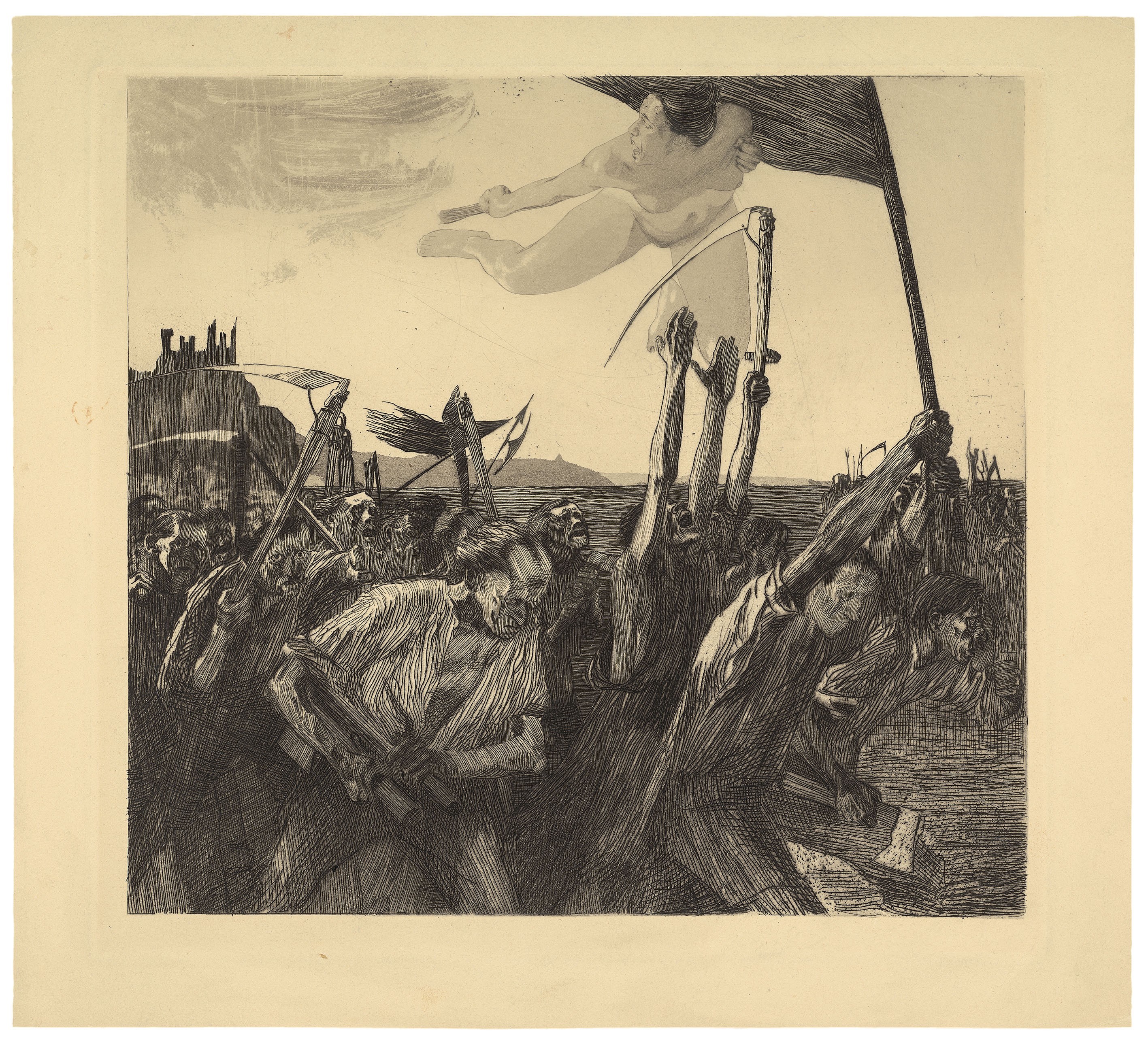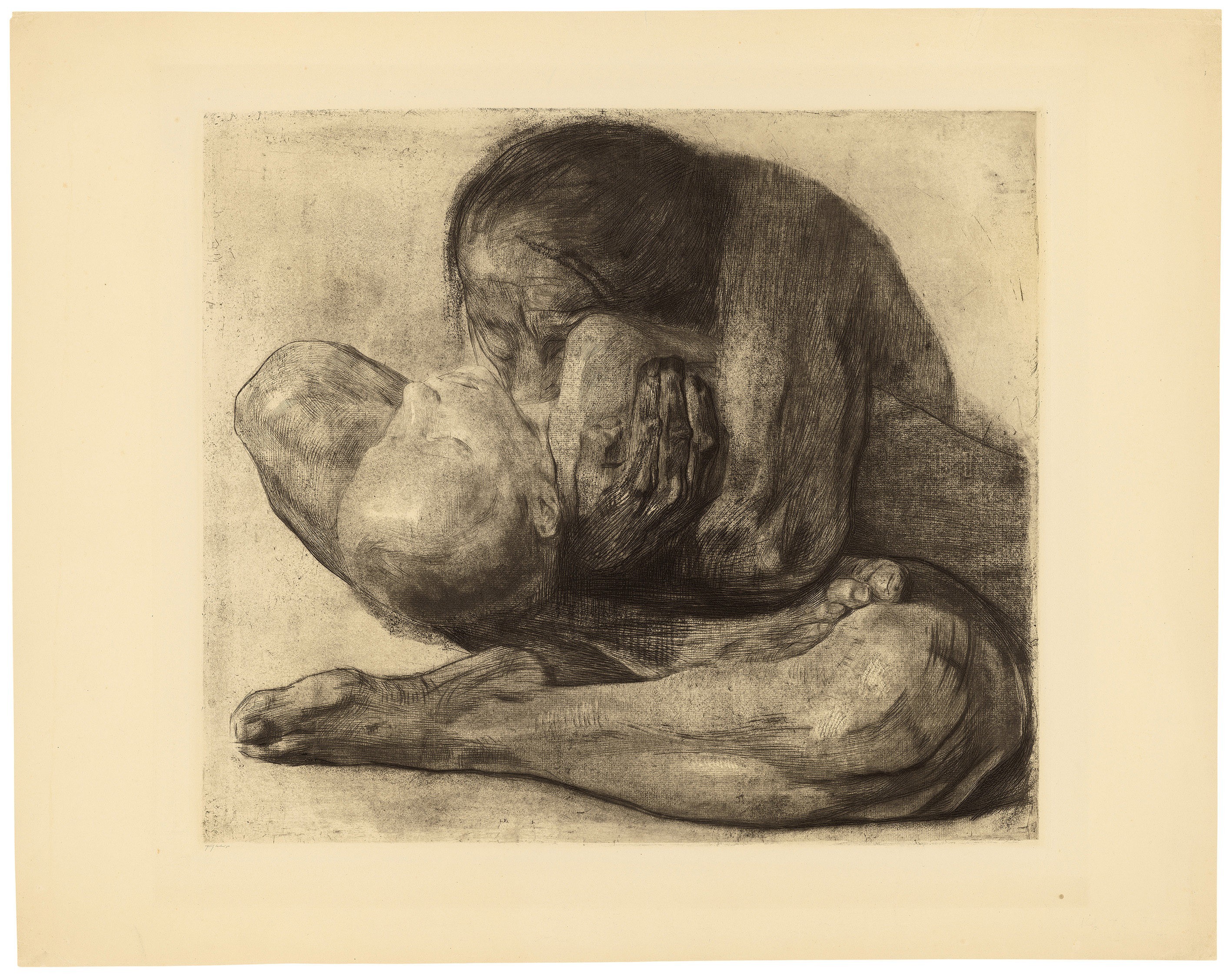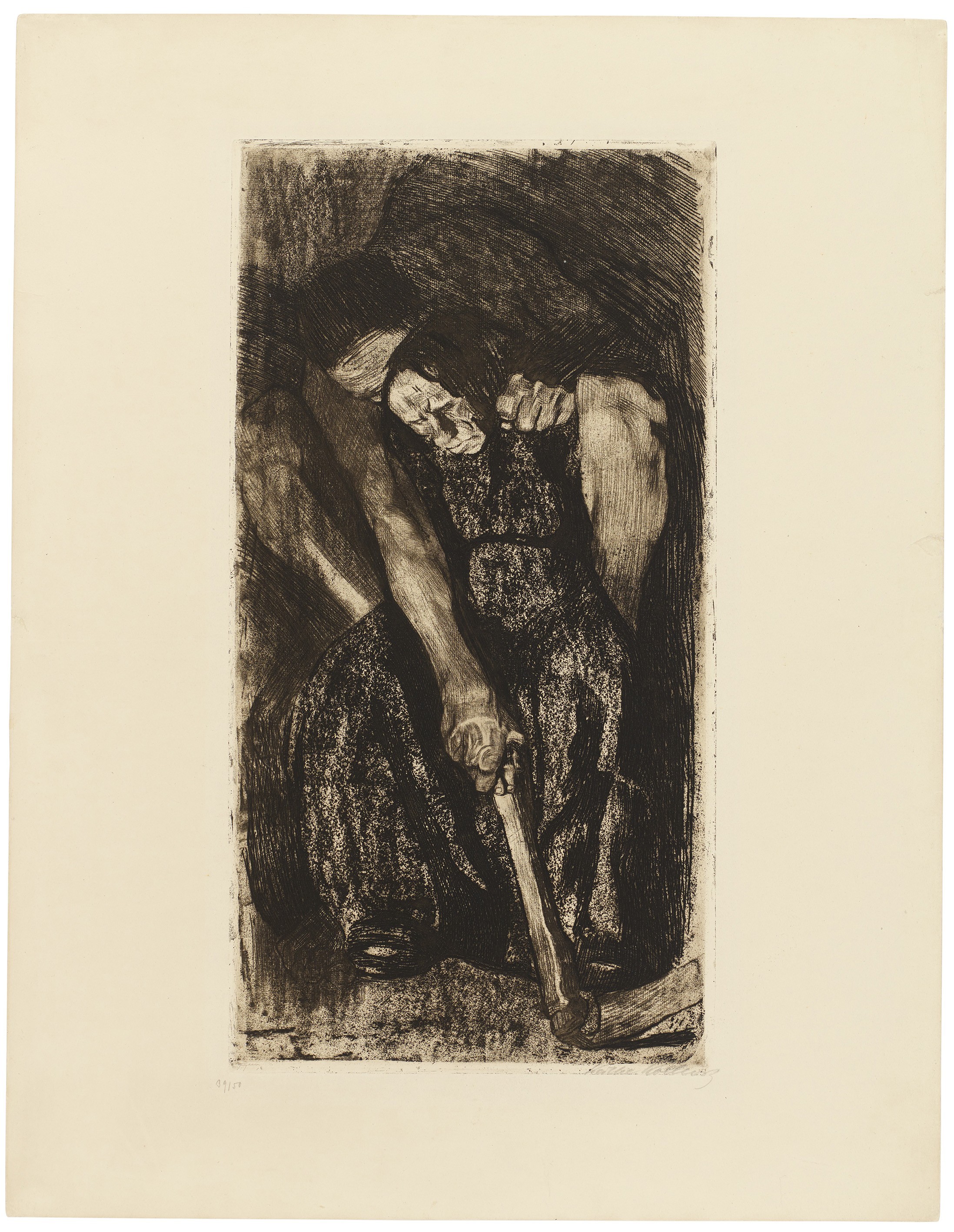

The motifs for the sheets of the Peasants’ War have not been picked and gathered from some literary source. After I created the small sheet with the woman hovering [above the peasants] [„Uprising”], the same theme occupied my mind for quite a while and I was hoping to be able to represent it in such a way that I could finish it.«
After completing the cycle »A Weavers’ Revolt«, Käthe Kollwitz turned her attention to the theme of the Peasants’ War. She had been inspired to explore this theme after reading Wilhelm Zimmermann’s »Allgemeine Geschichte des grossen Bauernkrieges« – first published in 1841 to 1843. Like Käthe Kollwitz’s father, Zimmermann moved in liberal circles in pre-revolutionary Germany. He sympathised with the demands of the peasants during the conflict in 1524/1525 and denounced the impoverishment of the rural population during his own lifetime. In social democratic circles, the Peasants’ War of 1524/1525 was regarded as the quintessential starting point of a revolutionary tradition and the paradigm of the fight for freedom.
Initially Kollwitz planned to execute the cycle as a series of colour lithographs. This plan was probably inspired by her first stay in Paris in 1901. She eventually changed this plan and decided to create a series of etchings.
In 1904 the artist approached the Verbindung für historische Kunst (Association of Historical Art) and applied for funding to complete the cycle. In this, she was supported by Max Lehrs, director of the Dresden Print Room and, alongside Max Liebermann, her most important patron. In 1908, the Association published the cycle together with the art dealer Emil Richter.