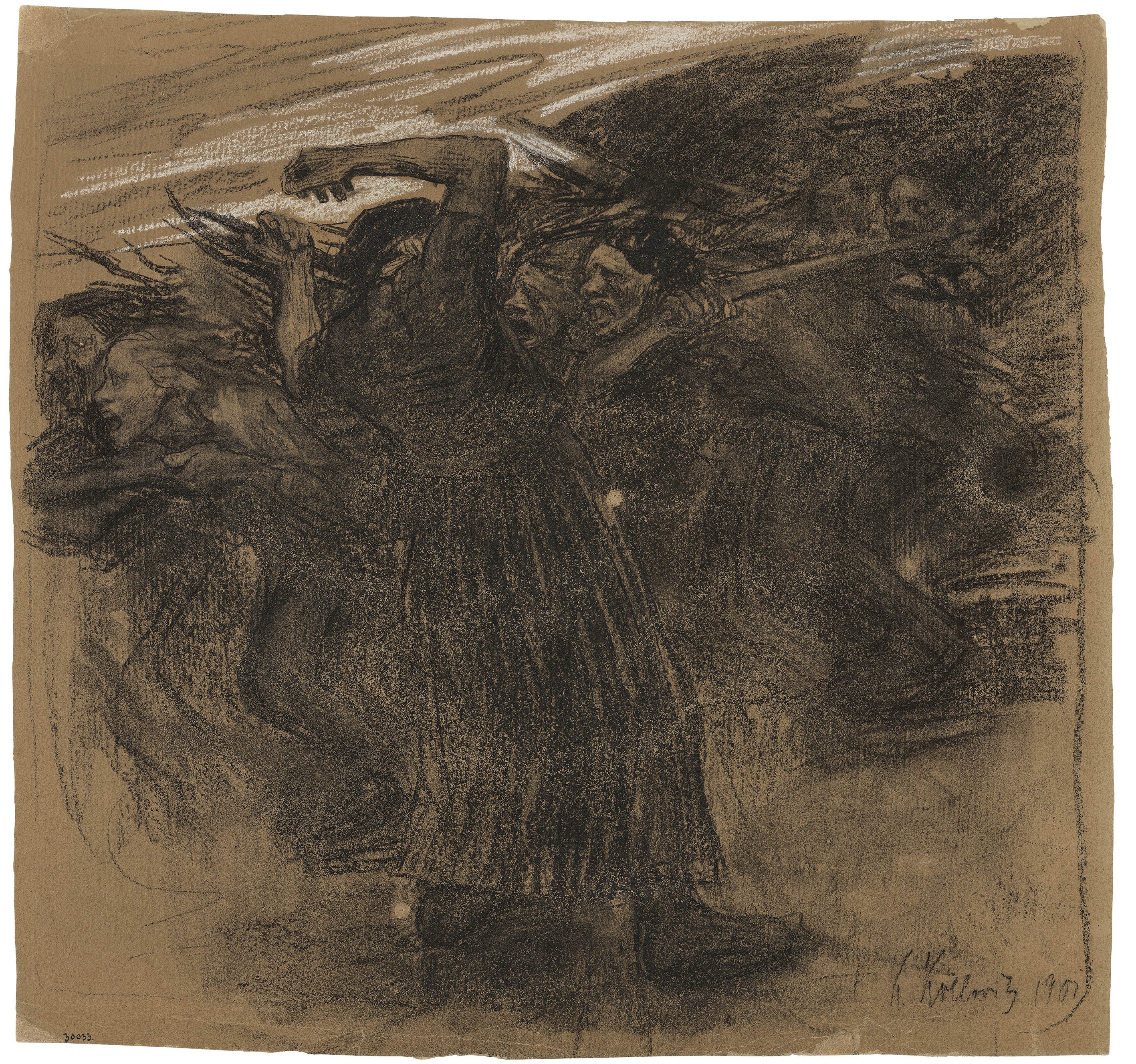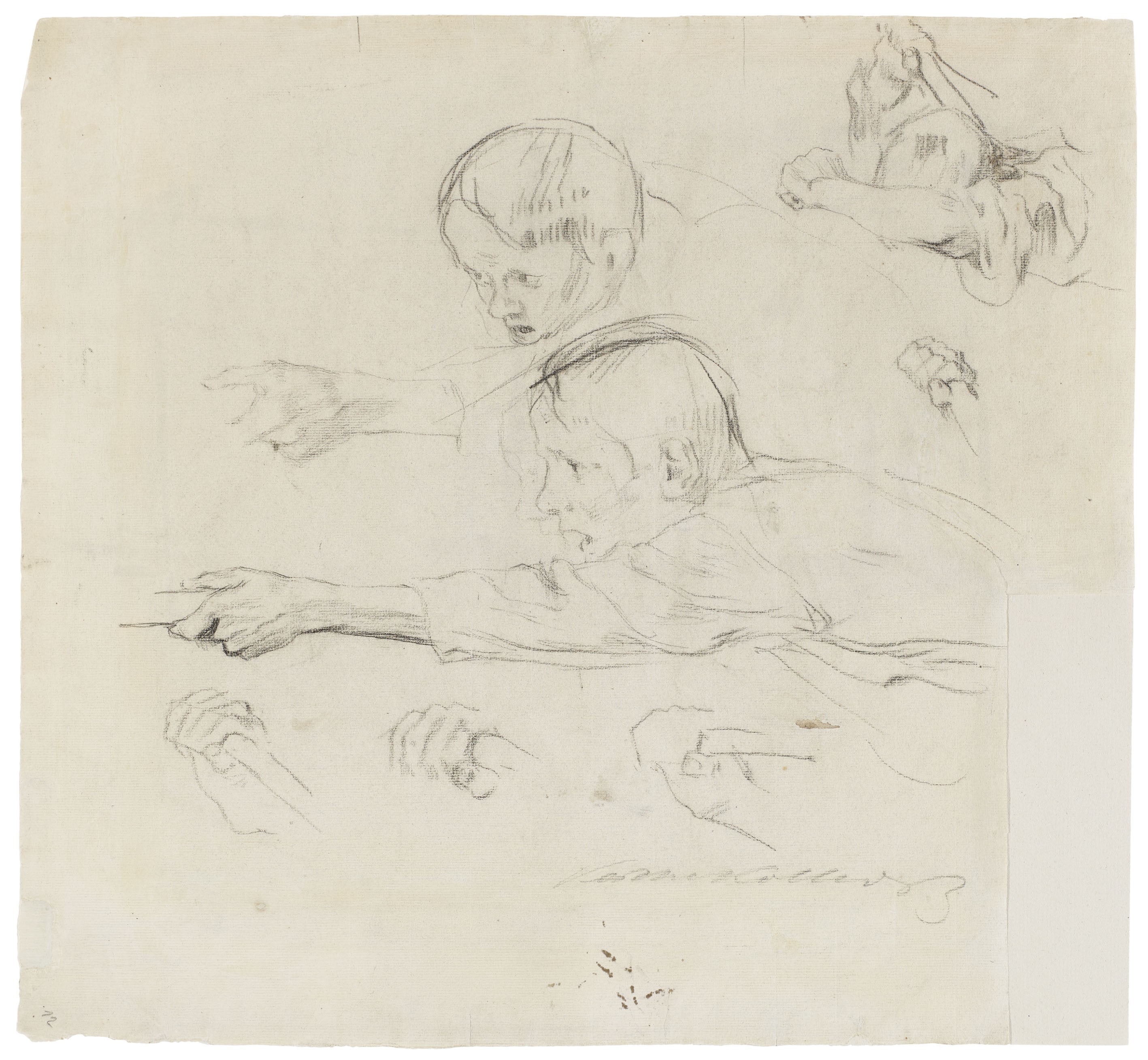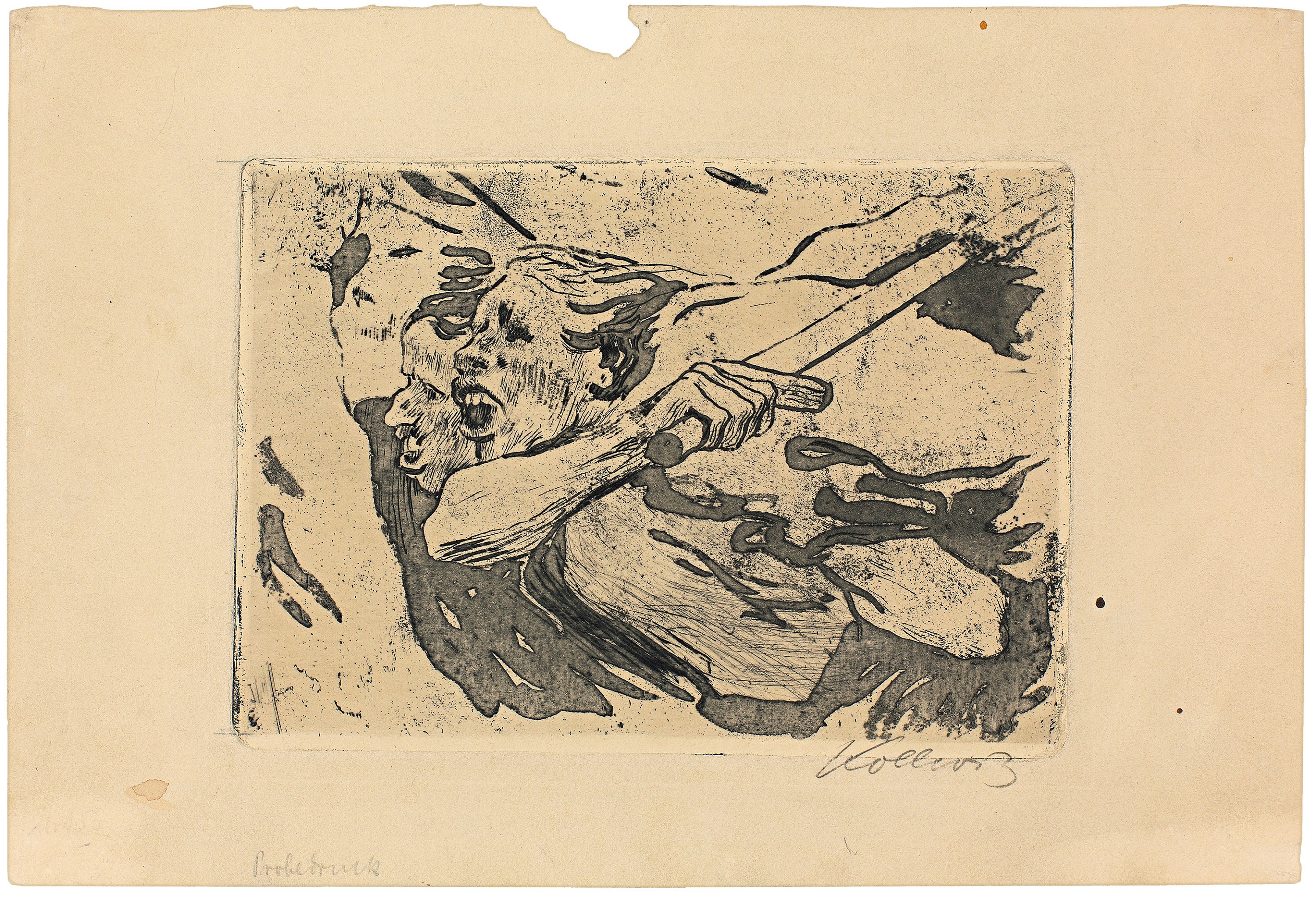
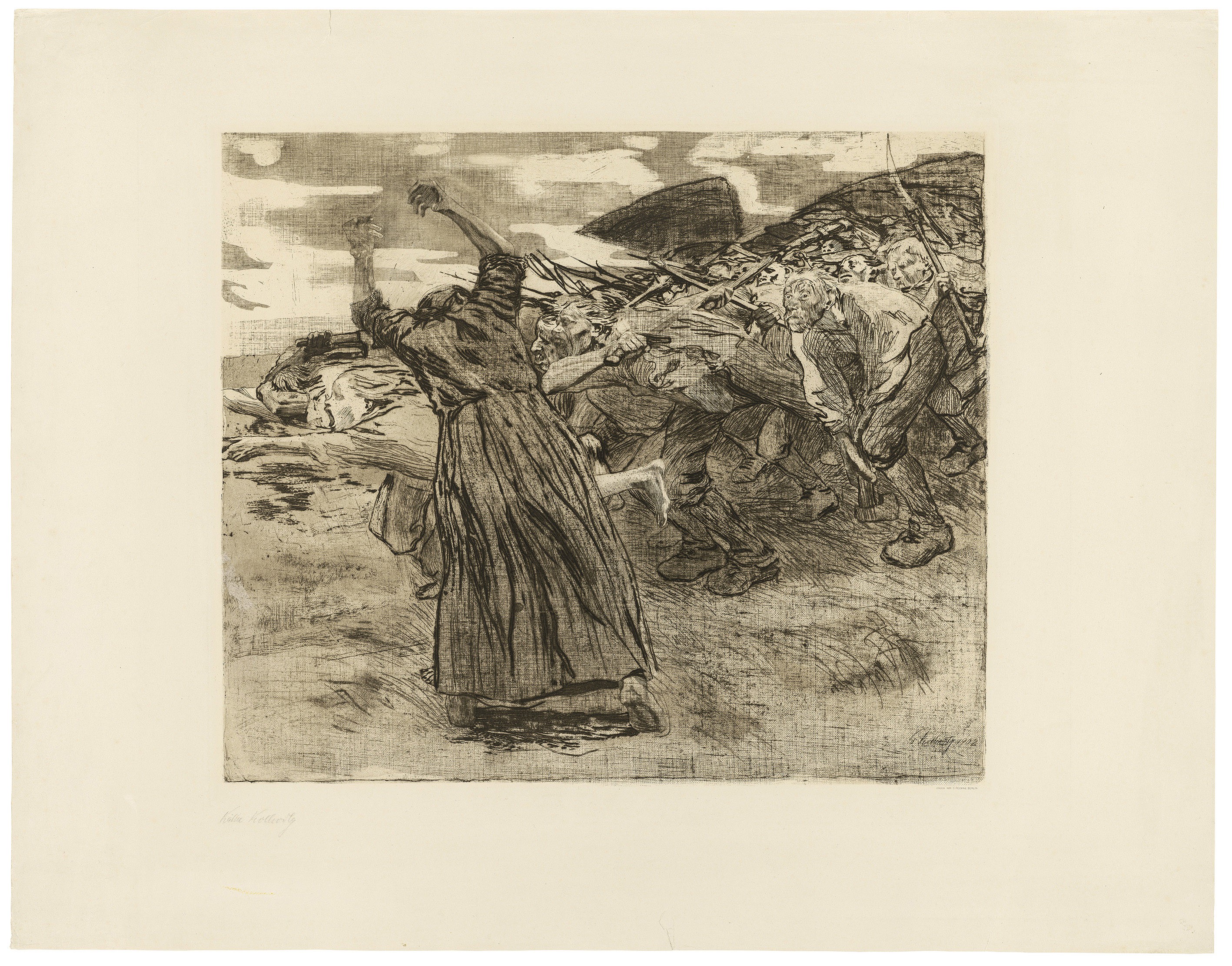
At that time, I was reading Zimmermann’s book on the Peasants’ War where he mentions ‘Black Anna’, a peasant woman who spurred the men on. I then made the large sheet depicting the group of the charging peasants.«
Käthe Kollwitz’ remarks refer to the ›Schwarze Hofmännin‹, one of the few historically documented women in the Peasants War, who blessed and spurred the peasants on before they stormed Weinsberg. By showing only the back of the ›Schwarze Hofmännin‹ in the »Charge« sheet, Kollwitz gave the observer the opportunity to identify with the character.
The earliest compositional study known shows that the artist – influenced by her stay in Paris – originally planned to execute this sheet as a colour lithograph, too.
Käthe Kollwitz herself referred to the sheet »Charge« as her »best work to date« in a letter from March 1903. In late 1902 she exhibited the etching, the first finished work in the cycle, at the Berlin Secession.