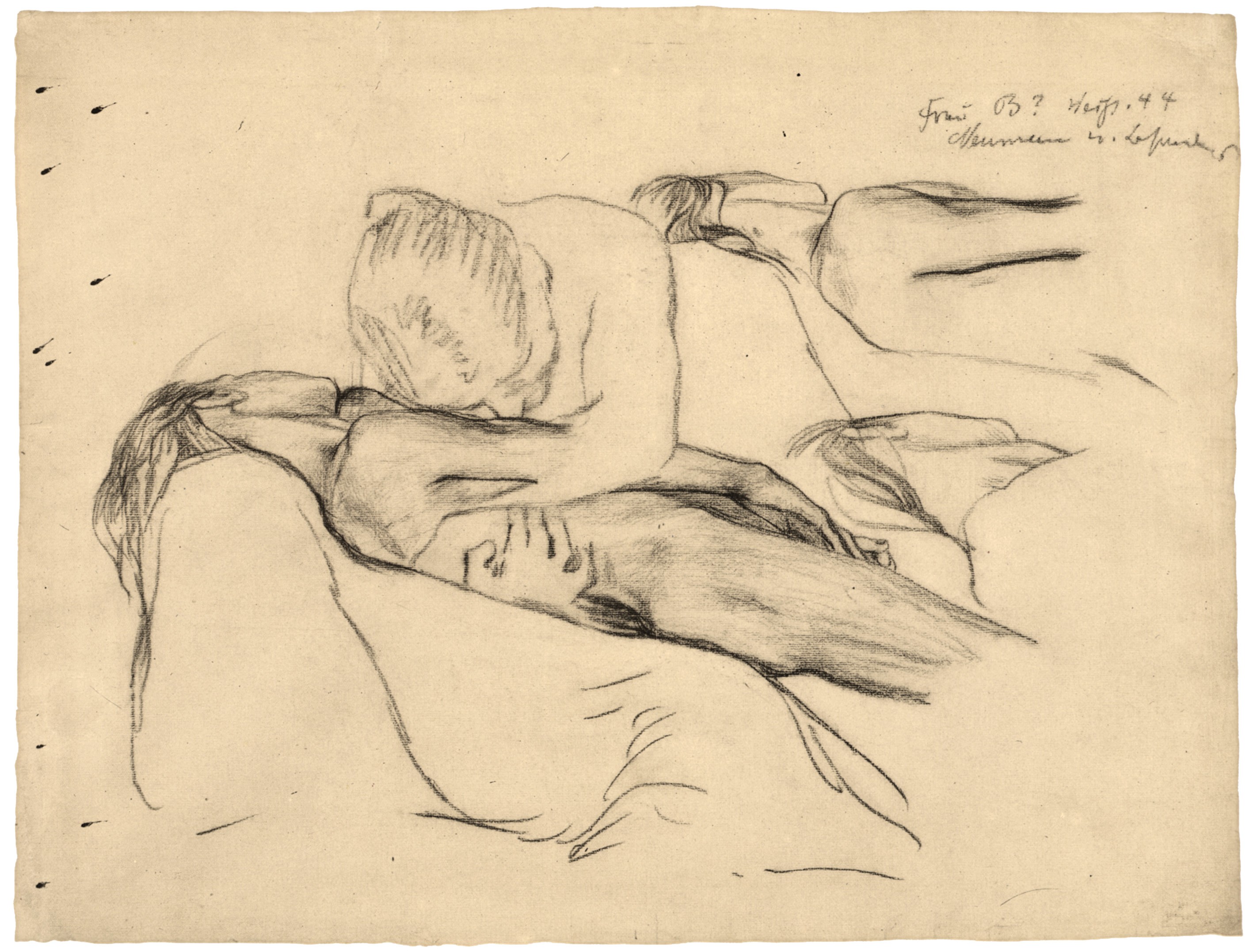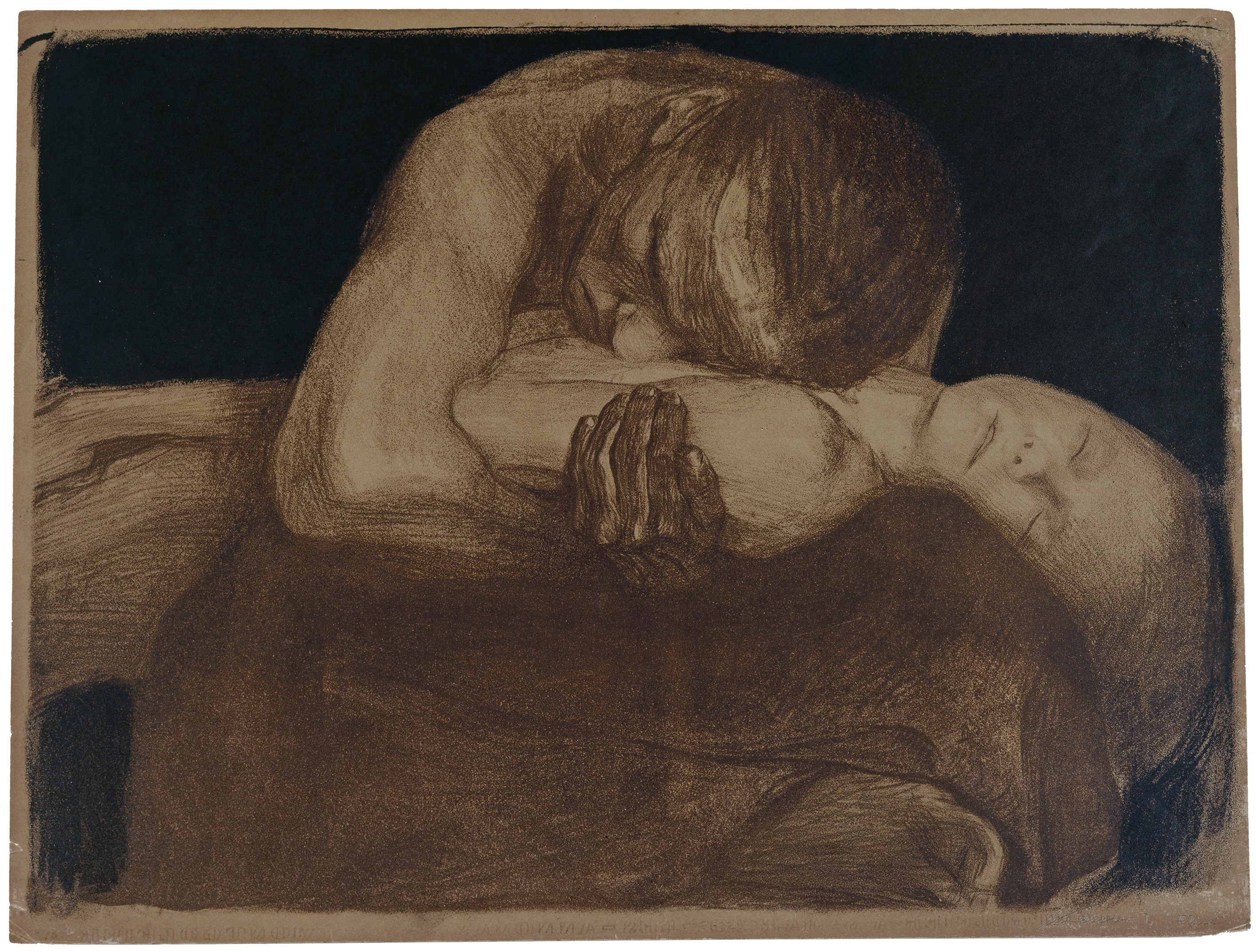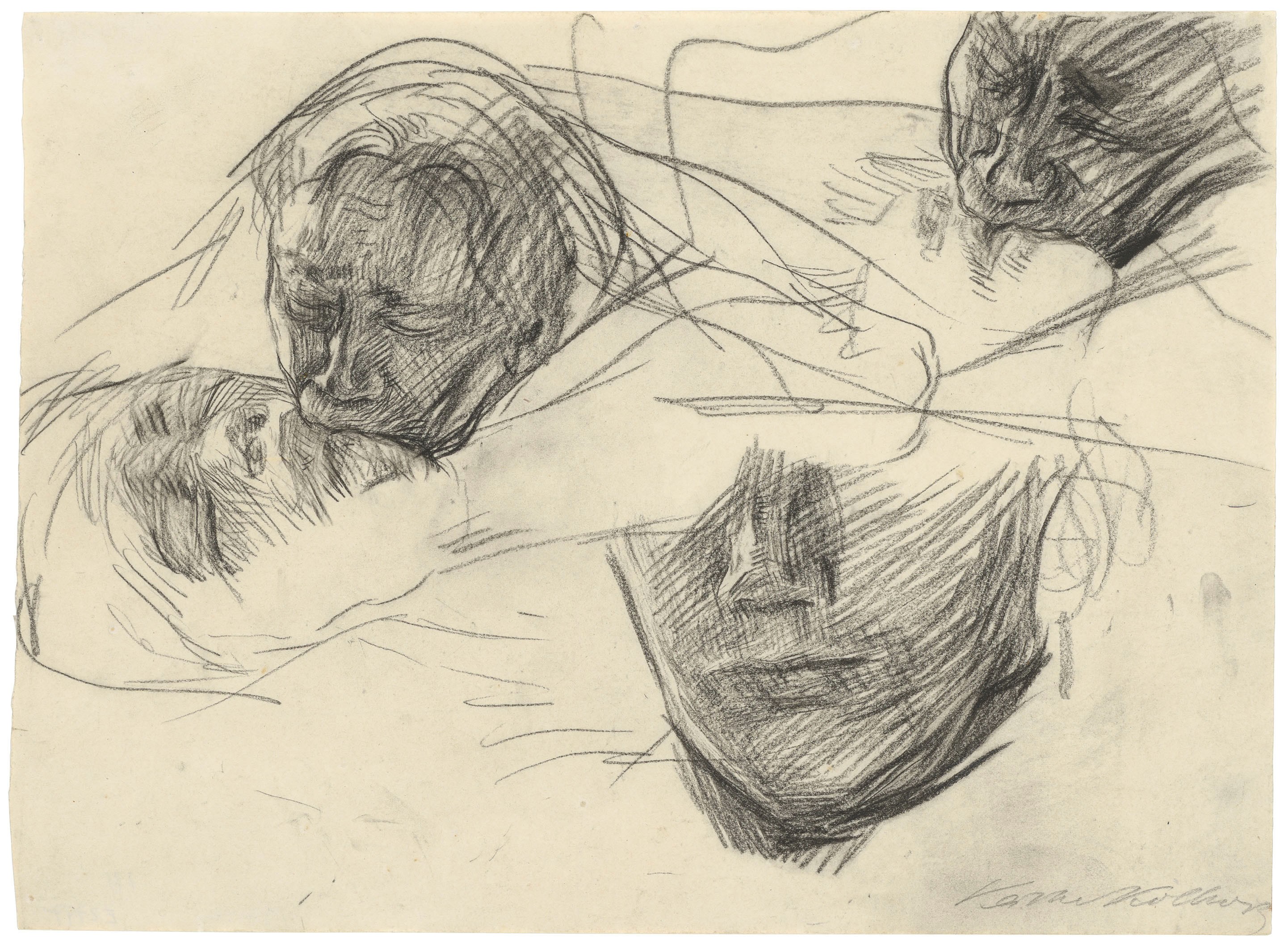
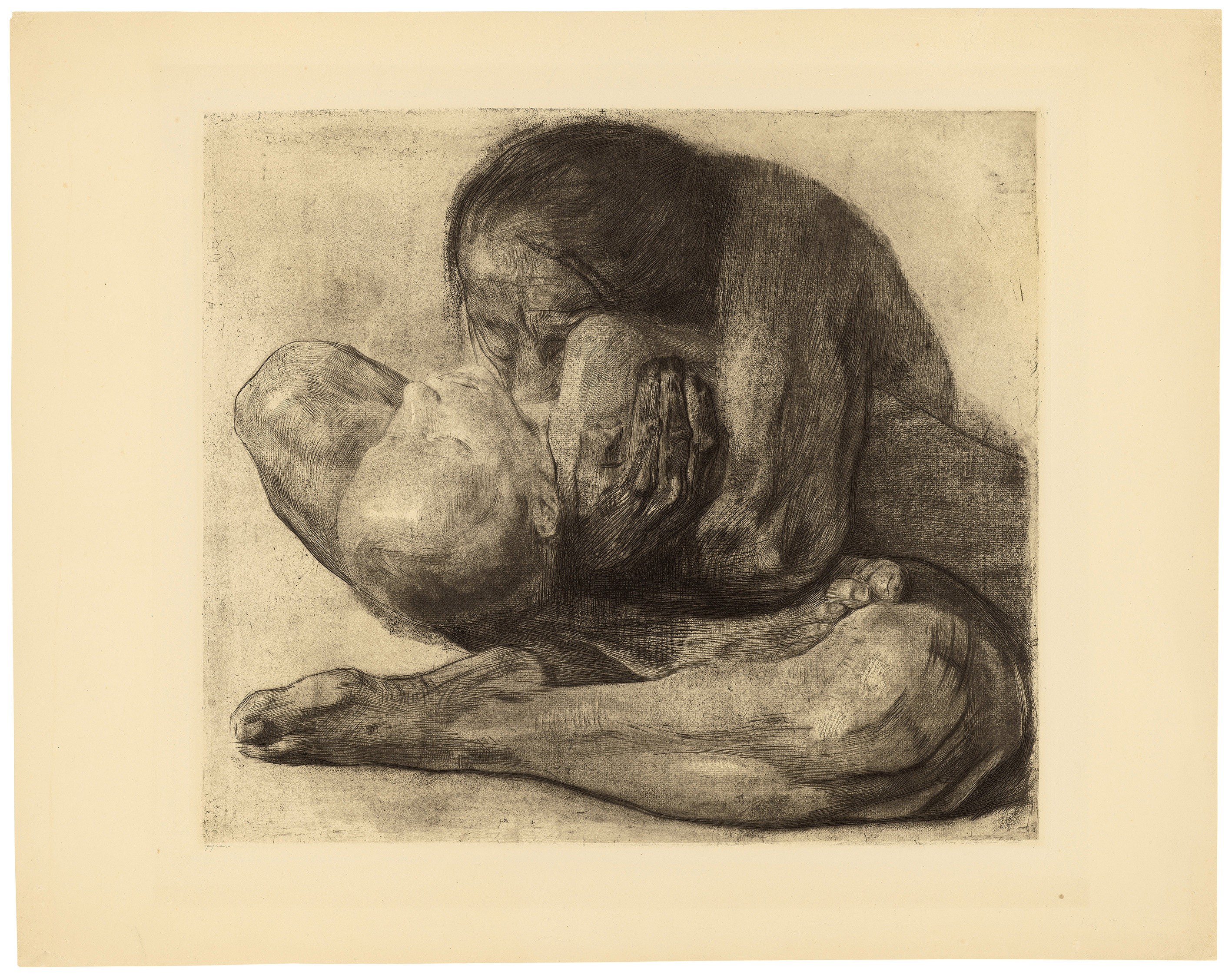
As in the case of the colour lithograph »Pietà«, Kn 77, Käthe Kollwitz developed this etching in the context of her work for the sixth portfolio of her Peasants War cycle. Although she did not include it in the cycle, she published it as an individual sheet.
This work triggered her decision to execute the Peasants War series as intaglio prints. Influenced by French Modernism, the artist also experimented with the effect created by a variety of colour backgrounds.
This depiction of a mother, desperately clutching her dead child, fills the entire pictorial space and its scope is monumental. Sitting cross-legged, she bends her naked body over the lifeless boy lying in her lap. The contrast between the delicate features of the child and the brutish, animal-like countenance of the mother highlights the pain of loss in a dramatic manner. The untamed, passionate feelings expressed by the body language of the mother, make the two figures merge into one.
A letter from Käthe Kollwitz to Arthur Bonus reveals that the artist used herself and her youngest son Peter as models for this composition:
When he was seven years old and I was working on the etching ›Woman with dead Child‹, I did a drawing of myself, holding him on my arm, in front of the mirror. That was very exhausting and I groaned. Then he said in his little child’s voice: Stop groaning, mum, it is going to be very beautiful…«
Hans Kollwitz, the artist’s elder son, associated the death of his younger brother Peter who fell in the war with these two picture series:
I asked mother where she got the image of the mother with her dead child from – years before the war – which featured in almost all her pictures from that period. She thought she foresaw Peter’s death even then. She said she had been crying while working on these images.«