The first two sheets of the »Peasants’ War« cycle highlight the peasants’ oppression and lack of rights that triggered the historical uprising.
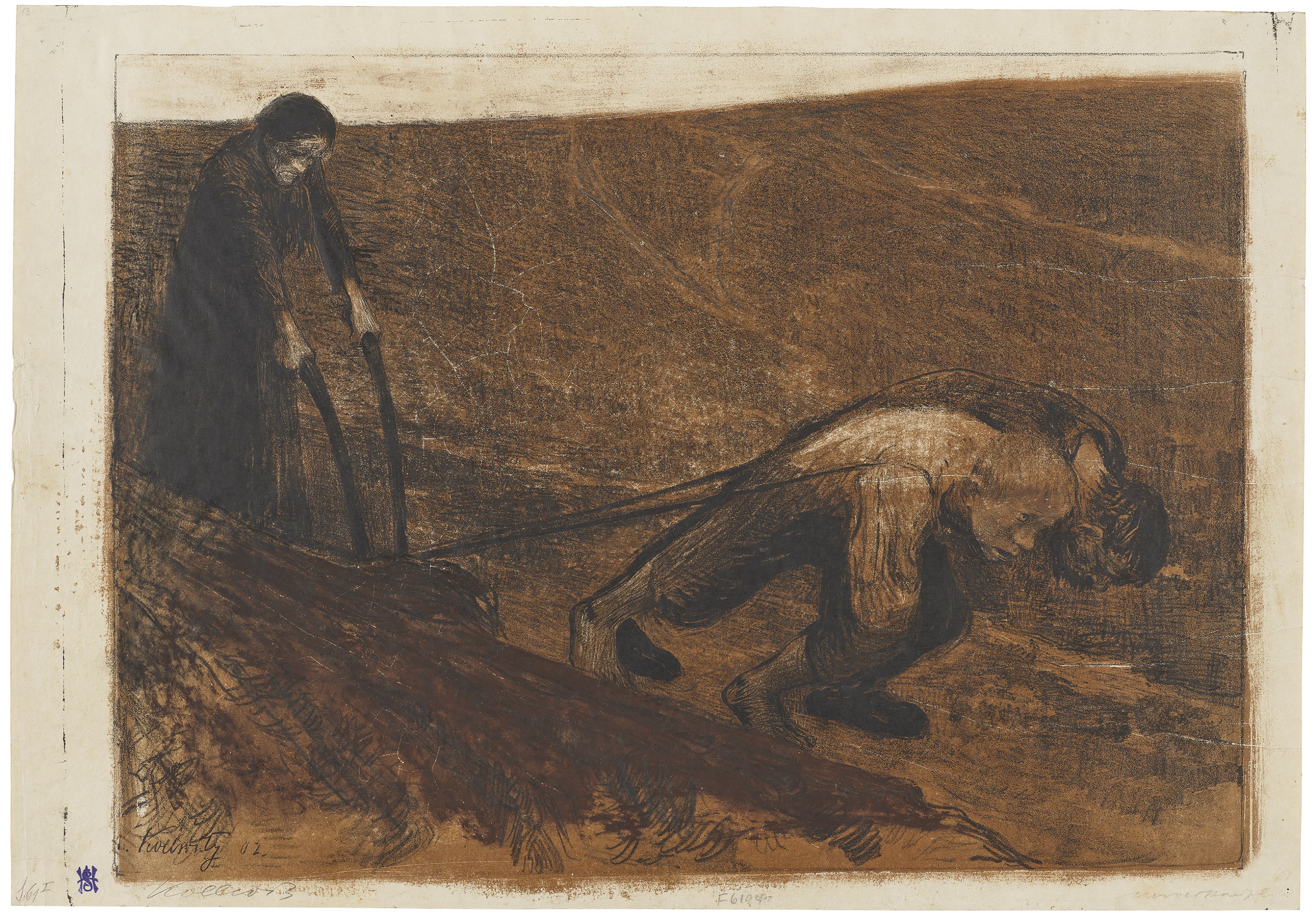
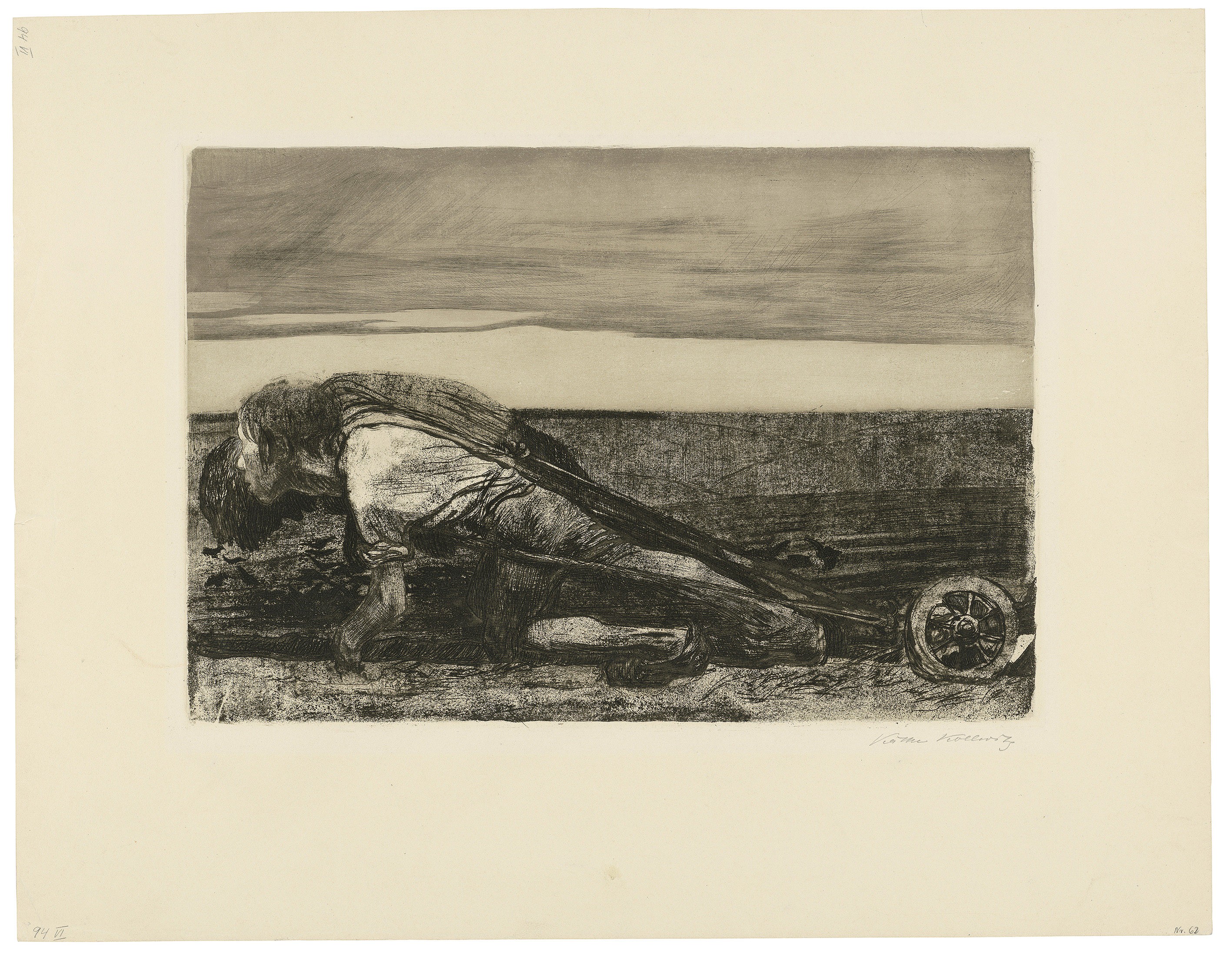
In this sheet, Kollwitz illustrated this theme by depicting two peasants – probably father and son – who are forced to yoke themselves to the plough as they have no oxen.
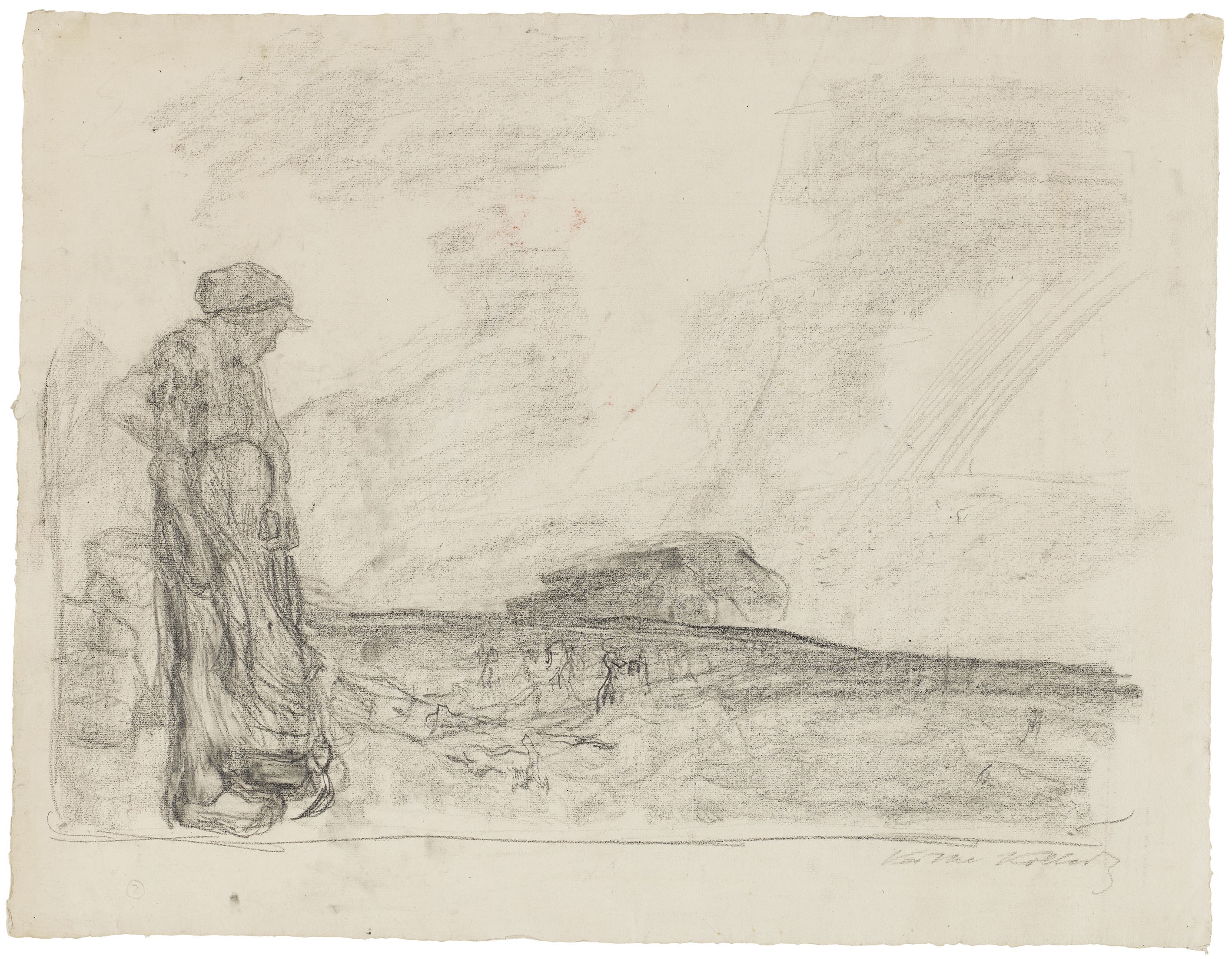
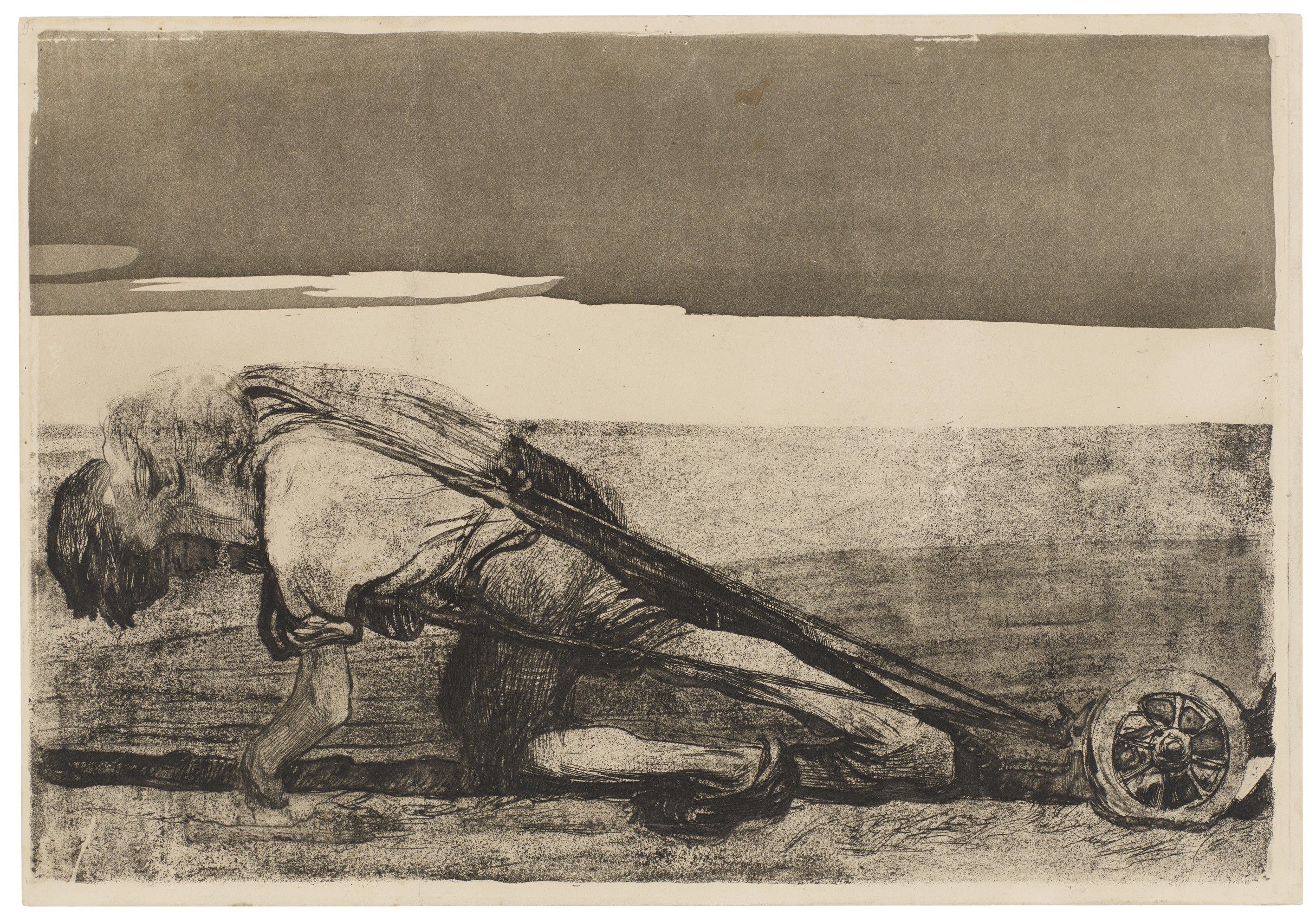
The first few designs for this sheet that are still extant date from 1901. These early sketches were followed in 1901/1902 by two lithograph versions and in 1904 by an etched version.
It was only in the winter of 1906/1907 that Kollwitz achieved the final expression of the work. In the course of the drawn-out genesis the artist developed a pictorial language that became more and more abstract and which only used simple lines to express what the story is about. The shallow angle of the ploughmen’s diagonal line which hardly rises above the horizontal ground symbolises the peasants’ humiliation and oppression. The complete lack of vertical lines as a metaphor for the dignified, erect posture of man, and the heavy sky above further emphasise the atmosphere of oppression.