
Open today: 11.00 – 21.00

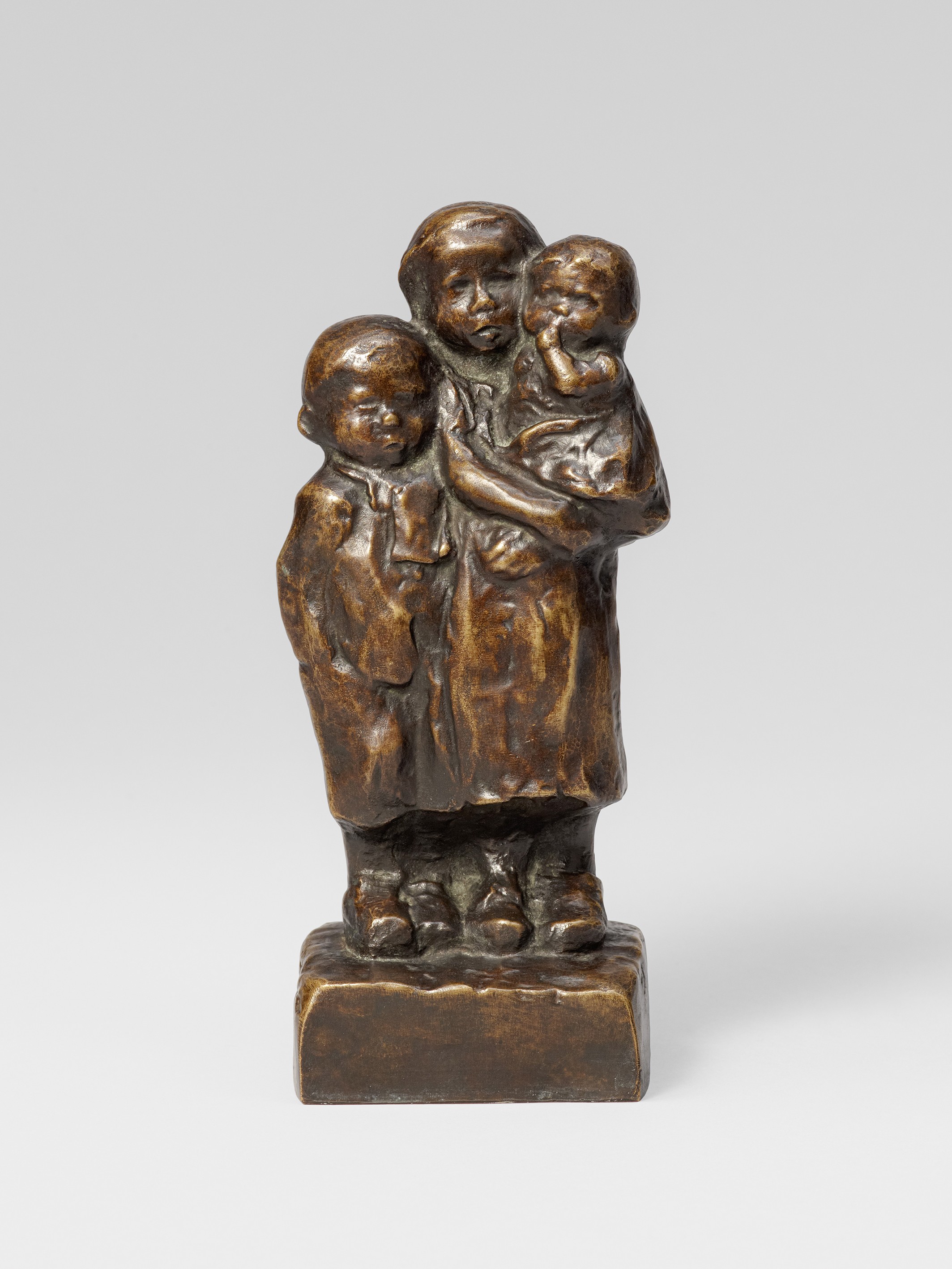
Group of Children,
presumably 1936/37

Käthe Kollwitz, Group of Children, model probably 1936/37, cast probably 1960, bronze, 187,5 x 84,5 x 62 mm, Seeler 33 II.B.5., Kollwitz Museum Köln, Inv. Nr. 70100/86007 © Kollwitz Museum Köln, ph. Goldberg/Fuis. 

This small group is another example highlighting Käthe Kolwitz’ striving for formal clarity. The three children are closely huddled together and form a sculptural unit.

The earliest documentation of this group is from Karl Kollwitz who told a mutual friend in September 1939 that he took great pleasure in looking at the bronze of a group of children standing in front of him. This work was probably created as early as 1936/1937 in connection with the »Soldiers’ Wives waving Farewell«.

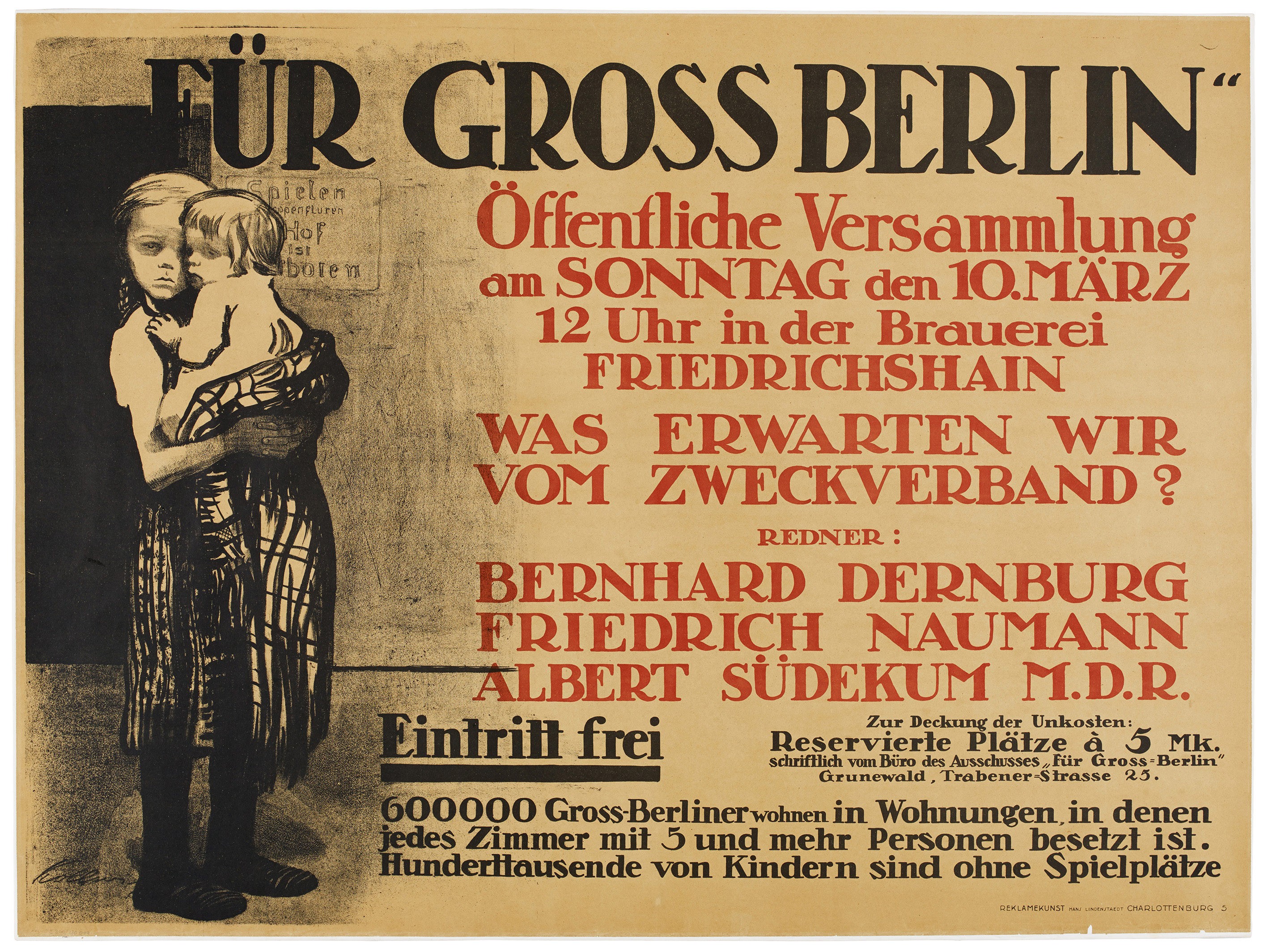
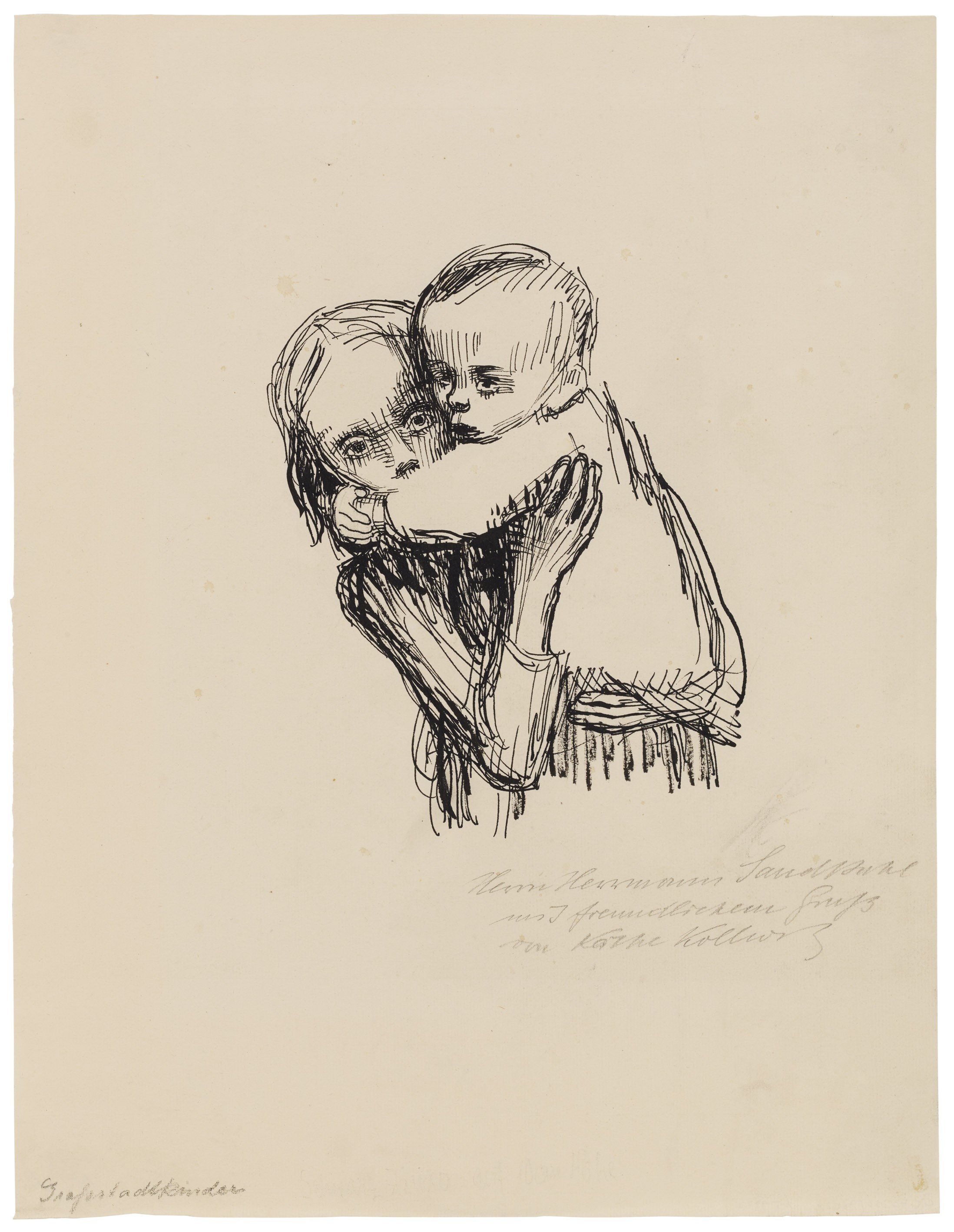
The figures in the »Group of Children« had already been pre-formulated in the artist’s graphic work. The main features of the girl carrying her little sister go back to a composition that was created as early as 1912 for the poster »For Greater Berlin«. In her subsequent graphic works, Kollwitz frequently returns to this pictorial idea which thematises childhood neglection by demonstrating that older children were burdened with responsibility for their younger siblings at a very early stage.
Contextual Works

Käthe Kollwitz, Poster »For Greater Berlin«, 1912, crayon and brush lithograph (transfer) 690 x 950 mm, Kn 122 I, Kollwitz Museum Köln, Inv. No. 70300/88003.
Käthe Kollwitz, City Children, 1923, pen on yellowish laid paper, 205 x 165 mm, NT 997a, Kollwitz Museum Köln, Inv. Nr. 70200/96021.