OPEN today: 11.00–18.00

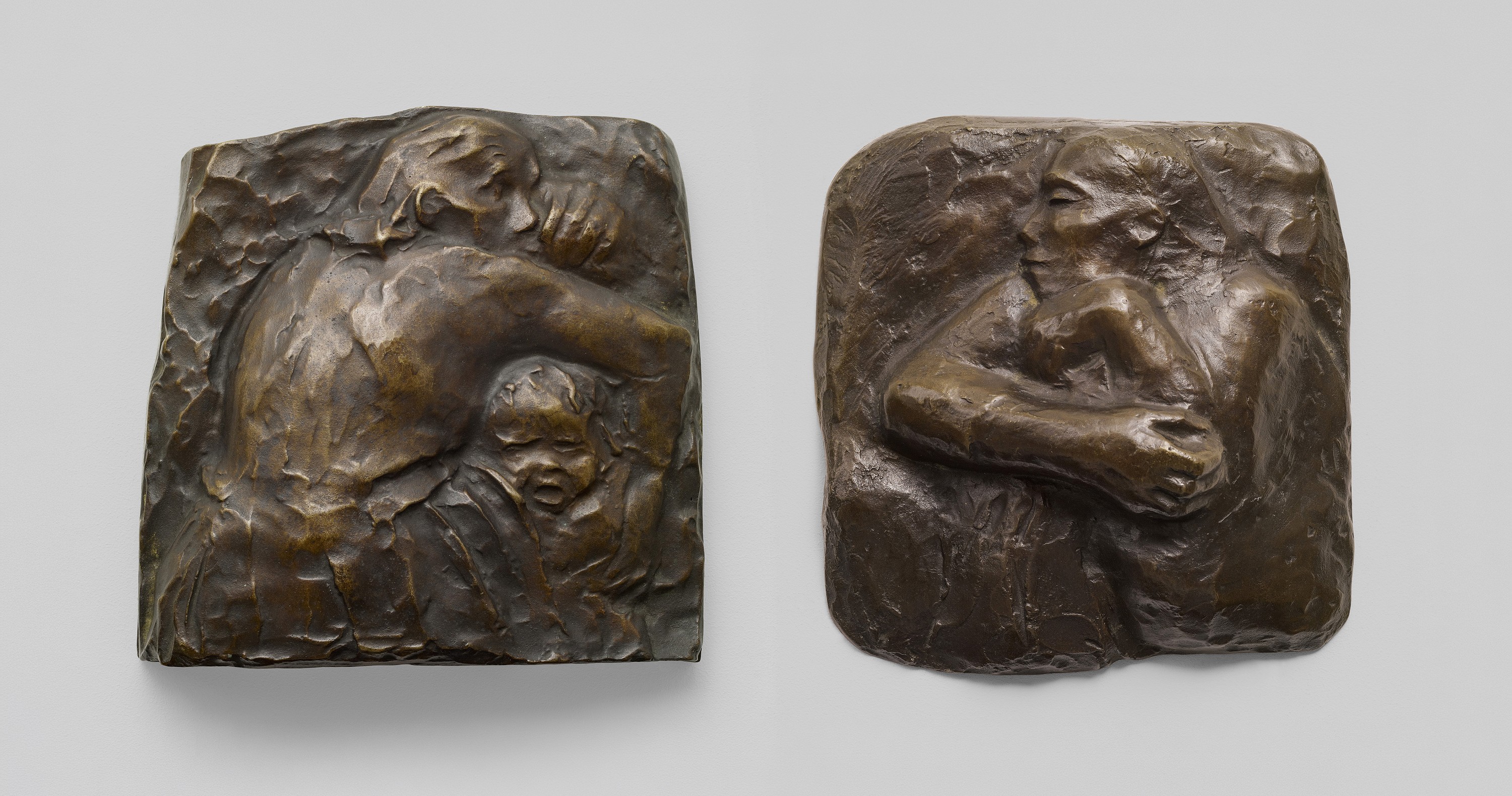
Mother Protecting her Child, I and II, 1941

Käthe Kollwitz, Mother Protecting her Child I, model completed by October 1941 at the latest, cast probably 1951, bronze, 172 × 174 × 42.5 mm, Seeler 41 I.B.1., Kollwitz Museum Köln, Inv. Nr. 70100/86006 and Mother Protecting her Child II, model completed by October 1941 at the latest, cast probably 1951, bronze, 179 × 172 × 52.5 mm, Seeler 42 I.B.1., Kollwitz Museum Köln, Inv. Nr. 70100/86007 © Kollwitz Museum Köln, ph. Goldberg/Fuis. 

These two reliefs thematise, like many of Käthe Kollwitz’ sculptural works, the motif of protection. The reliefs were created in the middle of World War II and are the last and final examples of the sculptural realisation of this theme.

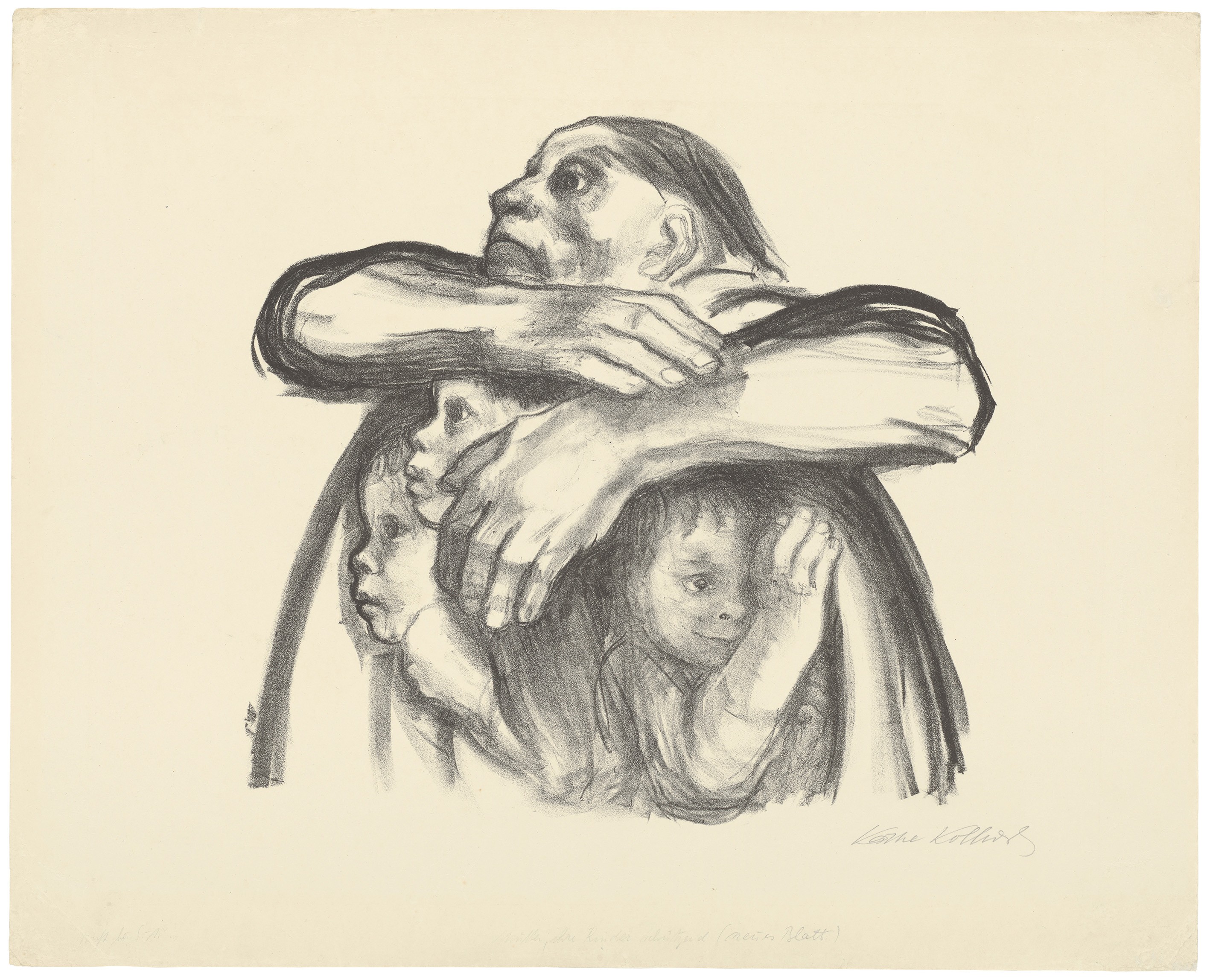
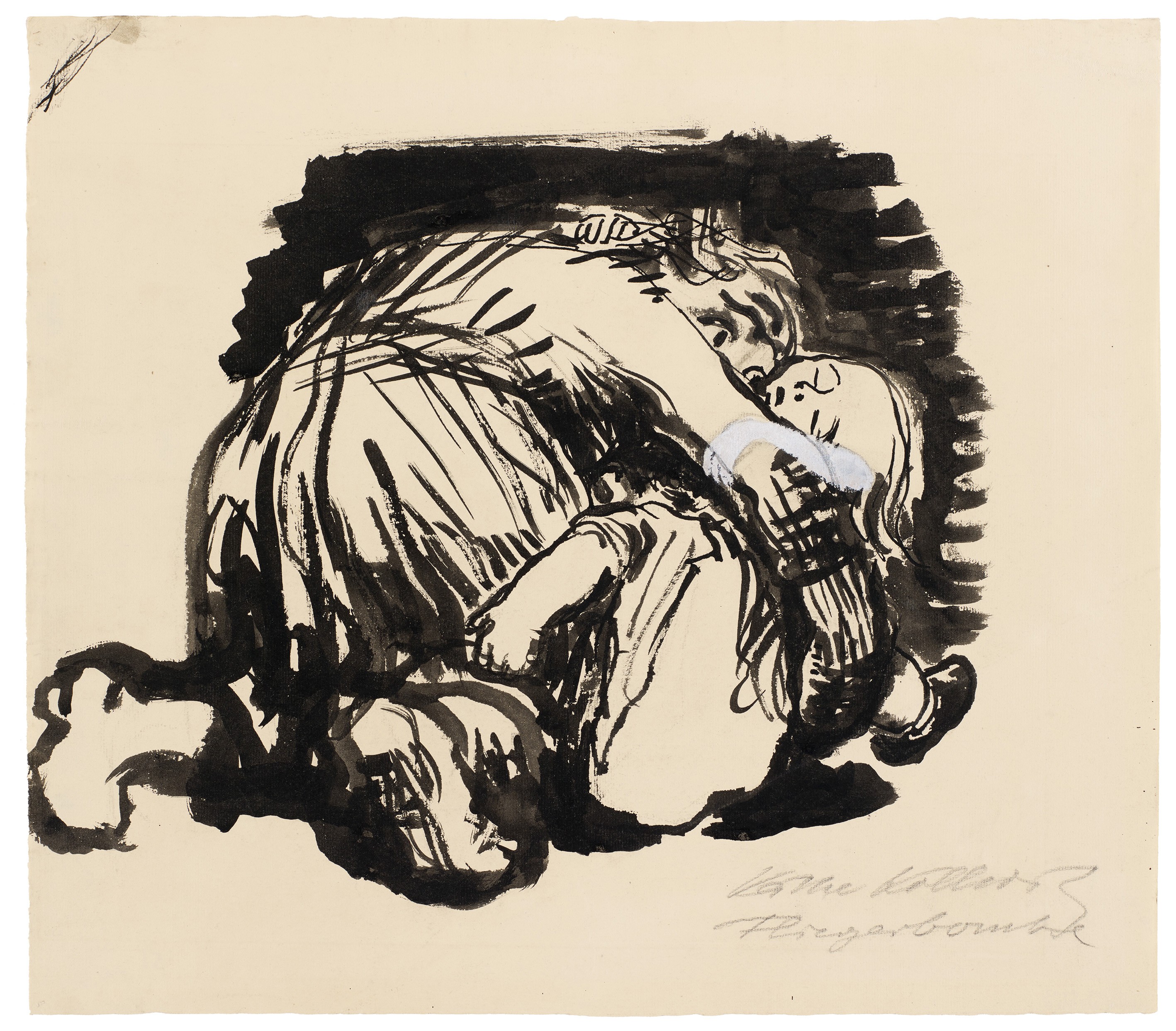
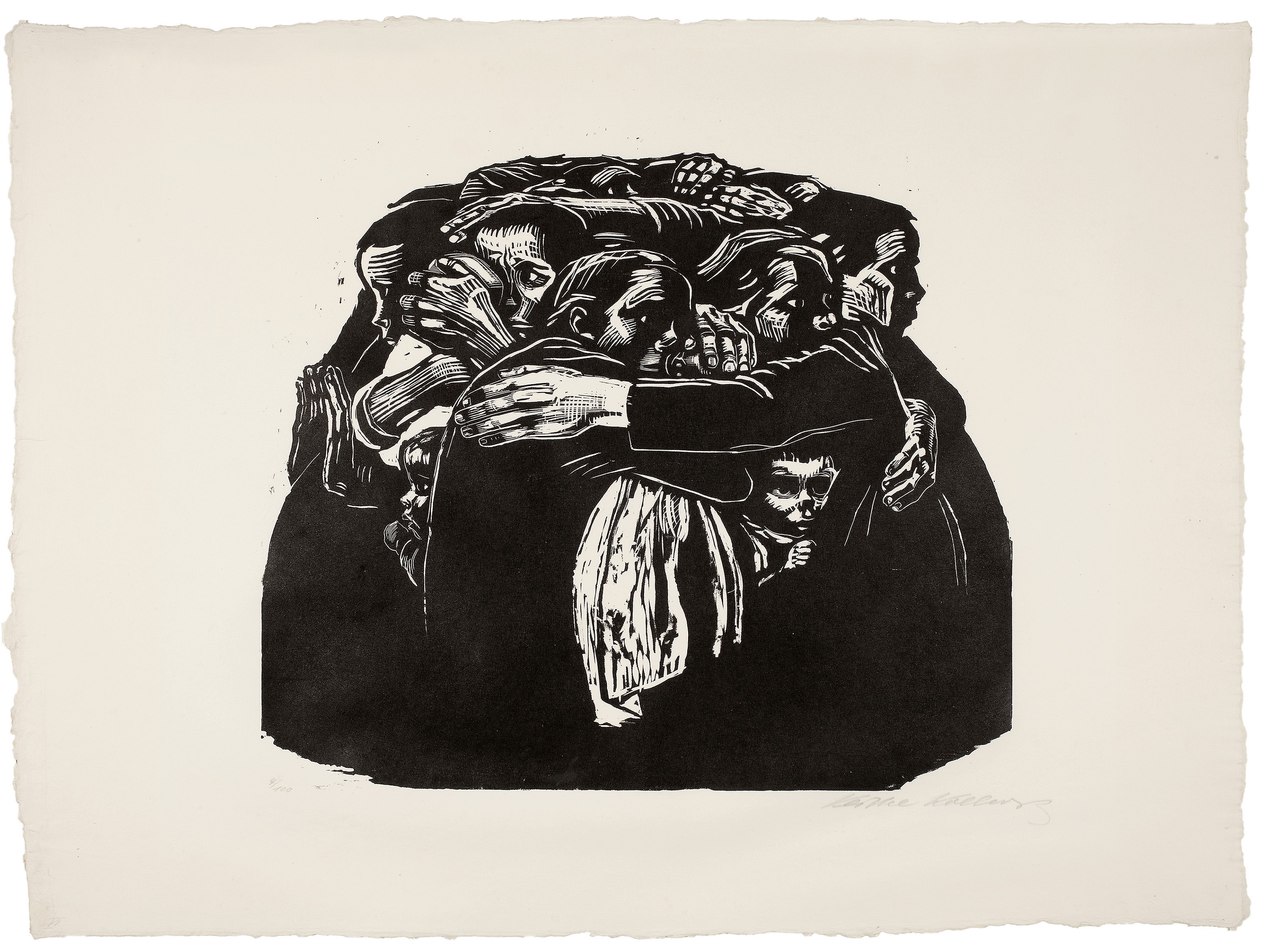
The motif of active care for the welfare of children, protected from all kinds of dangers by their mothers, was formulated repeatedly by the artist – both in her graphic and sculptural works. In these reliefs, there is an even stronger sense of the children being in imminent danger to life than in the woodcut »The Mothers« from the »War« cycle, in the »Tower of Mothers«, Seeler 35, and definitely in the famous lithograph »Seed for sowing should not be milled«, Kn 274. This at least is what the desperate weeping of the child and the haunted look of the mother in Relief I suggest – they are in a life-threatening situation. In that respect it is much closer to the drawing »Aerial Bomb«, NT 960.

The works are listed under the title »Aerial Bomb« in the books of the Noack foundry, where Kollwitz commissioned zinc casts of the relief. This title is certainly a reference to the term the artist herself used. It shows that the motif, which had been formulated in the aftermath of the First World War, was taken up again and put into a new, topical context – the Allied air raids on Berlin and the deadly terror of the people who, like Käthe Kollwitz, sought refuge in air-raid shelters.

Although Relief II is a much calmer composition, it was certainly created at the same time, as the two works were obviously conceived as counterparts. This is underpinned by their size, which is roughly the same, and by the two mothers’ orientation towards each other. 
Contextual Works

Käthe Kollwitz, The Mothers, sheet 6 of the series »War«, 1921/22, woodcut, 340 x 400 mm, Kn 176 VII b, Kollwitz Museum Köln, Inv. Nr. 70300/92016.
Käthe Kollwitz, »Seed for sowing should not be milled«, 1941, crayon lithograph (transfer), 370 x 395 mm, Kn 274, Kollwitz Museum Köln, Inv. Nr. 70300/87024.
Käthe Kollwitz, »Seed for sowing should not be milled«, 1941, crayon lithograph (transfer), 370 x 395 mm, Kn 274, Kollwitz Museum Köln, Inv. Nr. 70300/87024. 
Käthe Kollwitz, Aerial Bomb, 1924/25, brush and black ink, 250 x 350 mm, NT 960, Kollwitz Museum Köln, Inv. Nr. 70200/84012.