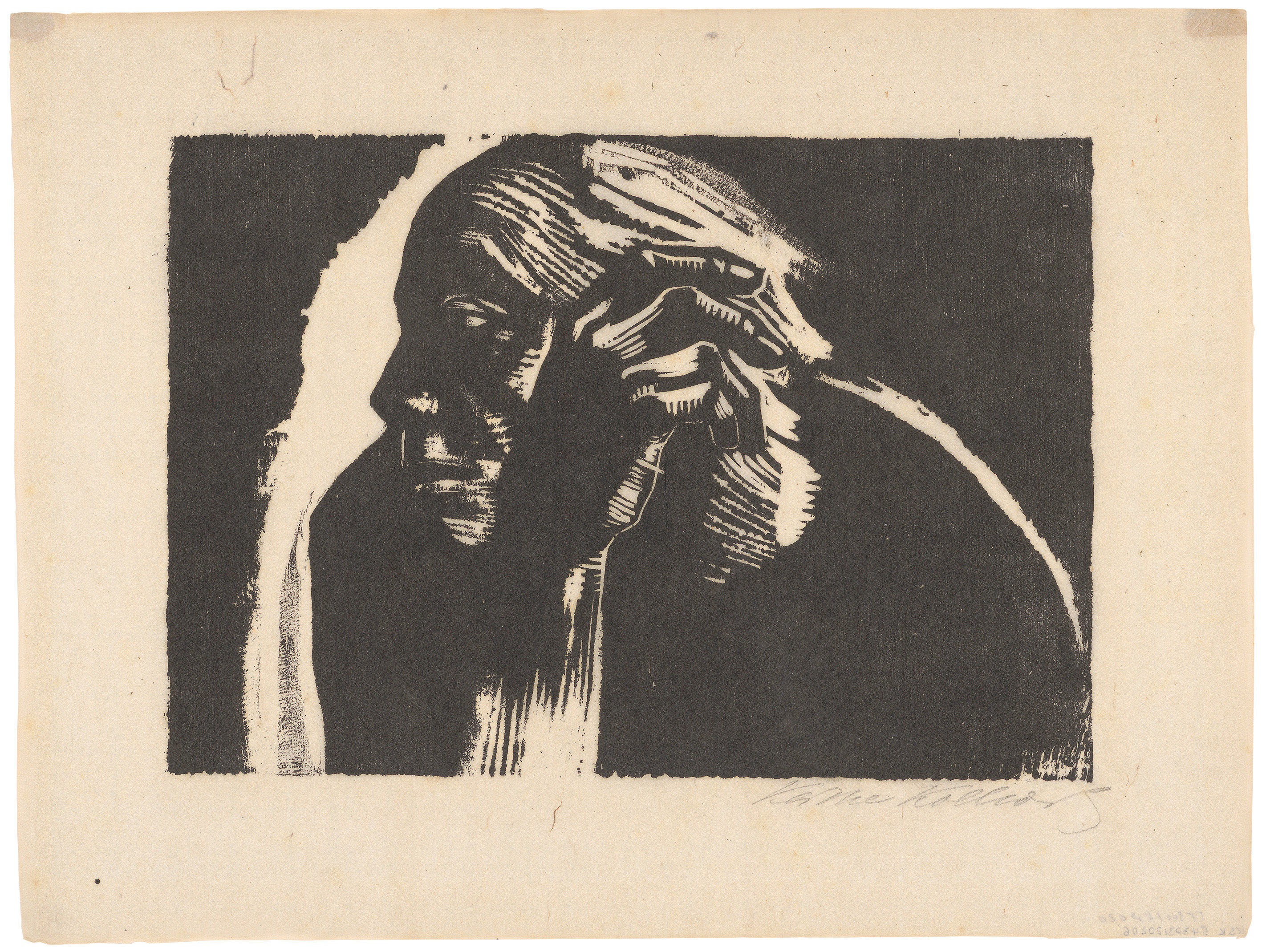
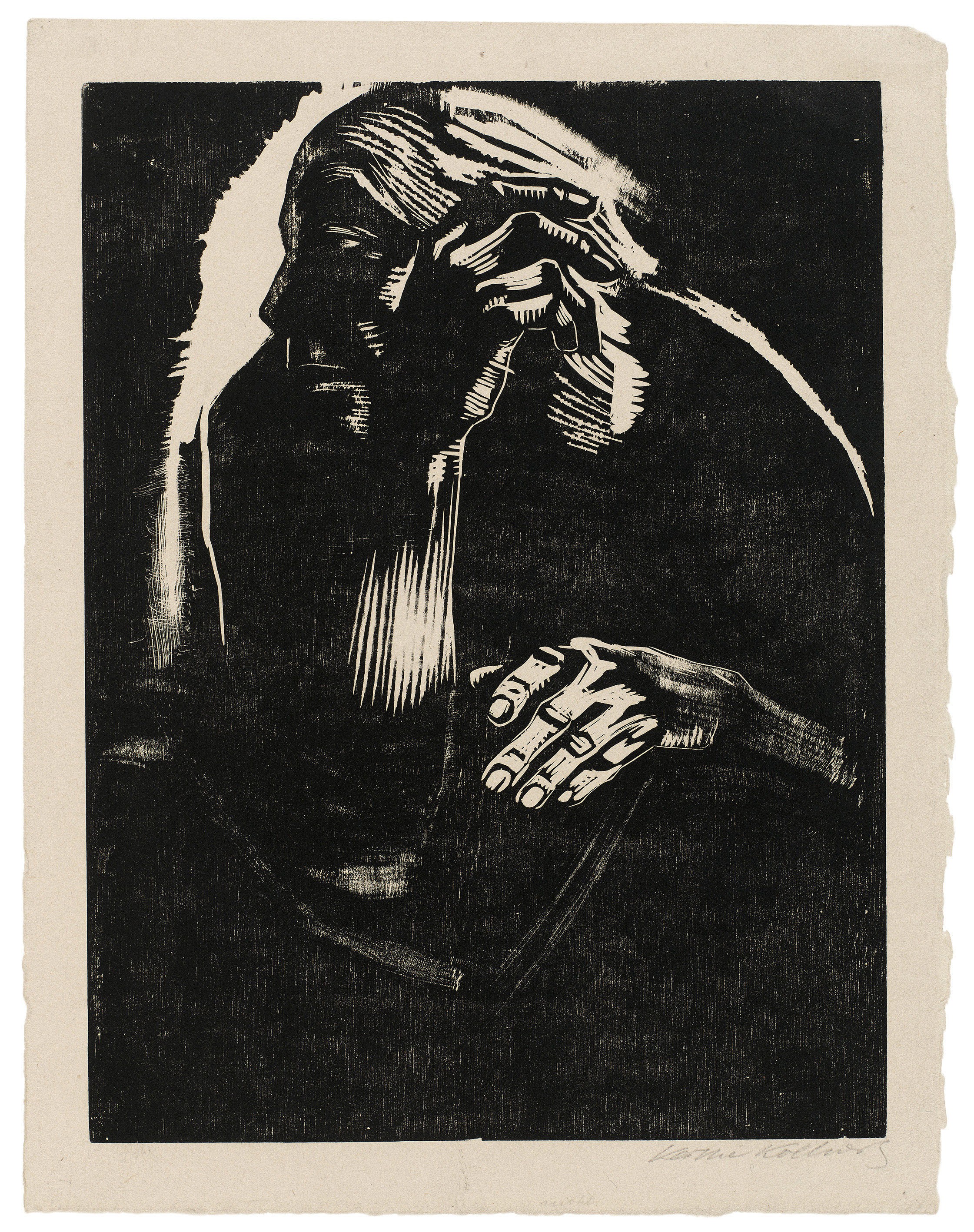
Although Käthe Kollwitz only created woodcuts for a total of ten years – from 1920 until 1929 – she made use of this technique to create a self-portrait. In a diary entry of 14 May 1924 she wrote:
I’m working on small jobs for publishers. Elisabeth greeting Mary and the self-portrait with raised hand. Both of them woodcuts.«
In the course of her work on the wood, the artist edits and reworks the printing block several times. The first four state proofs (the fourth proof is shown here) still show the portrait in a three-quarter view. It seems as if she has just turned her head to the side while her left hand remains in its previous position, presumably supporting her head. Her right hand rests on her knee.
Only two prints of this version are known to exist.
In a subsequent working step, the artist reduces the height of the printing block (originally 40 cm) by almost half. She thus achieves a stronger focus on the facial area, which gives this self-portrait a higher degree of intensity.
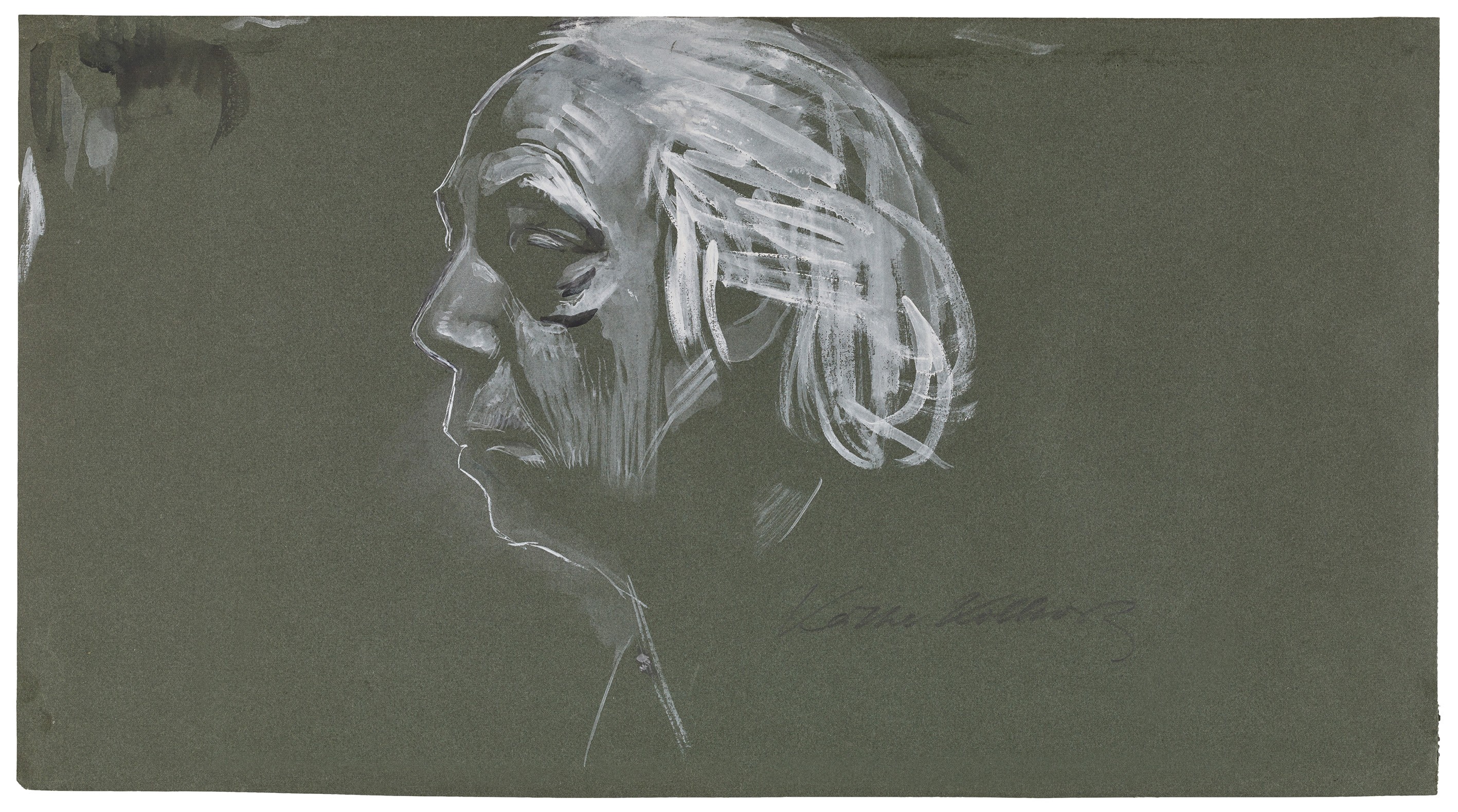
In the brush drawing, NT 1001, the artist started out by simulating the effect of a white-line woodcut using opaque white and a black wash on dark paper.