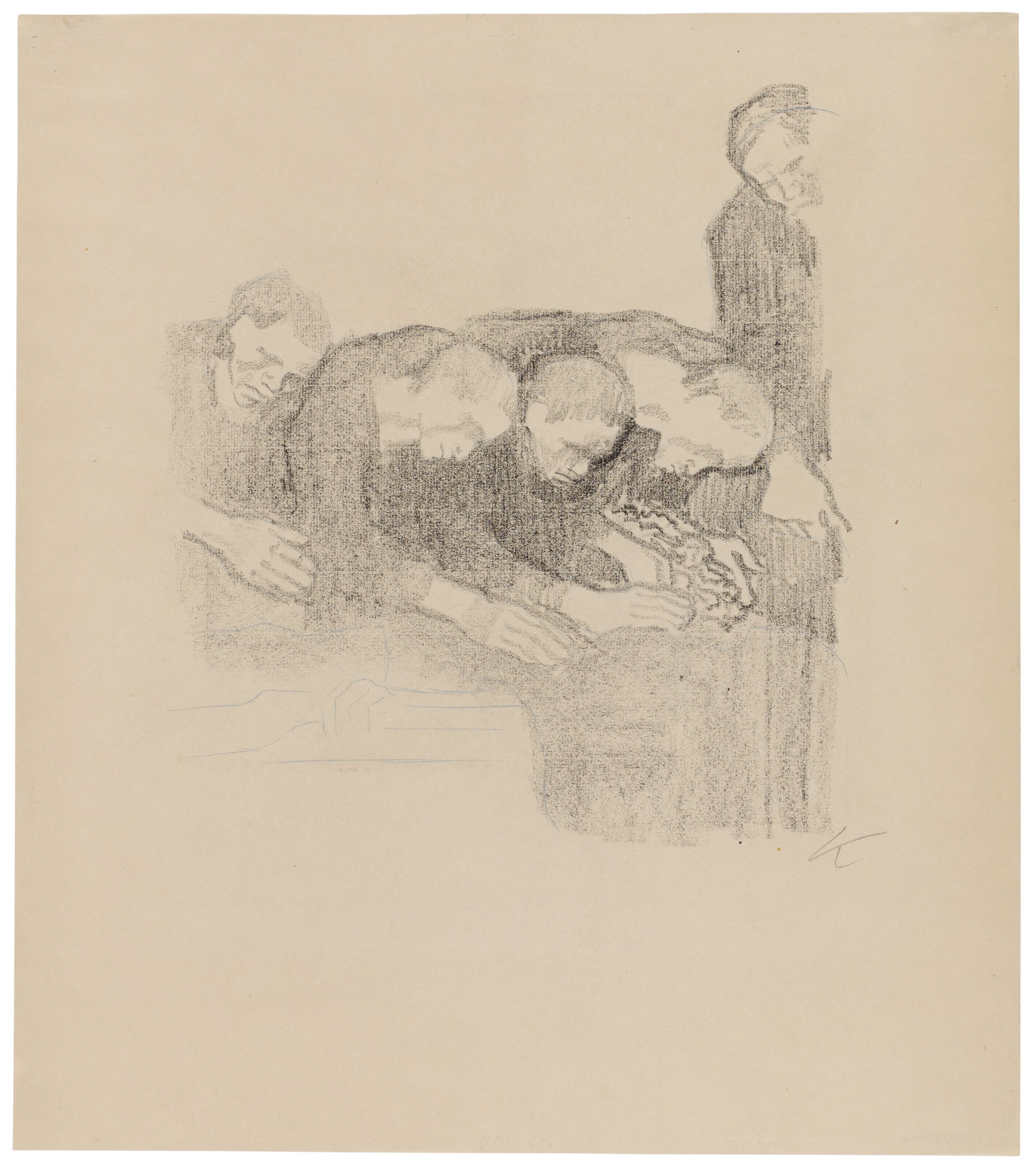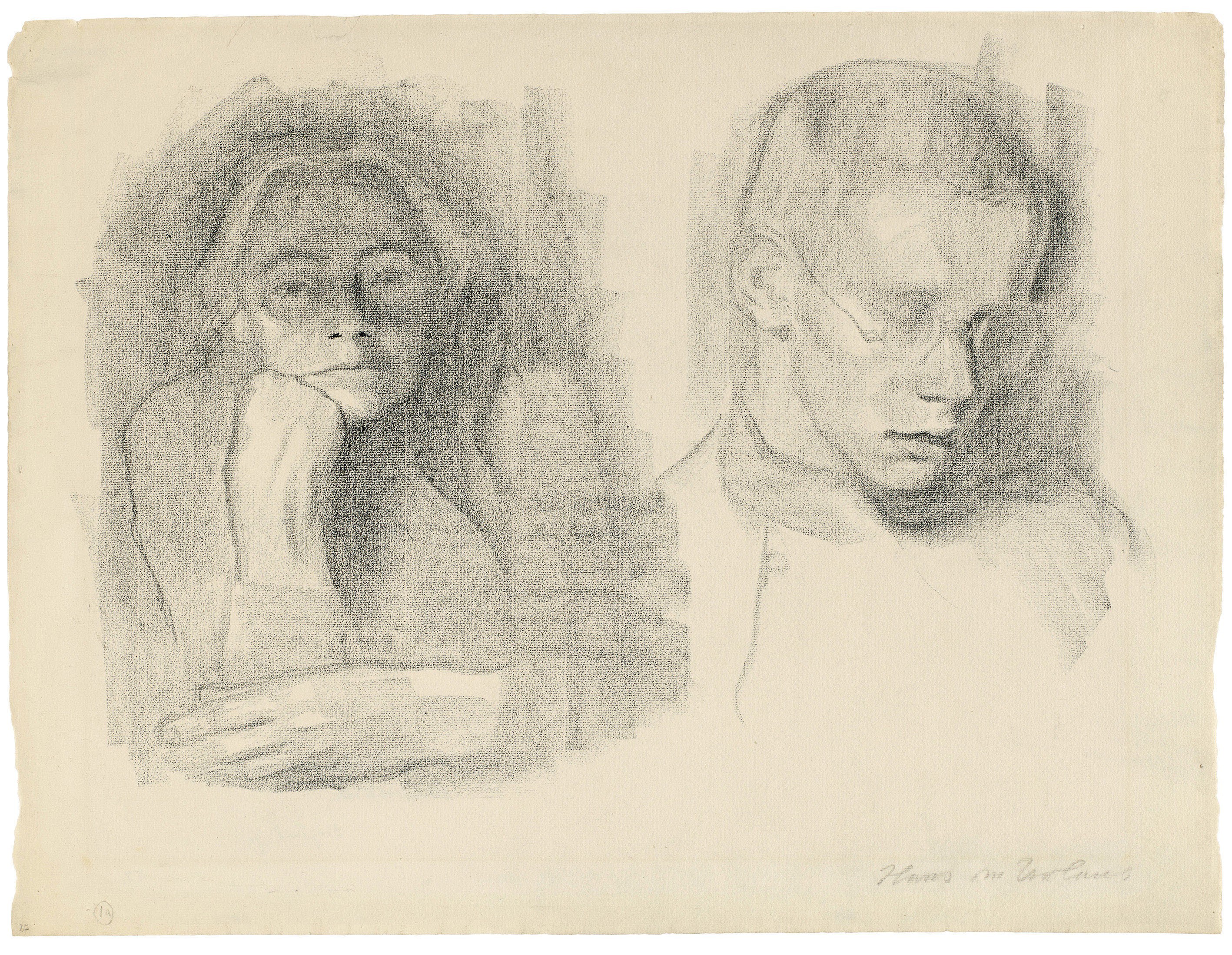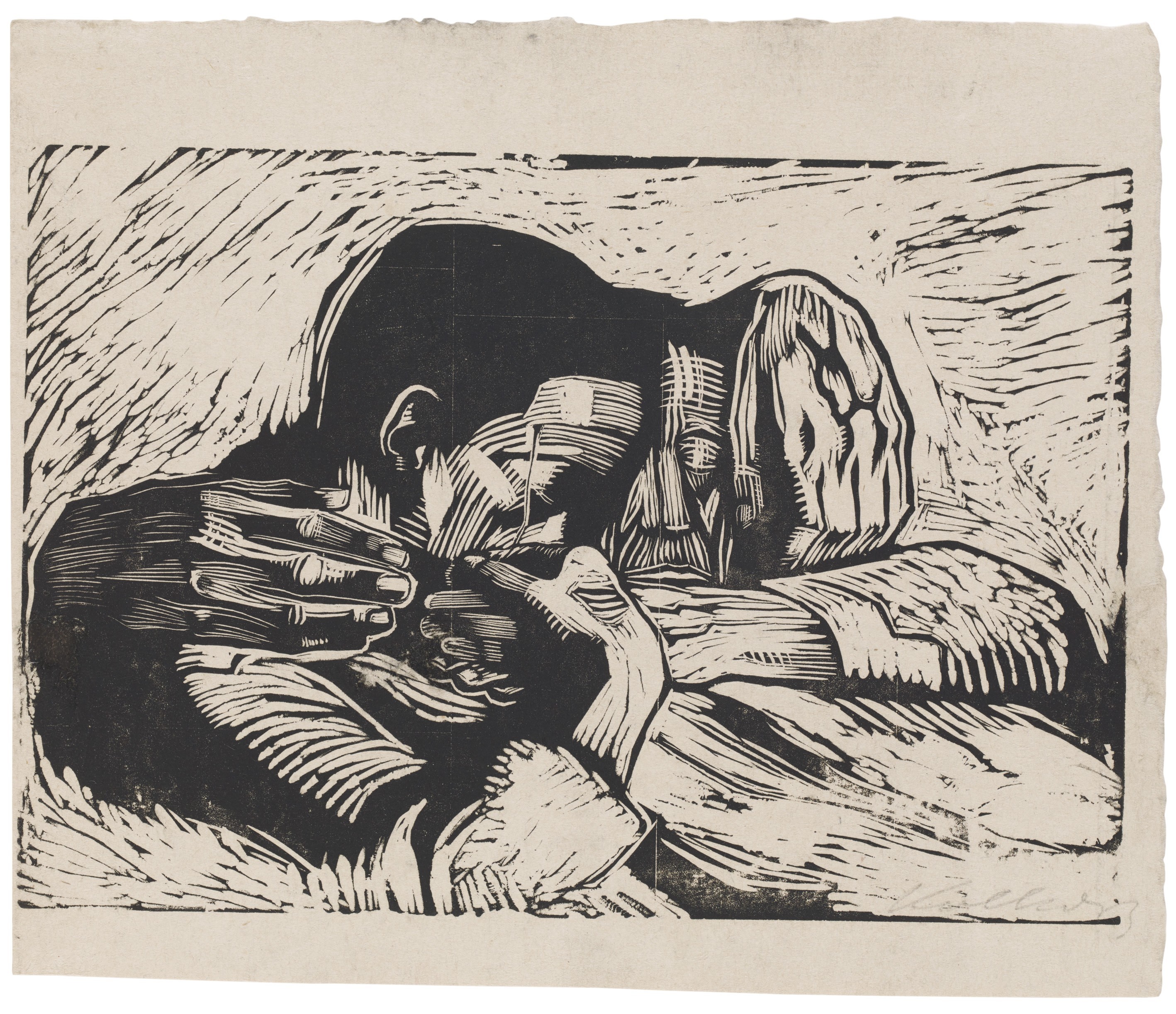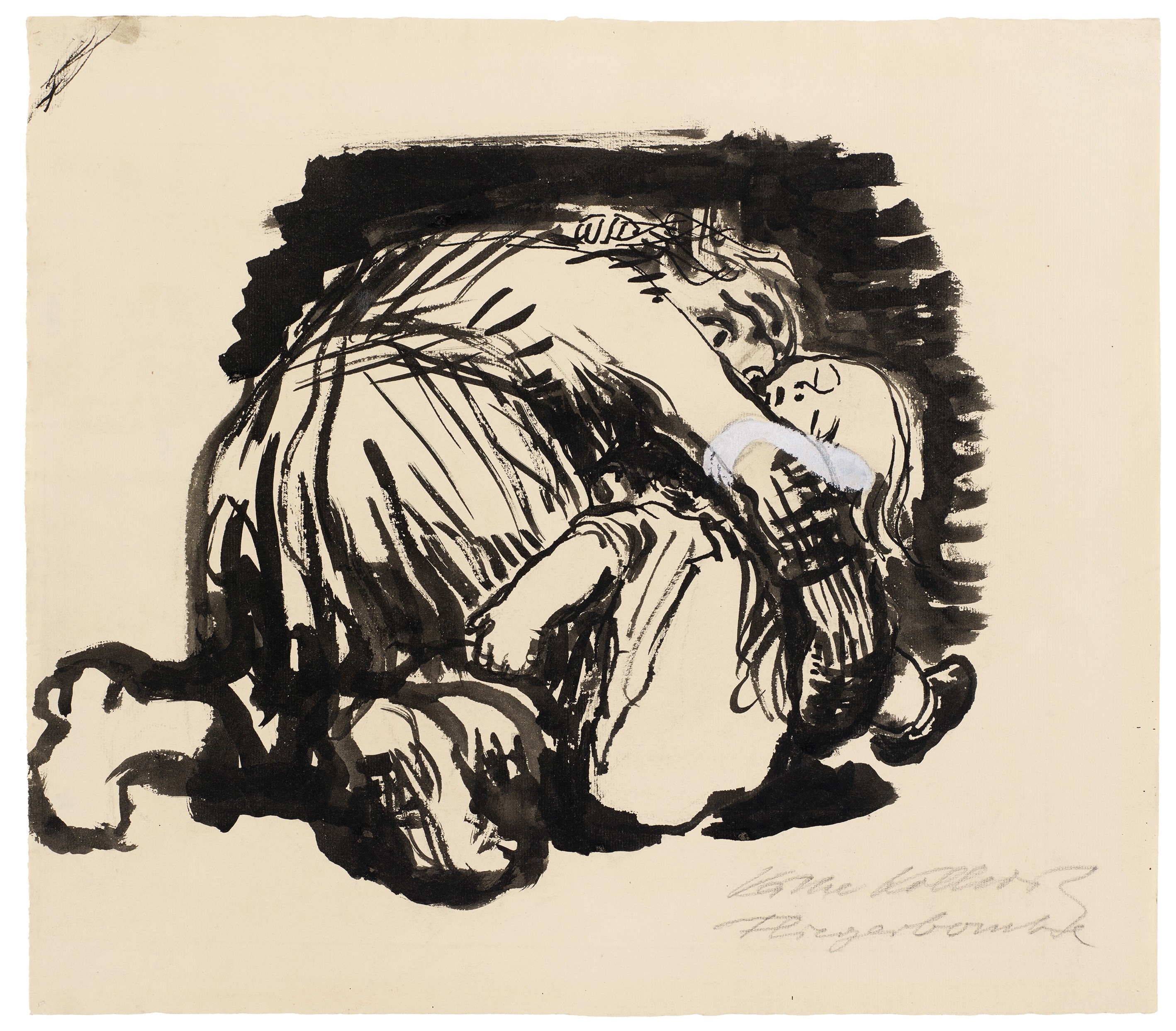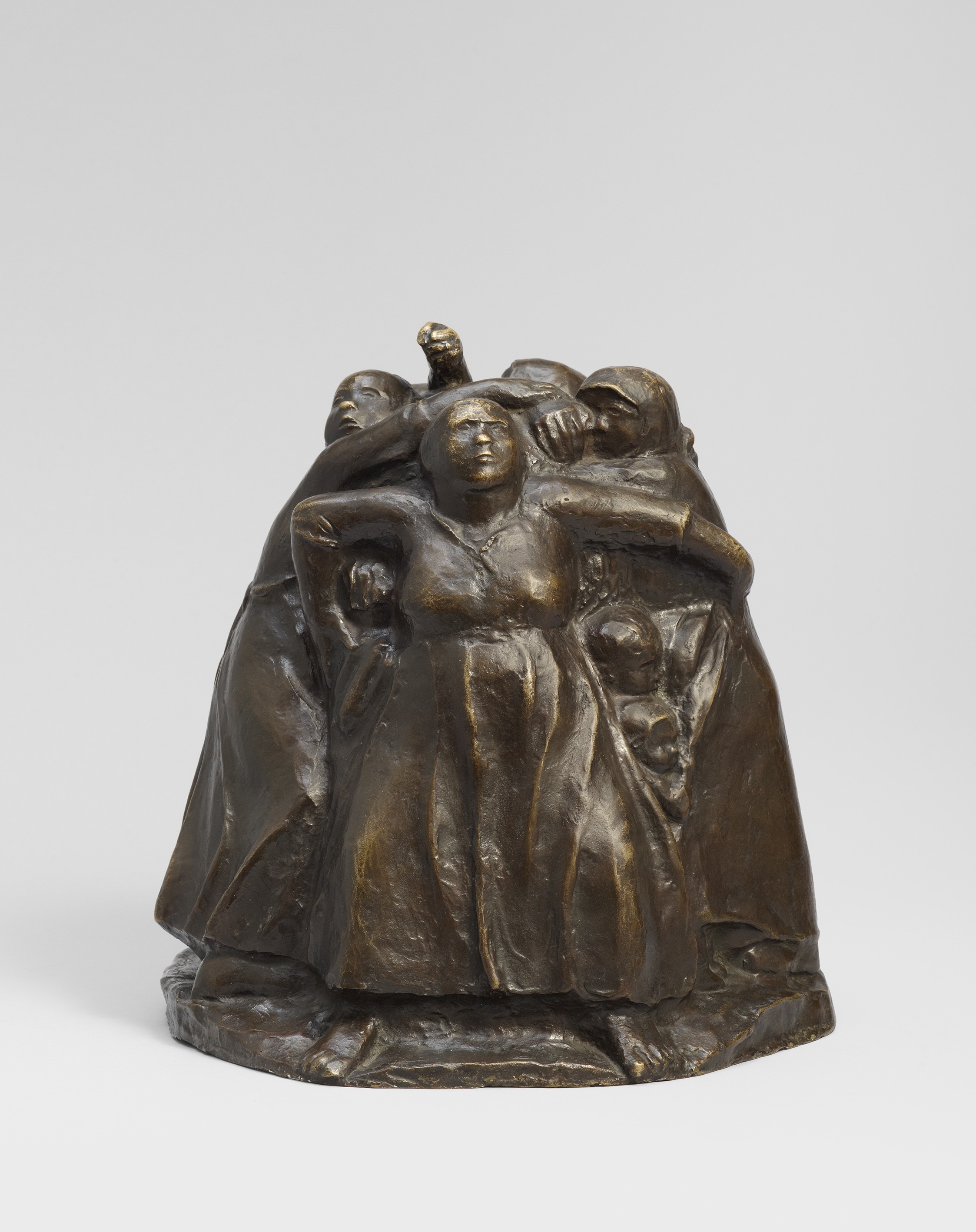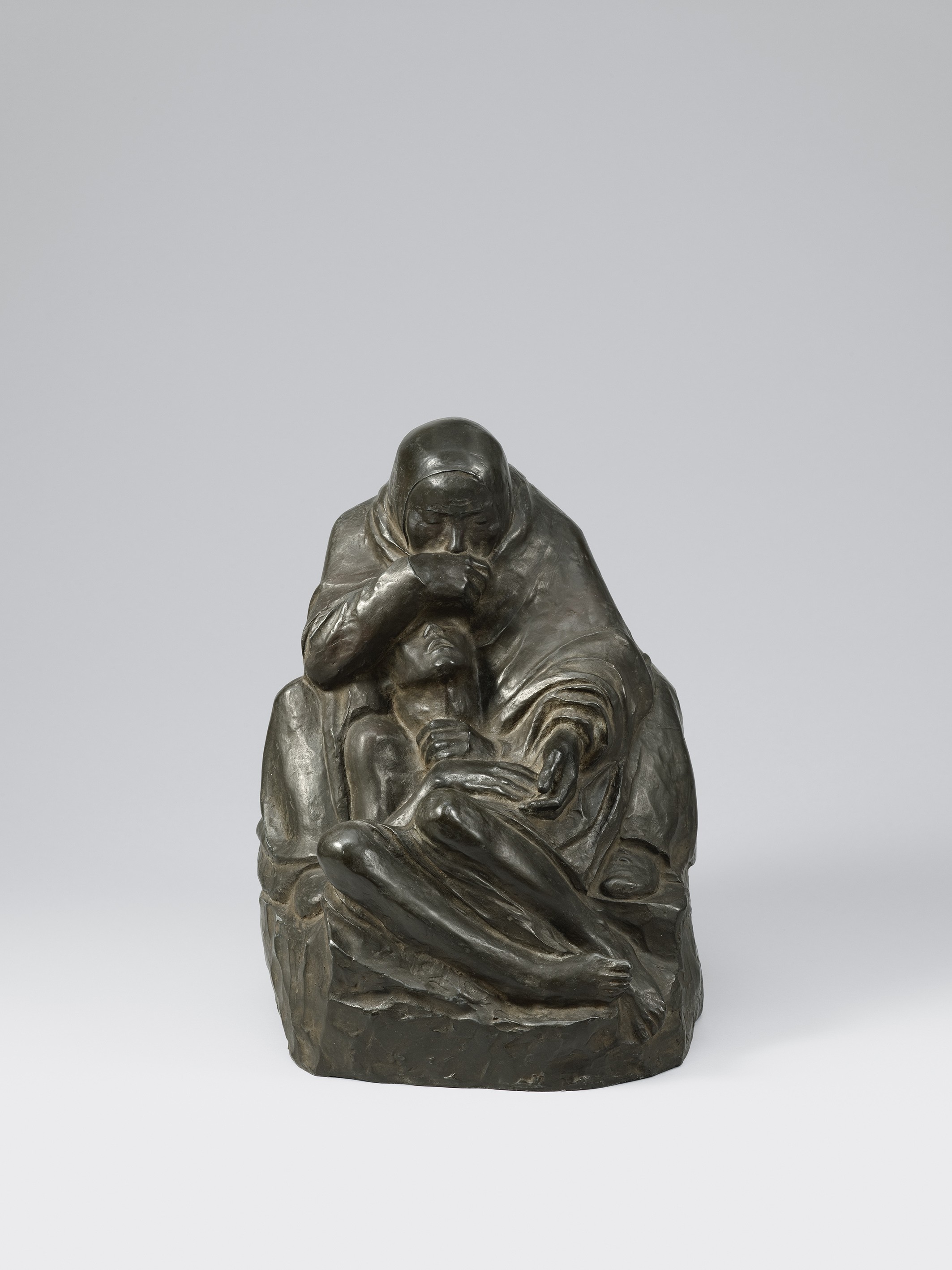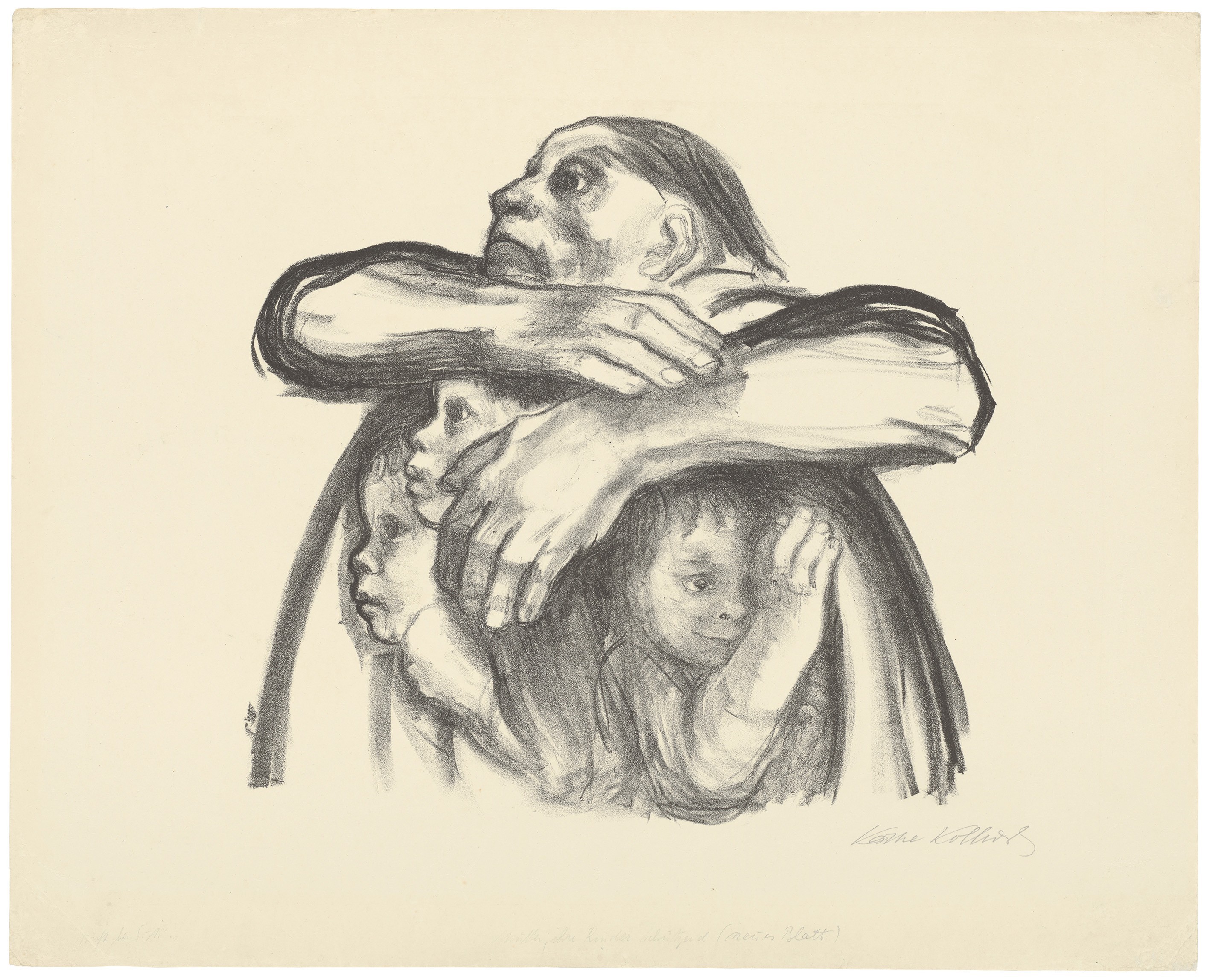
After her younger son Peter had fallen in 1914 as a volunteer in the First World War, Käthe Kollwitz underwent a painful change of heart and became a pacifist.
Peter, […] they all devoted their lives to the idea of patriotism. The young men in England, Russia and France did the same. The result was […] an impoverished Europe robbed it of its most beautiful people. Was the youth in all these countries deceived?« 1917
In 1918 the artist challenged Richard Dehmel’s appeal for a final push to win the war in an open letter that was published in Vorwärts (28 Oct) and two days later in Vossische Zeitung (30 Oct):
Enough people have died! No more people must fall! I invoke a greater poet than Richard Dehmel [Goethe] who said: ›Seed for sowing should not be milled‹.«
Alongside her woodcut series »War«, the artist already created anti-war prints and drawings during the First World War. After Hitler had come to power and a new world war was looming, she returned to this field of topics above all with sculptural works. As Käthe Kollwitz’ works were unofficially banned from being exhibited in public from 1935 onwards, these works failed to reach a larger public.
As a result of the outbreak of war, she again used the quote »Seed for sowing should not be milled« in a lithograph. In her diary entries of 1941 she referred to this quote as her legacy.