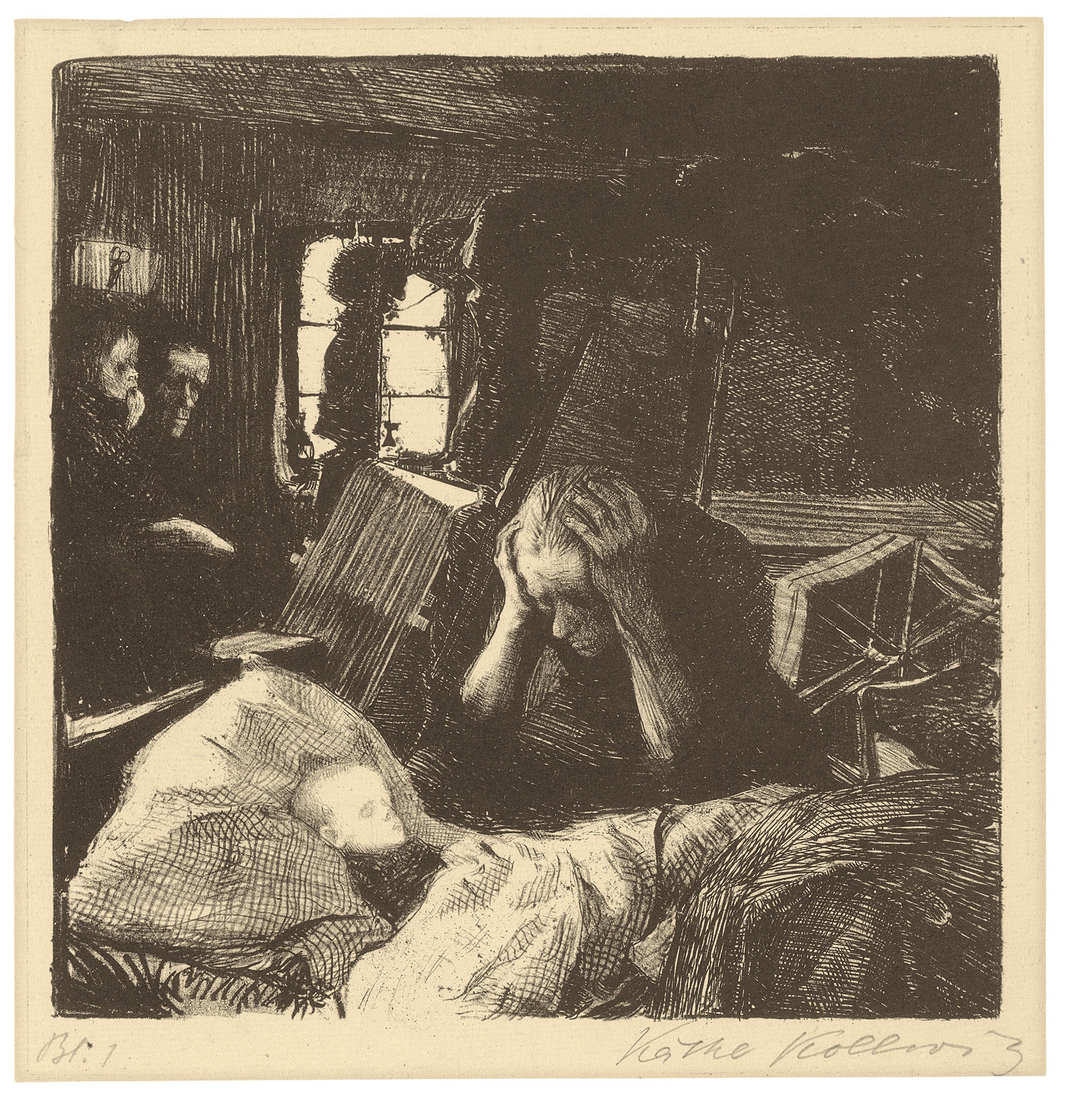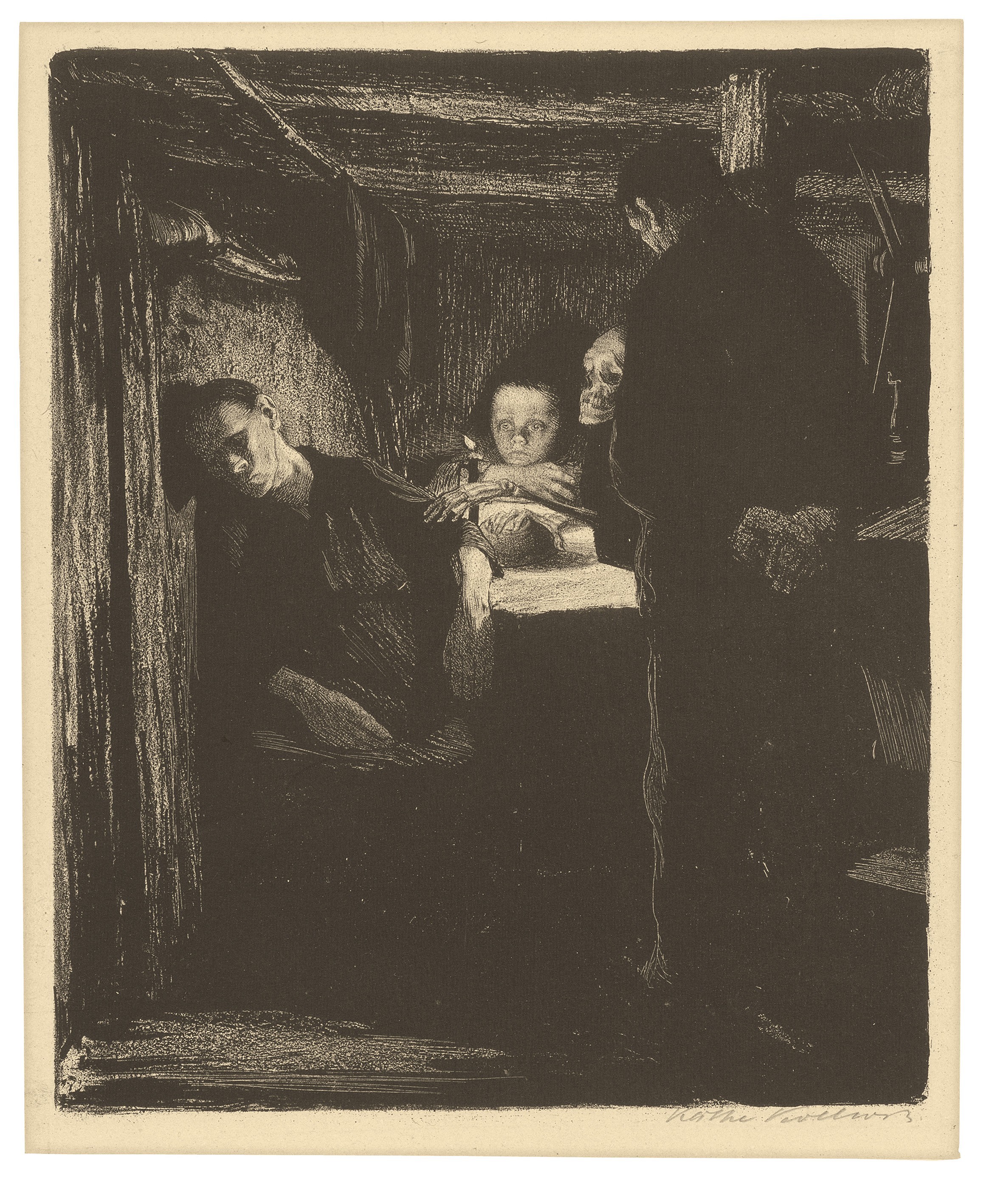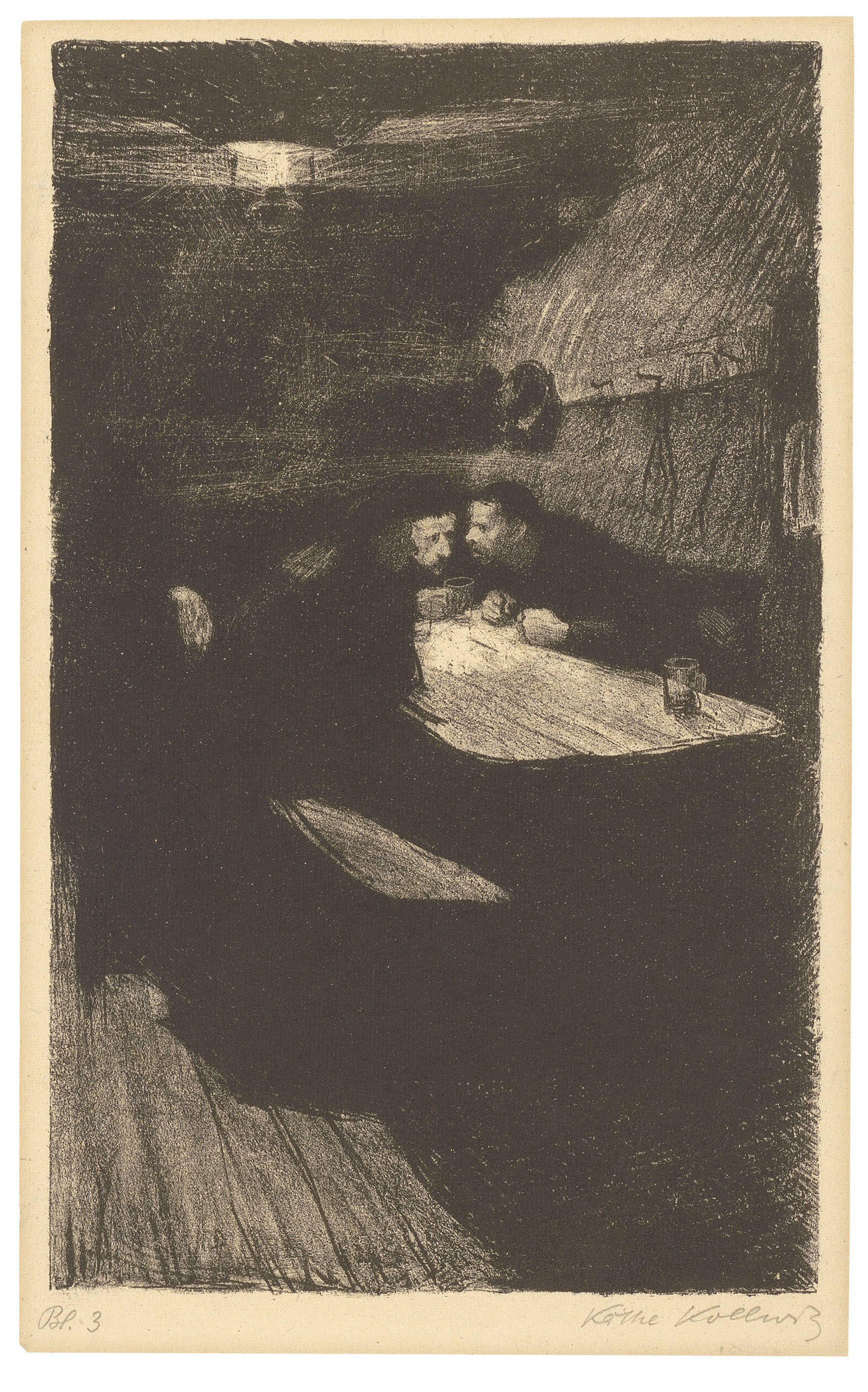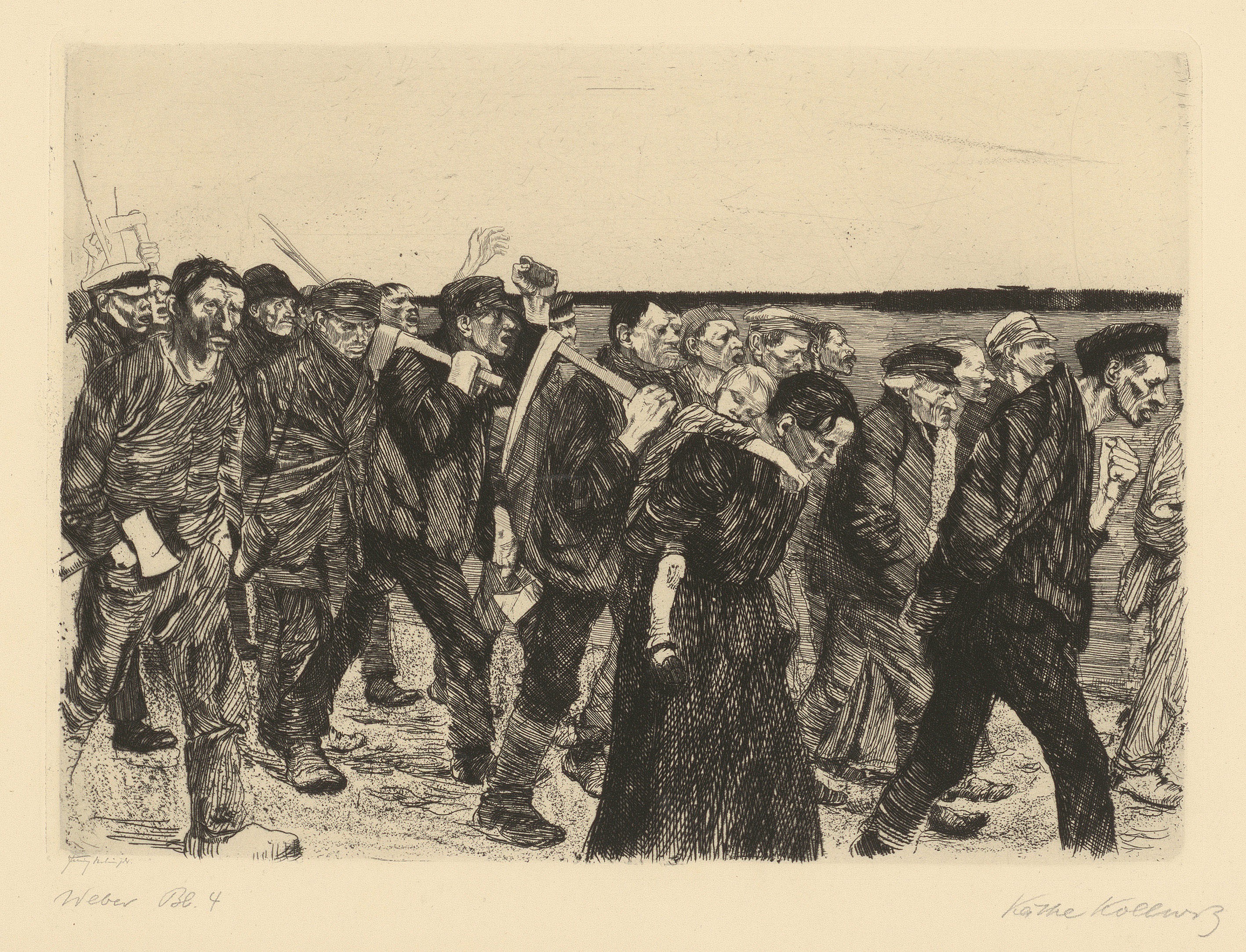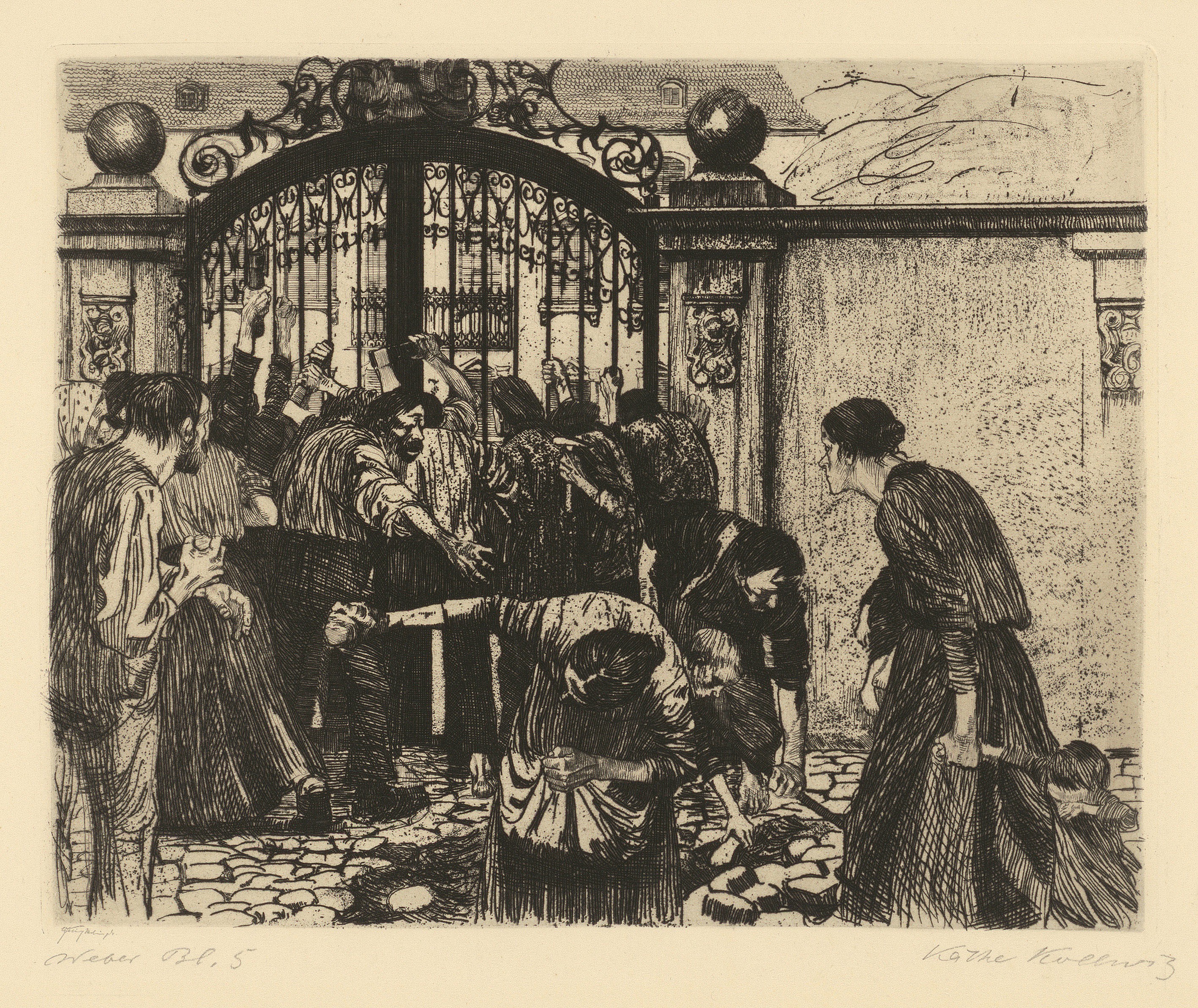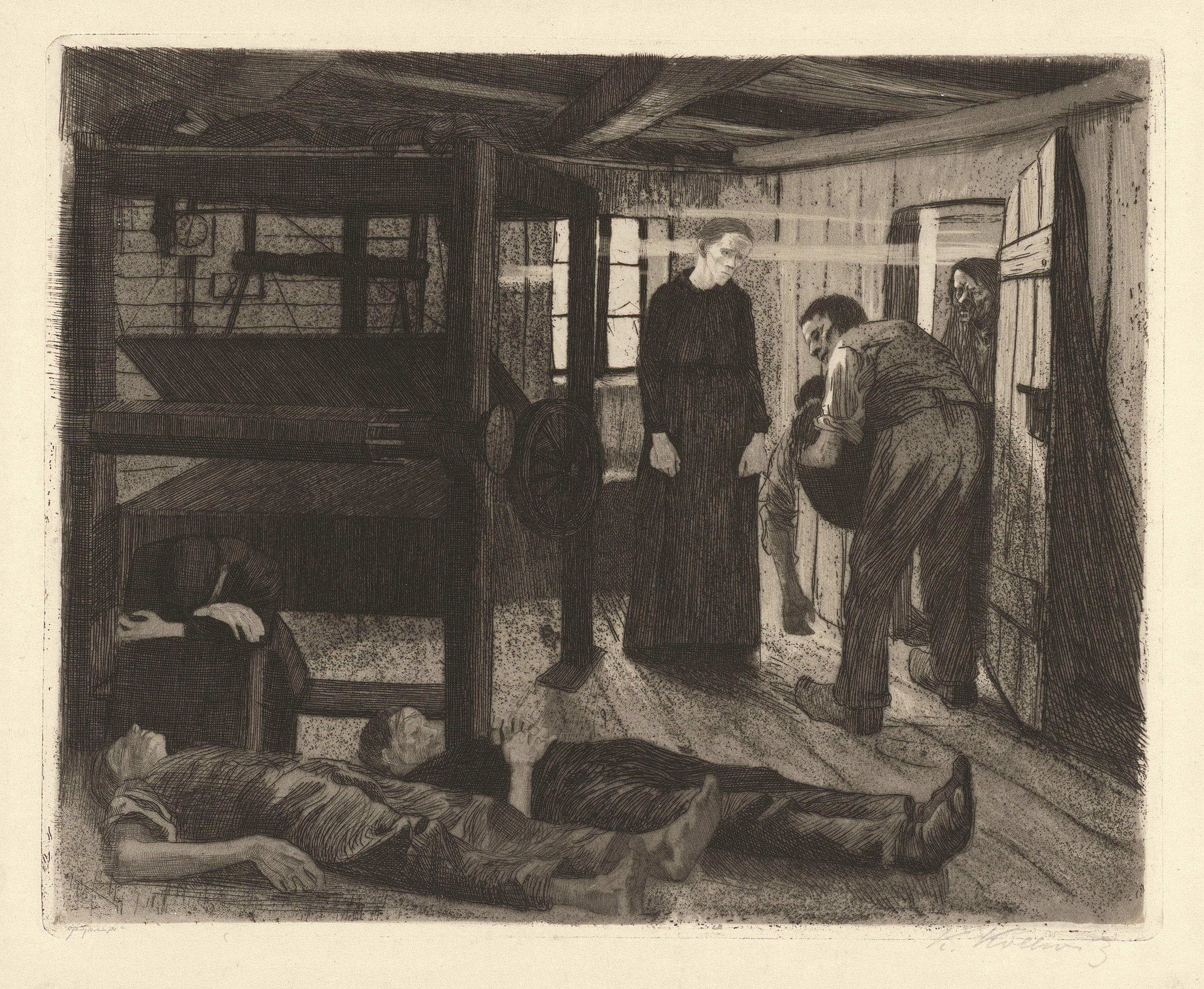

Profoundly impressed by the premiere of Hauptmann’s play »The Weavers« at the Freie Bühne theatre, Käthe Kollwitz started work on her cycle »A Weavers’ Revolt« in 1893 and abandoned her project to create a series on Zola’s novel »Germinal«, which she had already begun. The success of the premiere was spectacular and the audience was deeply moved. The reaction of the censors – the play was considered an incitement to class-hatred by the authorities – as well as a number of lawsuits on permission to stage the play, quickly made Hauptmann’s »Weavers« one of the best-known and most frequently discussed Naturalist plays in Germany.
Kollwitz’ cycle is, however, not an illustration of the play, and neither does it represent the historical revolt of weavers in 1844 on which the play is based. Instead, it shows a fictitious revolt in a contemporary setting. By abstaining from depicting the weavers wearing 1840s Biedermeier attire and instead representing them in workers’ clothes which only became popular during the industrialisation of Prussia after 1850, the artist made it clear that she was concerned with current problems.
A famine among Silesian weavers in 1891/1892 led to a massive press campaign in the entire Reich and in the early 1890s the issue was a general public discussion point. Seen against this background, it is understandable that Käthe Kollwitz’ »Weavers« cycle was regarded by the authorities as just as subversive as Hauptmann’s play and that Kaiser Wilhelm II refused to award a medal for the cycle at the Great Berlin Art Exhibition in 1898. The Kaiser did not succeed, however, in thwarting the artistic breakthrough that Käthe Kollwitz immediately enjoyed after publishing the cycle.
The artist’s original plan was to conceive the entire cycle as a series of etchings. As a result of technical uncertainties she eventually created the first three sheets as lithographs and only executed the last three folios as etchings. The two introductory sheets depict the general situation that led to the revolt. The third sheet deals with the weavers planning the uprising. The subsequent folios show the outbreak, climax and breakdown of the revolt.
According to the artist’s self-assessment of 1941, the »Weavers’ Revolt« was her most popular work during her lifetime.