Such angels please me. And although one has never seen either an angel or a man fly, the act of flying is nonetheless gloriously depicted.«
Within walking distance of the Kollwitz Museum Köln is the Gothic Antoniterkirche in Cologne’s Schildergasse. Although there is no work by Käthe Kollwitz there, we encounter the artist here in a special way: The »Floating Angel« created in 1927 by Ernst Barlach (1870–1938) unmistakably bears Kollwitz’s facial features.
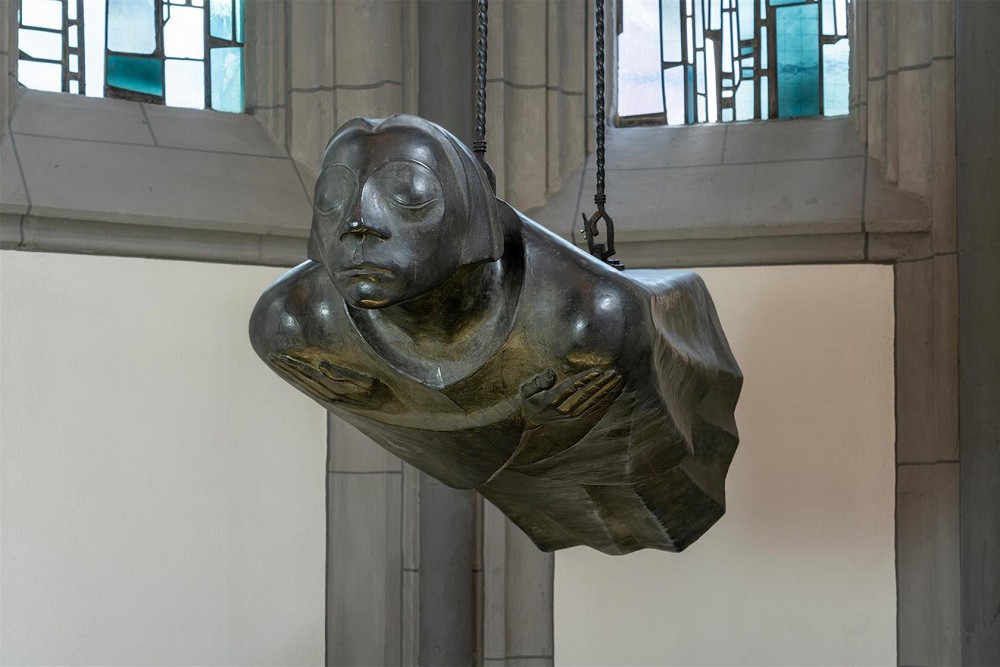
The larger-than-life bronze figure floats in a horizontal position above head height in the side aisle of the church. The back is straight, the arms are crossed in front of the chest. The peaceful, floating posture and the facial features with tightly closed eyes and mouth radiate an impressive sense of calm. Despite this inward-looking attitude, the figure has an enormous presence.
In creating the angel, the face of Käthe Kollwitz found its way into the work without my intention.
If I had wanted to do something like that, it probably would have turned out badly.«
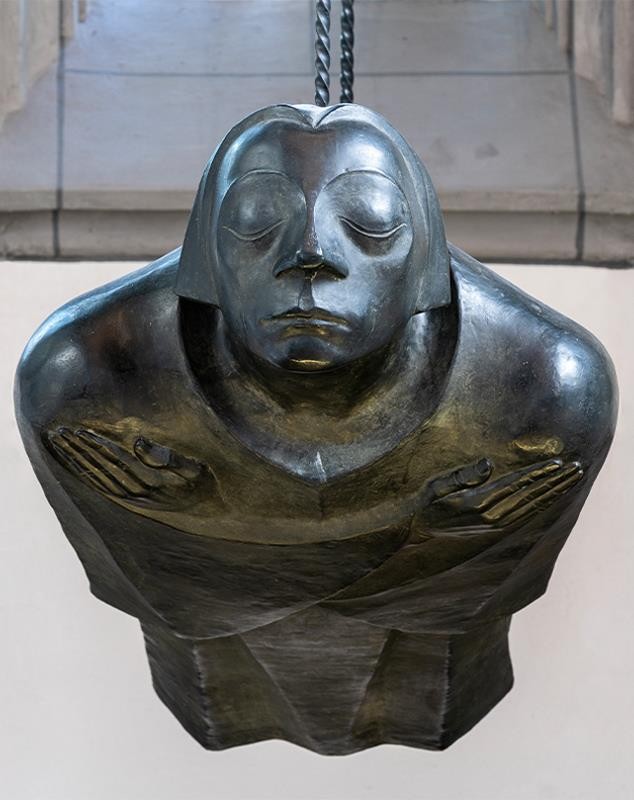
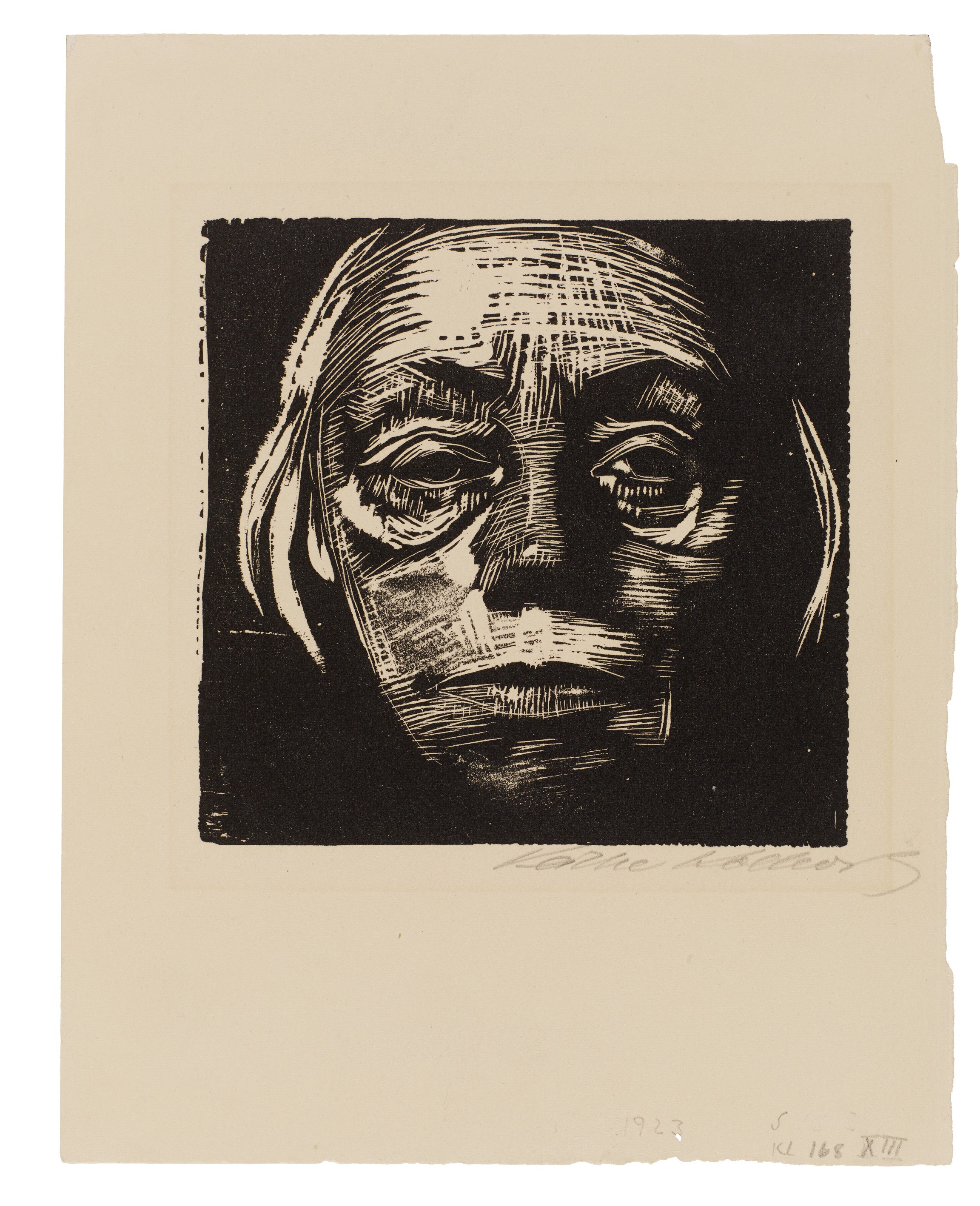
Barlach’s »Floating Angel« was originally created for the 700th anniversary of Güstrow Cathedral and as a memorial for the fallen of the First World War. On 23 August 1937, the original was removed from Güstrow Cathedral as ›degenerate art‹. It was defamed as »an insult to every soldier«. The casting was taken to Schwerin and melted down in 1941 as part of the so-called ›metal donation by the German people‹.
In 1939, Bernhard A. Böhmer, a friend of Ernst Barlach, commissioned the Hermann Noack Fine Art Foundry in Berlin to make a bronze re-casting based on the plaster model that still existed at that time but was later also destroyed. This second casting was hidden in the Lüneburg Heath during the war years and thus survived the Nazi art policy unscathed.
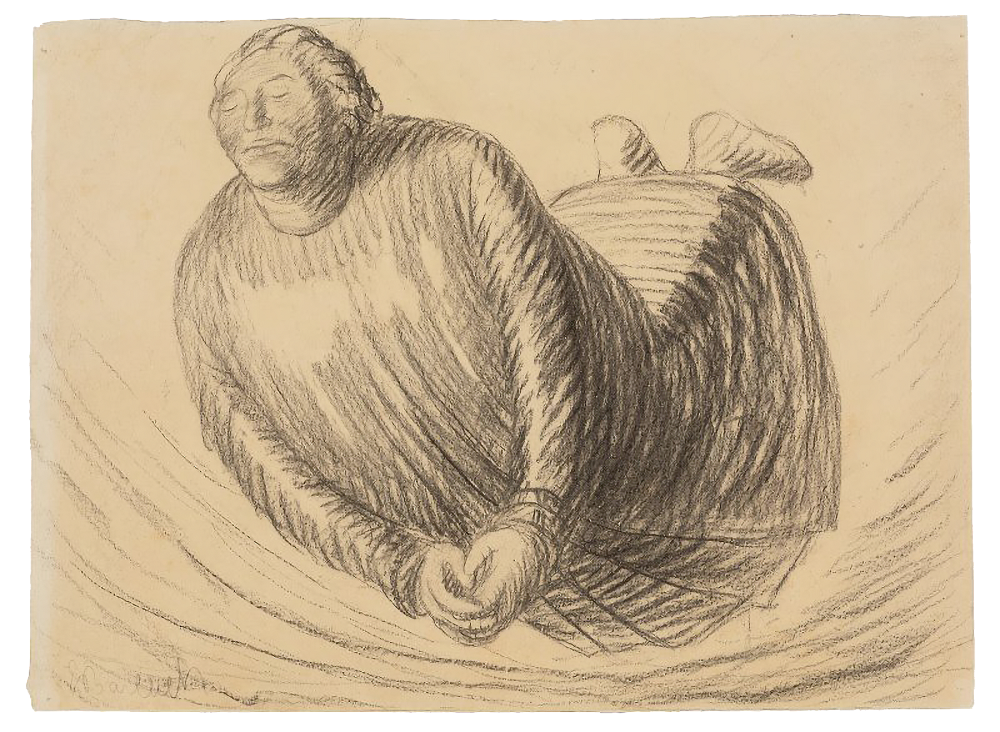
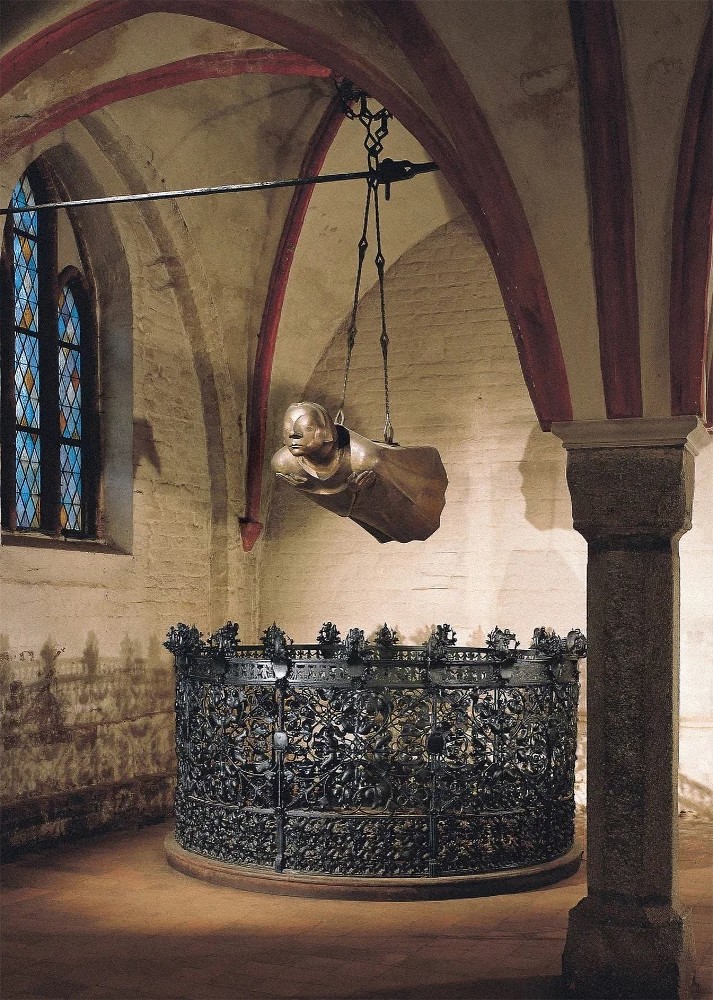
After the war, the Barlach Committee, which administers the artist’s estate, approached the City of Cologne and offered the Wallraf-Richartz Museum this cast for sale. Thanks in particular to the commitment of Leopold Reidemeister, then director of the Wallraf-Richartz Museum, and the initiative of several friends of Barlach, the sculpture was successfully mediated to the Antoniterkirche. Thanks to an extensive fundraising campaign, the angel was acquired in 1952 for the church, which had been destroyed in an air raid in 1942 and was in the process of being rebuilt. As a memorial, it still reminds us of the fallen of both world wars.
A cast of the Cologne copy was later made for Güstrow Cathedral. Since 8 March 1953, the »Floating Angel« has been hanging there again in its former place.
To this day, Ernst Barlach and Käthe Kollwitz are often mentioned in the same breath. Their mutual respect and artistic inspiration are manifest. Käthe Kollwitz in particular repeatedly emphasised the strong influence of Barlach’s artistic work, especially his sculptures. They felt close to each other throughout their lives. In 1919, Kollwitz and Barlach were both appointed to the Prussian Academy of Arts, which meant that they often met in person at the academy sessions. Under the Nazi dictatorship, the same fate befell them, albeit at a different time: Both were forced to leave the Academy.
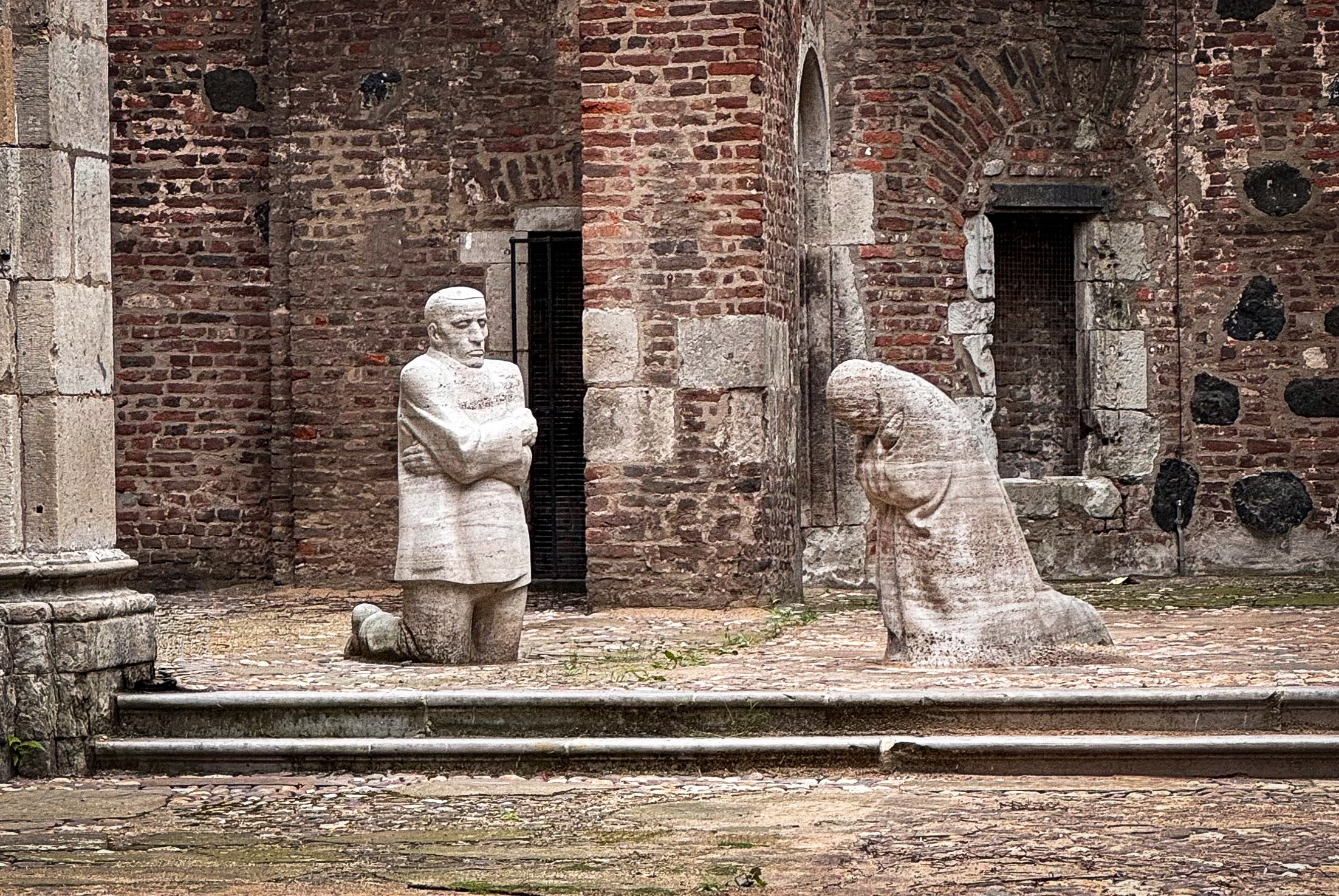
Kollwitz travelled to Güstrow for Barlach’s funeral in October 1938. In the month following the funeral service, she noted in her diary: »I sometimes feel that Barlach has given me his blessing. I am able to work well.« (Käthe Kollwitz, Diaries, November 1938). Her relief »The Lament« was created under this impression and against the background of her sculptor colleague’s position under the Nazi regime, which ostracised Barlach’s work as so-called ›degenerate art‹.
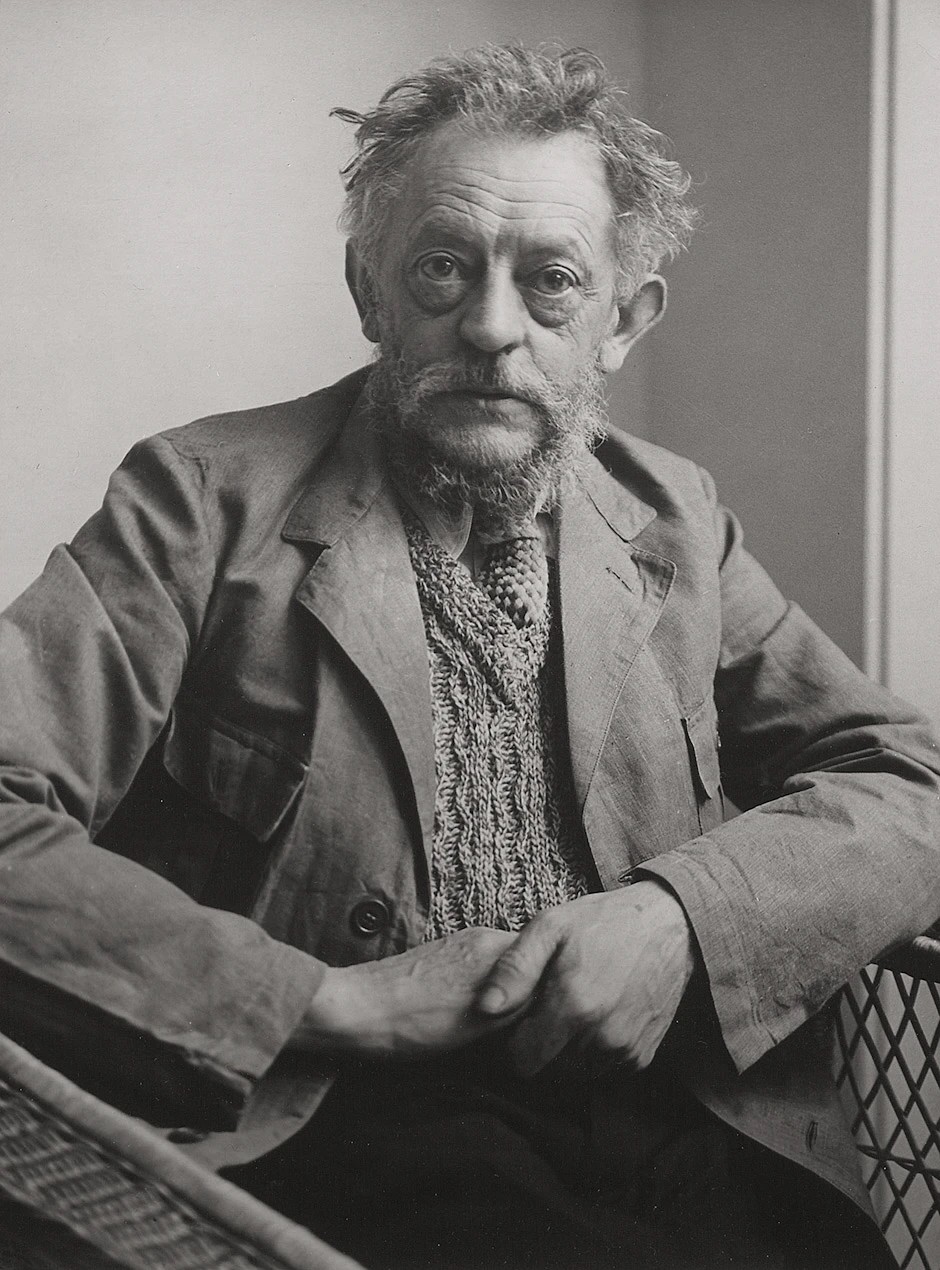
When I ask myself what causes the strong impression that Barlach’s works have always had on me, I think it is – as he himself once put it – that ›the outside is like the inside‹. His work is on the outside as well as on the inside. Form and content match perfectly.
This is the most convincing aspect of his work.«
The late Gothic Antoniterkirche on the much-frequented shopping street Schildergasse, founded in 1384 by the Antonine Order, was reopened after secularisation in 1794 as Cologne’s first Protestant parish church in 1805. The early sixteenth century choir window with a depiction of the crucifixion, the cast of the »Floating Angel«, and the sculptures »The Teaching Christ« and »Crucifix II« by Ernst Barlach are among the highlights of the church furnishings.
Adress:
AntoniterCityKirche
Schildergasse 57
50667 Köln
with Antje Löhr-Sieberg,
Film from Domradio Köln and AntoniterCityTours, 2008
(only in German)
Watch on YouTube