Where else in our time is human suffering expressed in such simple grandeur?«
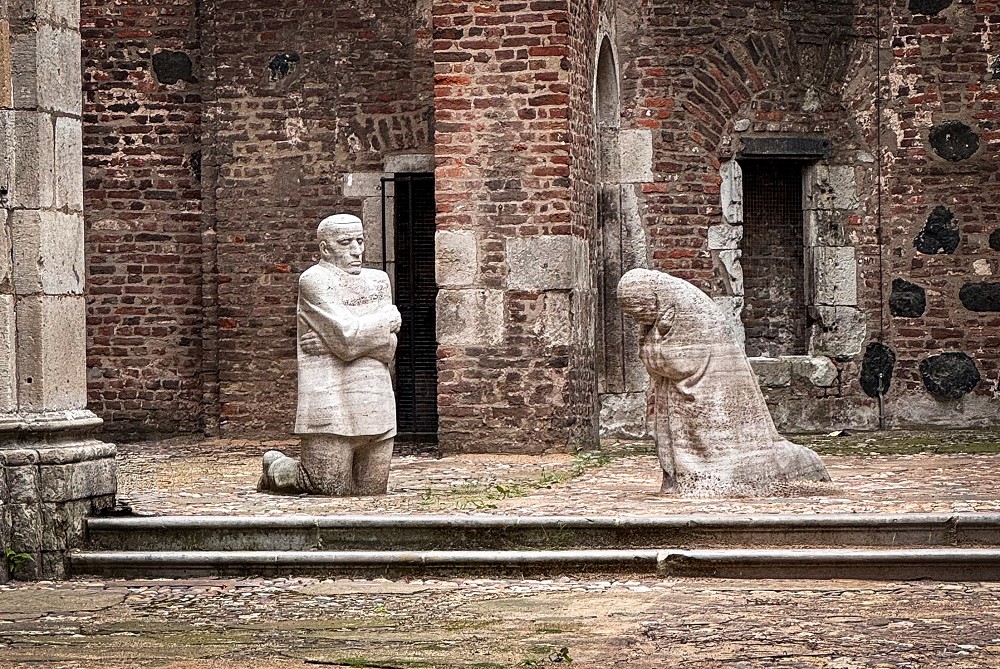
In the church ruins of Alt St. Alban, the first memorial of the Federal Republic of Germany for the fallen of both world wars, there is a replica of the »Grieving Parents« by Käthe Kollwitz. In the context in which it was created, the pair of sculptures is probably one of the artist’s most personal works – in its universally valid statement and effect, however, it also stands for a collective memory of war and tyranny.
I have tried to put into them everything that has moved all of us
who have bled under the war since it began.«
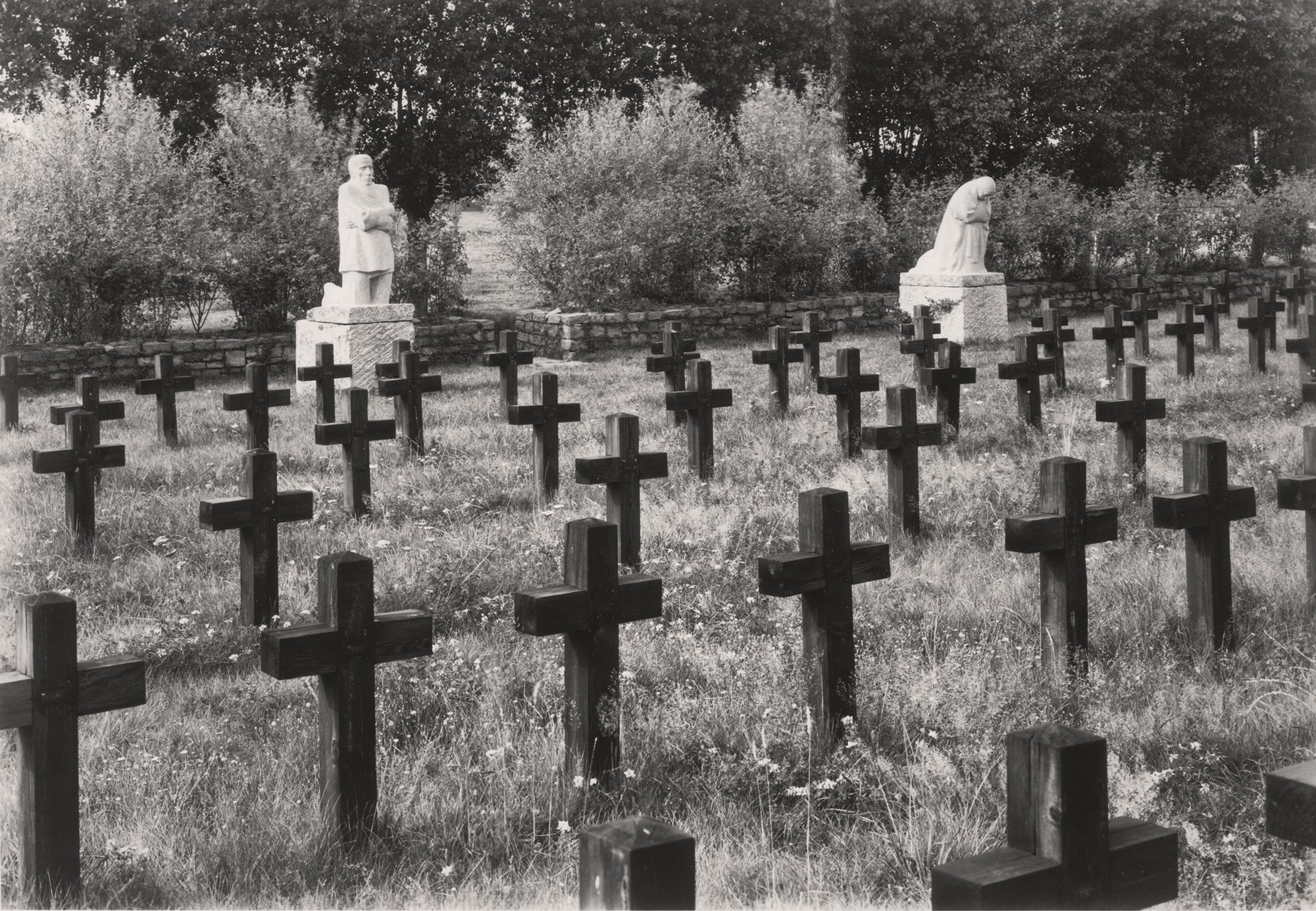
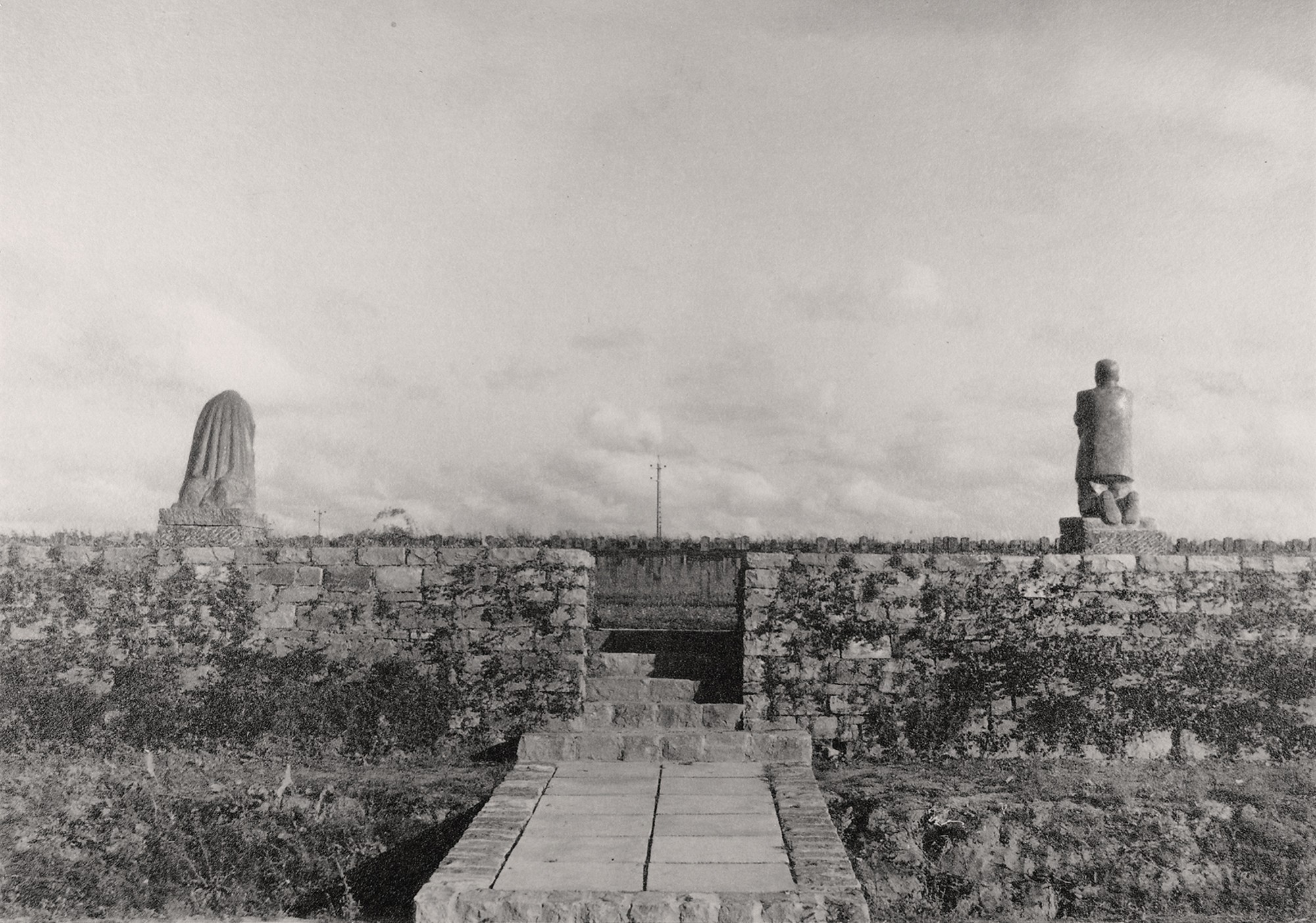
The original sculptures were created by Kollwitz for the Roggeveld military cemetery in Flanders, Belgium. There, her eighteen-year-old son Peter, who fell on 22 October 1914, in the first days of the First World War, was buried in a soldier’s grave. Today, the »Grieving Parents« are located at the military cemetery in Vladslo, where those buried in Roggeveld were reburied in 1956 as part of the consolidation of graves.
Shortly after Peter’s death, Kollwitz felt the need to erect a monument to her fallen son. However, she discarded her original plan to create a laid-out soldier with his father and mother at his head and feet respectively and developed the final conception after eighteen years of dealing with the subject. Finally, only the block-like figures of the parents are depicted, bearing the facial features of the artist and her husband. They mourn – each for themselves – for the lost child. Kollwitz reduced the statement to the essentials: to the bereaved in their grief and to a void that cannot be filled, a void that all those who died in the war leave behind.
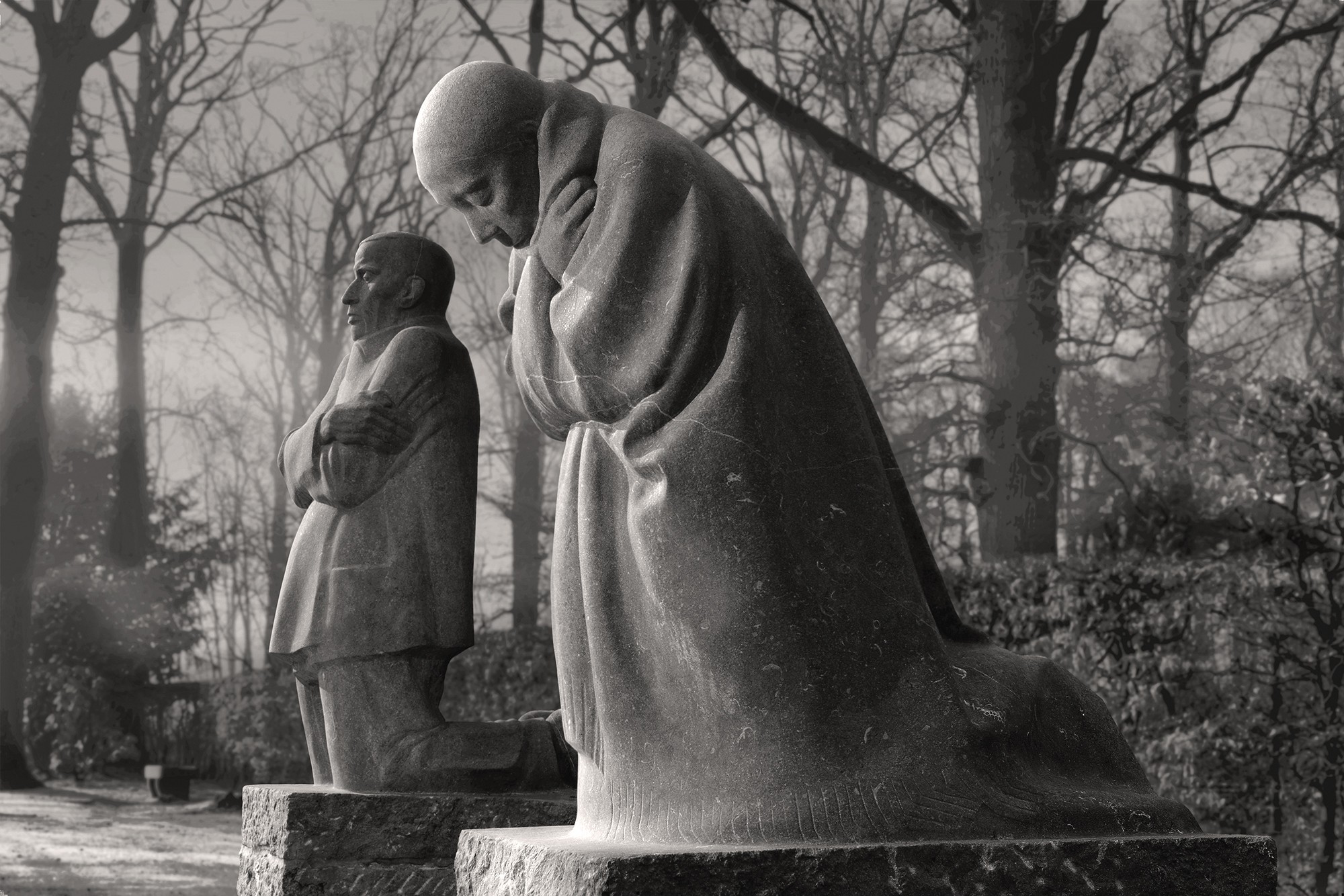
When the young Bonn Republic was considering a first nationwide memorial to the fallen of both world wars, it was decided to recreate the »Grieving Parents« – a project that goes back to the initiative of Hans Kollwitz, the artist’s elder son. In 1951, he approached German Federal President Theodor Heuss with a proposal to erect the pair of sculptures on German soil. Heuss, himself a great admirer of Käthe Kollwitz, took up the suggestion and supported its realisation.
The German War Graves Commission, which played a major role in financing the project, proposed Cologne as one of several alternative locations for the memorial – a large city near the seat of government, Bonn, and at the same time a metropolis that was heavily destroyed in the Second World War. After long discussions, it was agreed in October 1954 to install the figures in the ruins of the Church of St. Alban, which had been bombed out except for its tower. The oldest Romanesque church building in Cologne was not to be rebuilt but used instead as a memorial and place of remembrance.
In 1953, the workshop of Ewald Mataré was entrusted with the task of making replicas based on newly made plaster casts of the original stone figures in Belgium. Mataré did not carry out the commission himself, however, but rather passed it on to his two master students Erwin Heerich (1922–2004) and Joseph Beuys (1921–1986). Heerich took on the design of the mother and Beuys that of the father. Both figures are executed in shell limestone and enlarged by ten percent compared to the originals.
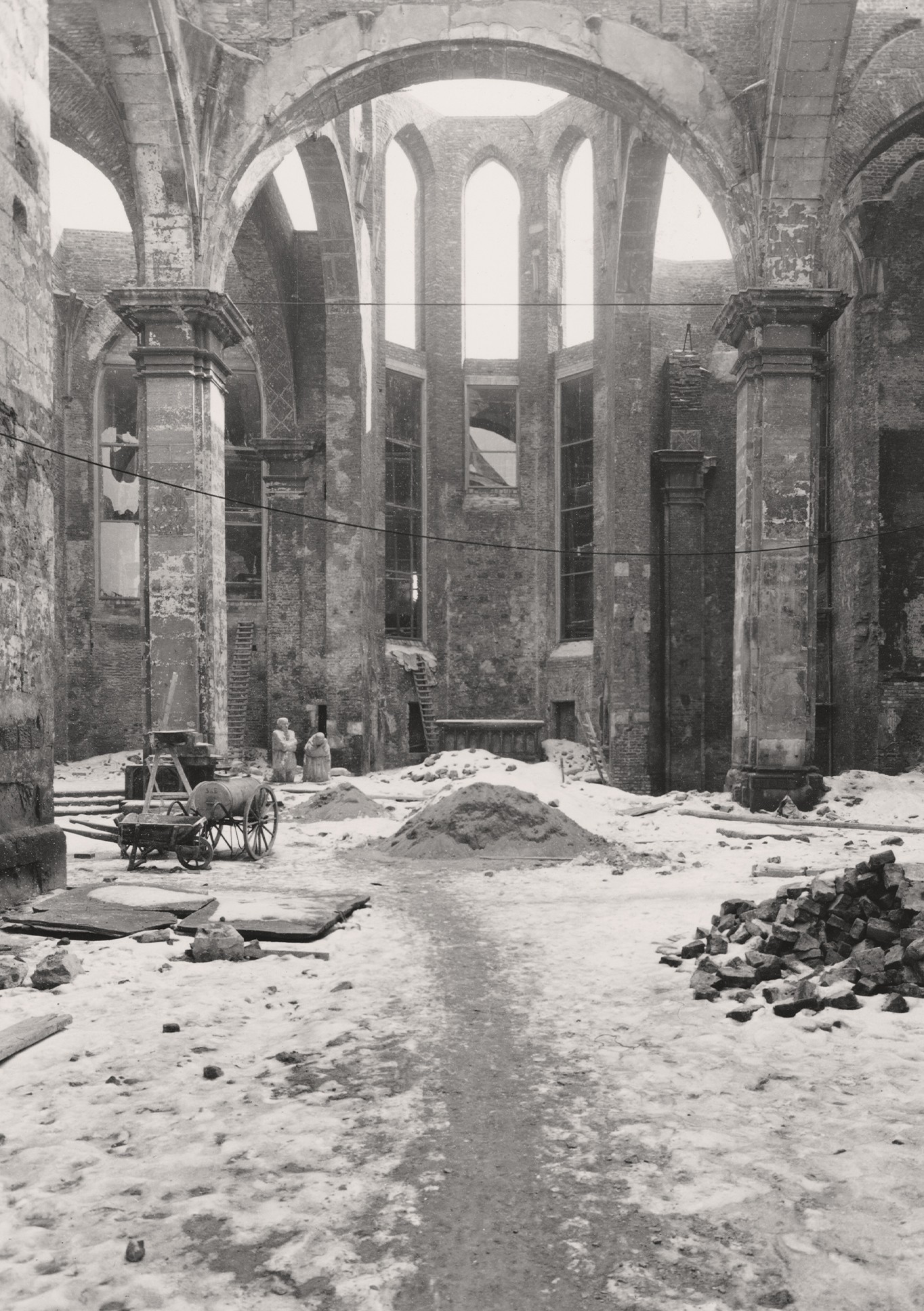
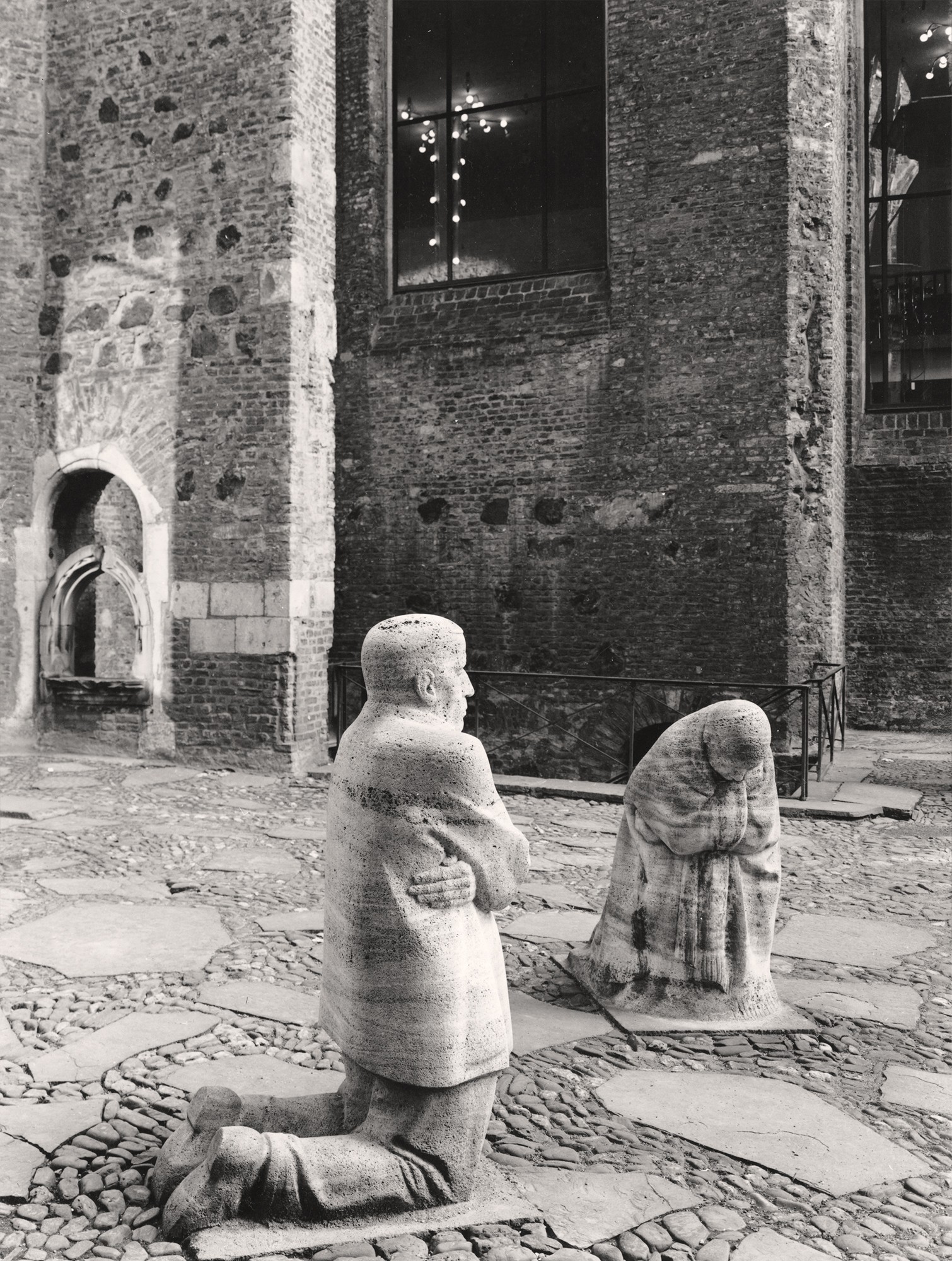
In March 1959, the pair of stone parents was finally installed on the newly designed floor of the crossing of the nave and the transept of Alt St. Alban.
Unlike in Belgium, however, the father and mother do not stand side by side here but rather face each other sideways. The integration of the block-like sculptures into the empty space of the church ruins and the long distance to the viewers behind the closed portal grille intensify their expression of silent mourning.
Where else in our time is human suffering expressed in such simple grandeur? But if the old town of Cologne offers such a work a home, then it must be remembered that the creator had her home on the banks of the Pregolya. Mourning for the fate of the fatherland thus remains forever linked to mourning for human fate.«
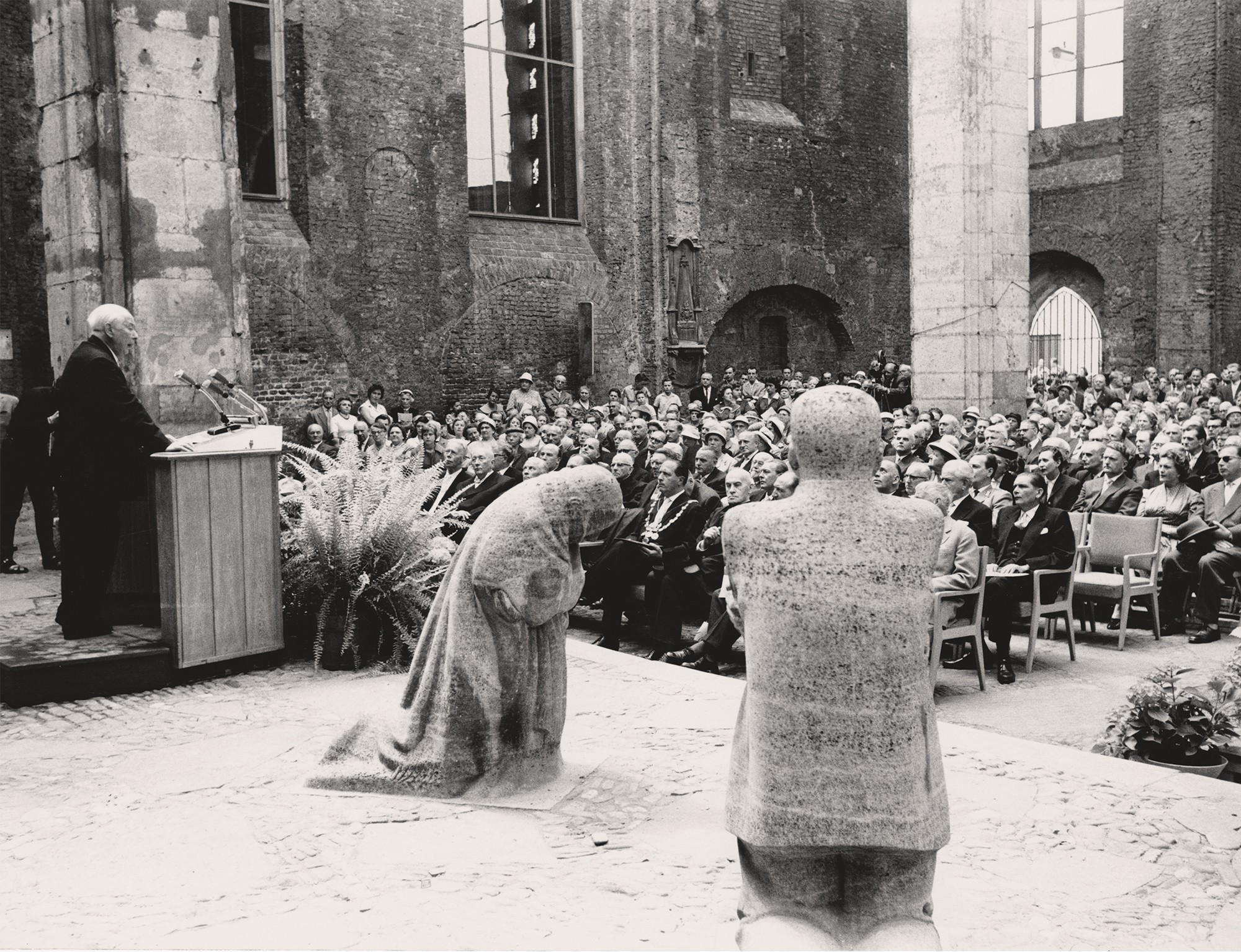
On 21 May 1959, the memorial was inaugurated with great public participation. In addition to German Federal President Theodor Heuss, Cologne’s Lord Mayor Theo Burauen, Hans Kollwitz, Ewald Mataré, and numerous representatives from politics, culture, and the Church were present.
Since then, the »Grieving Parents« have commemorated the fallen of both world wars in an impressive interplay with the bombed-out medieval architecture.
The former parish church of St. Alban was first mentioned in a document in 1172 and is thus one of the oldest Romanesque church buildings in Cologne. After its destruction in the Second World War, the decision was made not to rebuild the church, and it was decided to preserve it as a ruin and to erect the memorial. Since 1959, the area has also been linked to the former Gürzenich festival hall and storehouse, which the city built in 1441–47 on the property of the patrician Gürzenich family.
Adress:
Alt St. Alban
Quatermarkt 4
50667 Köln
The memorial is not accessible.
However, the »Grieving Parents« can be easily seen through the lattice gates.