
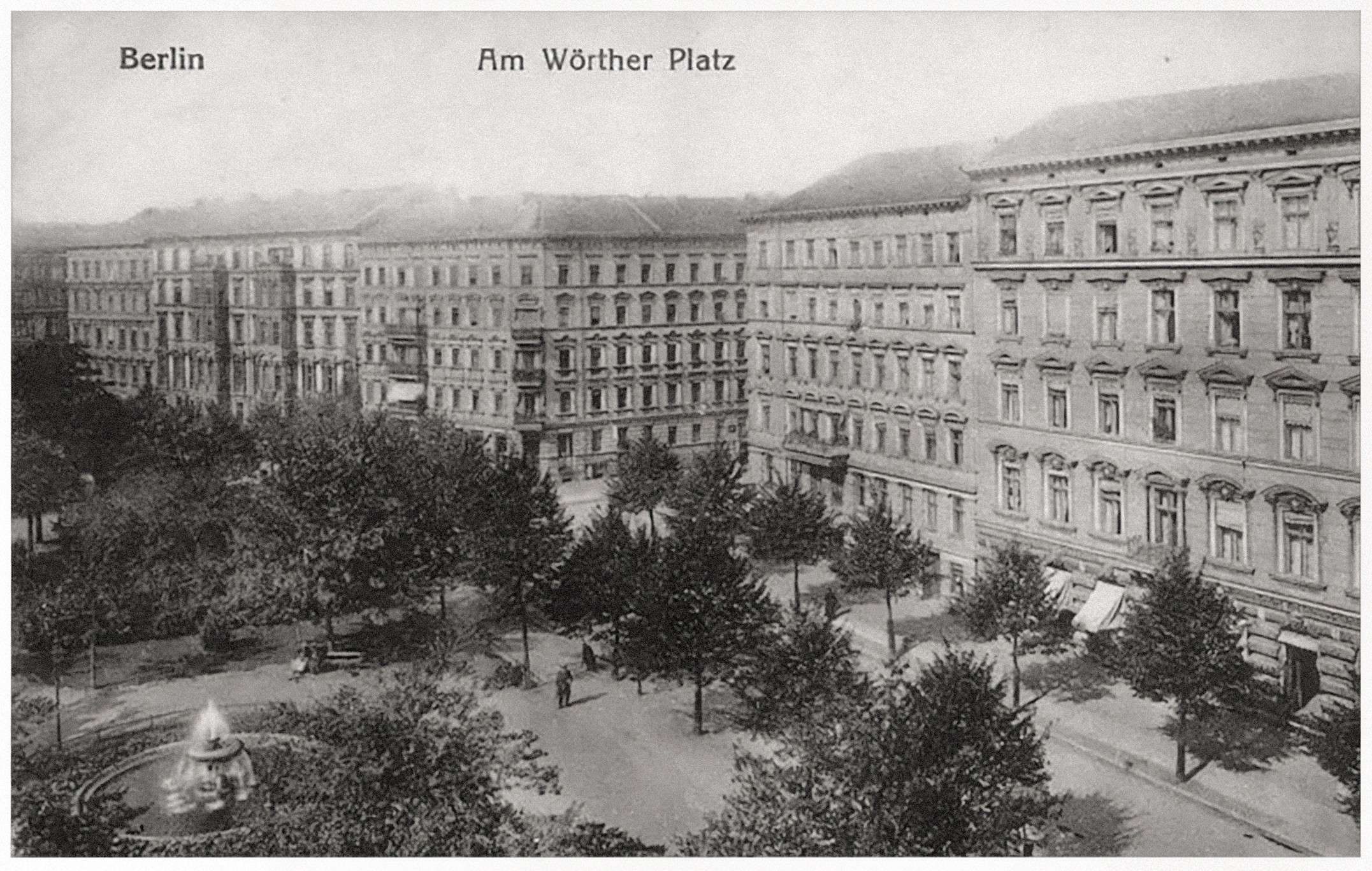
Marriage of Käthe and Karl Kollwitz (1863-1940) on 21 June.
That same year, the couple moved from Königsberg to Berlin, where Dr Karl Kollwitz opened a medical practice in the working-class district of Prenzlauer Berg. Under the German health insurance system, he had been assigned to the tailors’ health insurance fund. In Berlin, Käthe Kollwitz was confronted firsthand with the widespread poverty of the city, which she also witnessed through her husband’s patients. Her artistic work soon came to focus on socially critical themes.
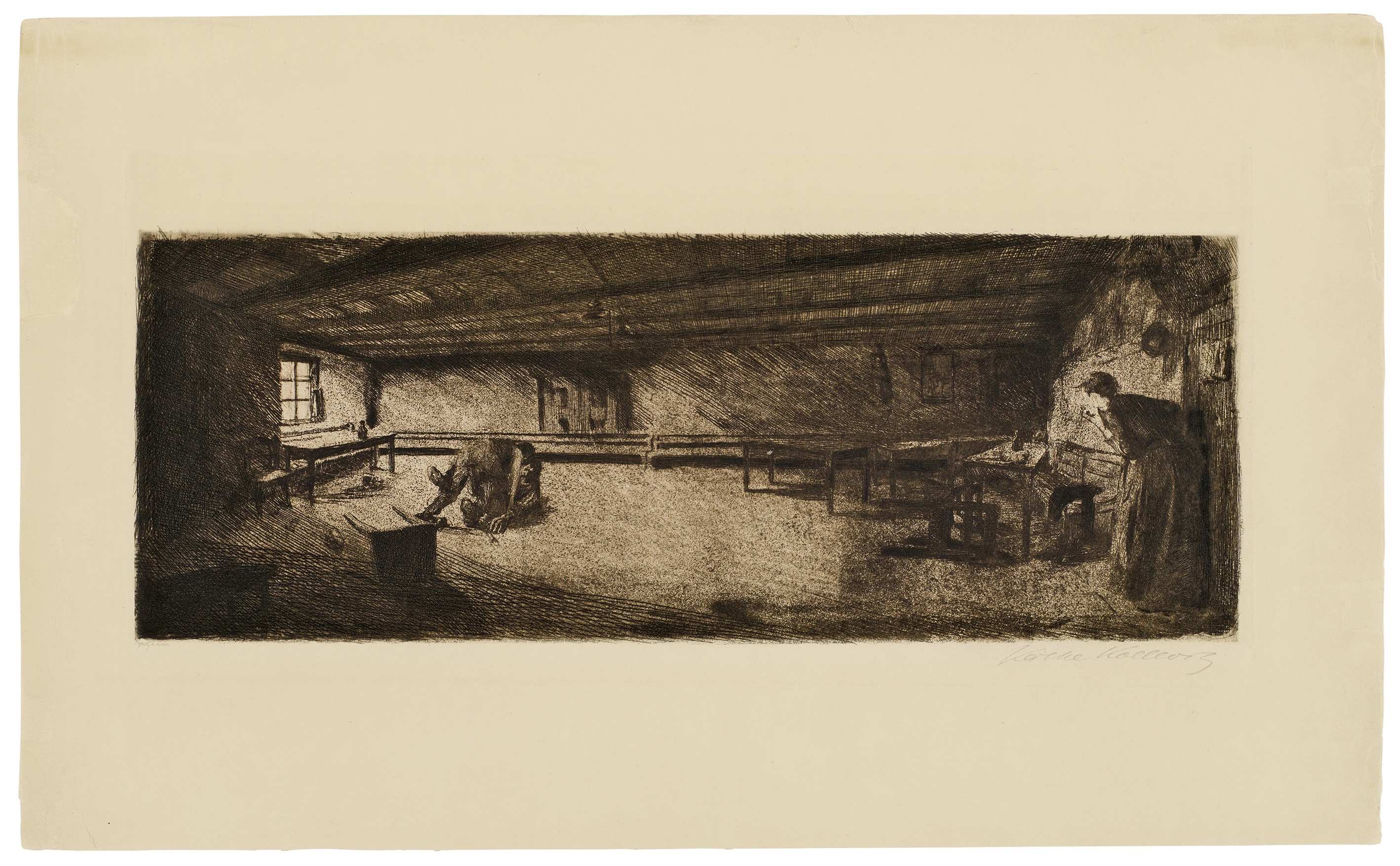
The artist began to take up her work on a print series on the novel Germinal by Emile Zola (1840-1902).
She created three etchings on the theme: the »Scene from Germinal«, Kn 19 III b, originally conceived as a drawing in Munich, which represents a drama of jealousy between two men and Cathérine, as well as a »Conspiracy Scene«, Kn 10 and Kn 11, in two versions.
These works, like almost all the etchings during her lifetime, were printed at the Hofkupferei Felsing in the Berlin district of Charlottenburg. The firm, which existed from 1797 to 1965, was managed by Wilhelm Felsing (1868-1940) between 1892 and 1940 and its clients included, alongside Käthe Kollwitz, Karl Stauffer-Bern, Max Klinger, Max Liebermann, Lovis Corinth, Max Slevogt, Emil Nolde and Heinrich Zille.
In 1893 Käthe Kollwitz abandoned work on the Germinal series to focus on her cycle »A Weavers’ Revolt«.
German legislation was changed to improve the protection of workers. It regulated the maximum number of working hours, introduced a general ban on Sunday work and abolished factory work for children under 13.
At its party convention in Erfurt, the SPD explicitly included the demand for women’s voting rights in its programme.
Publication of Max Klinger’s (1857-1920) Malerei und Zeichnung (Painting and Drawing) – an art theoretical paper
Kollwitz probably read the paper in the year of its publication. Later, the artist remembered how she became aware that »I’m not a painter at all« (Tagebücher, Rückblick (Diaries, Retrospection), 1941) while reading the essay.
She increasingly focused on graphic art.
In Klinger’s paper Käthe Kollwitz found a general rationale for an artist to explore the negative sides of life in graphic art. Apart from that, Klinger’s publication was hardly of any relevance for her later socio-critical works as Klinger’s understanding of the kind of criticism that a graphic artist should convey did not include social criticism. In this, he was strongly influenced by Schopenhauer’s pessimistic view of life.
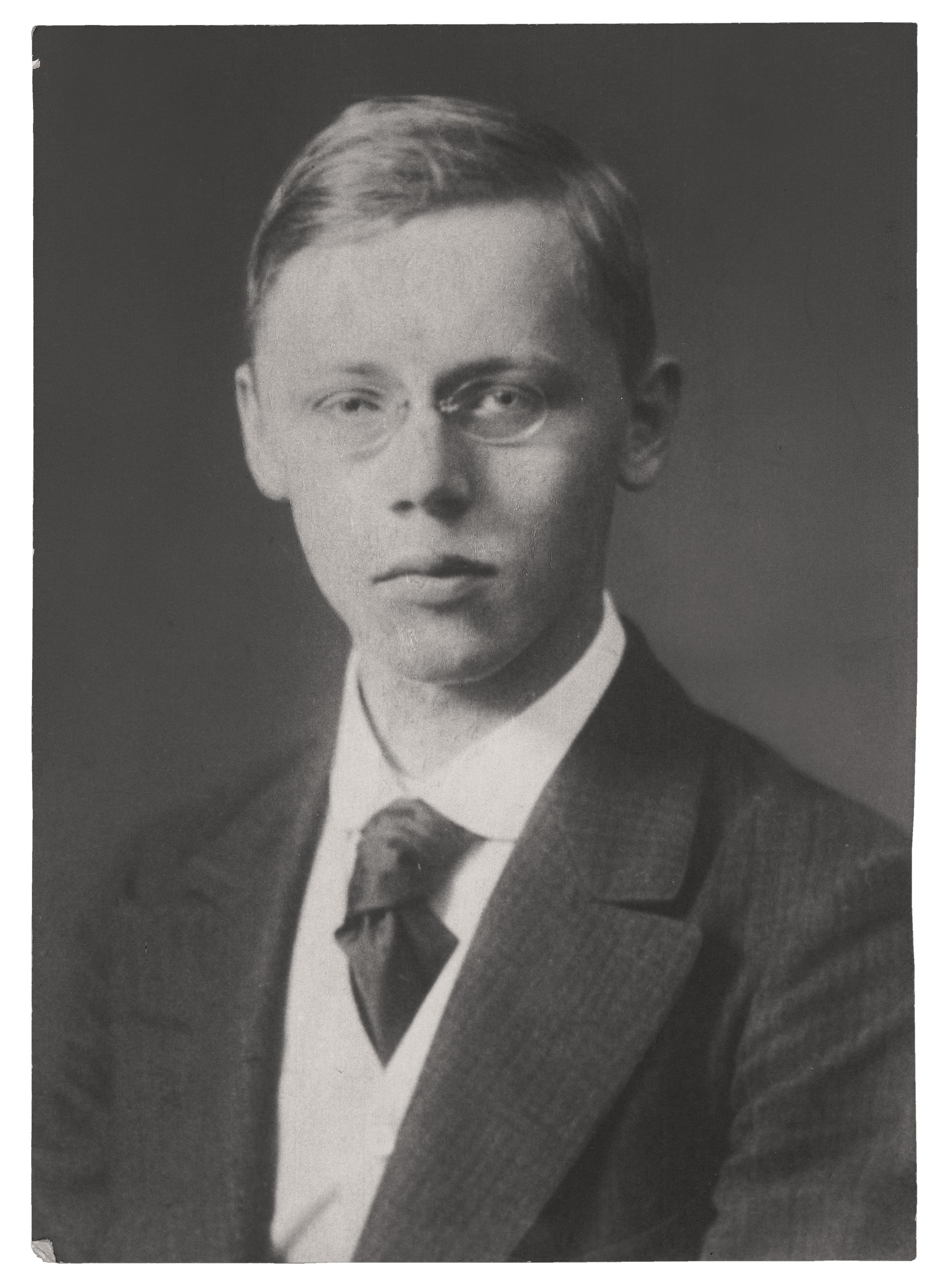
Birth of her first son, Hans Kollwitz (1892-1971).
The artist’s eldest son became a school physician in 1928 and later head of department for pandemic diseases in Berlin. After World War II, he retired early to devote his time to his mother’s work.
Hans Kollwitz was the first to publish selections of her diaries and letters. He supported exhibitions and published a book with photographs of Käthe Kollwitz’ sculptural works.
Secret military alliance between France and Russia.
The non-renewal of the Reinsurance Treaty with the German Reich results – subsequent to the secret military alliance – in a formal treaty of alliance on 4 January 1894. This consequently led to the war on two fronts scenario that Bismarck had always been afraid of and was one of the factors leading to the First World War.
Foundation of the art association Vereinigung der XI in Berlin
Alongside the Münchner Secession – also founded in 1892 – this group of artists was among the most important German associations to abandon the conservative official art scene. The Vereinigung der XI was an important precursor of the Berliner Secession.
Käthe Kollwitz’ younger sister Lisbeth Schmidt (1870-1963) married the Jewish engineer Dr Georg Stern (1867-1934) from Königsberg. Like Käthe and Karl Kollwitz, the couple took up residence in Berlin.
The artist begins work on the cycle »A Weavers’ Revolt« (1893-1897).
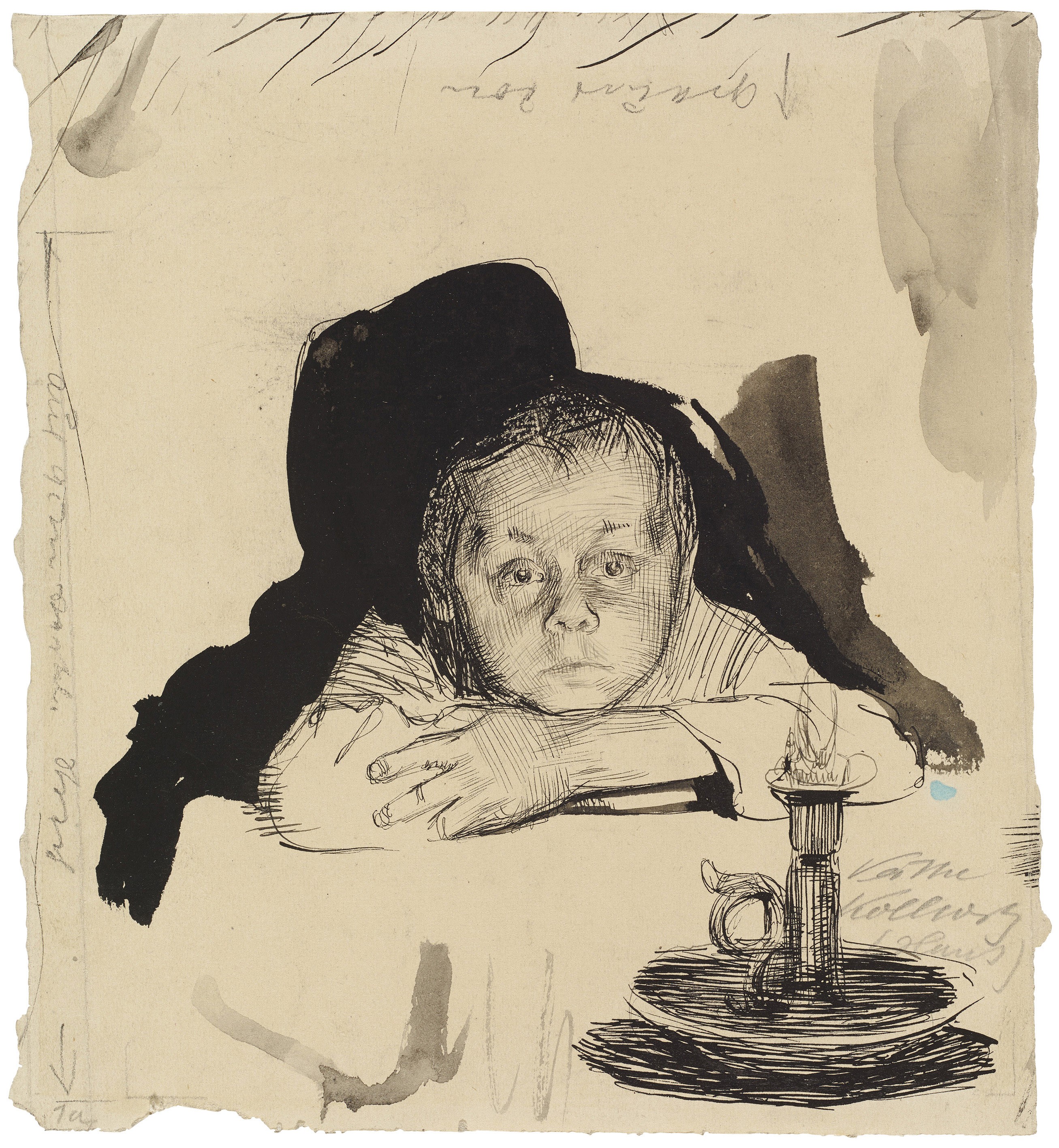
Almost 40 preparatory drawings for the Weavers cycle have been preserved. The ink drawing »Hans Kollwitz with a Candle« (1895), NT 115, a detail study for folio 2 in the series, is among the most impressive individual works and early proof that the artist often used her two sons as models.
Strongly impressed by the premiere of the Naturalistic drama The Weavers by Gerhart Hauptmann (1862-1946), Käthe Kollwitz abandoned her work on a cycle on Germinal by Emile Zola (1840-1902) and started on the six-folio print cycle »A Weavers’ Revolt« which she finished in 1897.
There was an important event at that time – the premiere of Hauptmann’s Weavers at the ›Freie Bühne‹ theatre. […] I was there, burning with excited anticipation and interest. The play left a huge impression on me. The best actors were involved […]. In the evening, there was a festive get-together of a lot of people in the course of which Hauptmann was praised to the skies as a role model for the young generation. The performance was a milestone in my career. The ›Germinal‹ cycle, which I had already begun, was abandoned and I focused on the Weavers.«
The fact that the study »Hans Kollwitz with a Candle« was made as a preparatory work in pen and ink for the second folio »Death«, tells us that it must have been made at an early stage when the artist was still planning to execute the entire cycle as etchings. However, the execution of the deep black shadows in ink as an intaglio print – for example as an aquatint etching – still caused Kollwitz such serious problems at that time that she eventually decided to execute the first three folios of the print cycle as lithographs and only the last three folios as etchings.
First participation of Käthe Kollwitz in exhibitions.
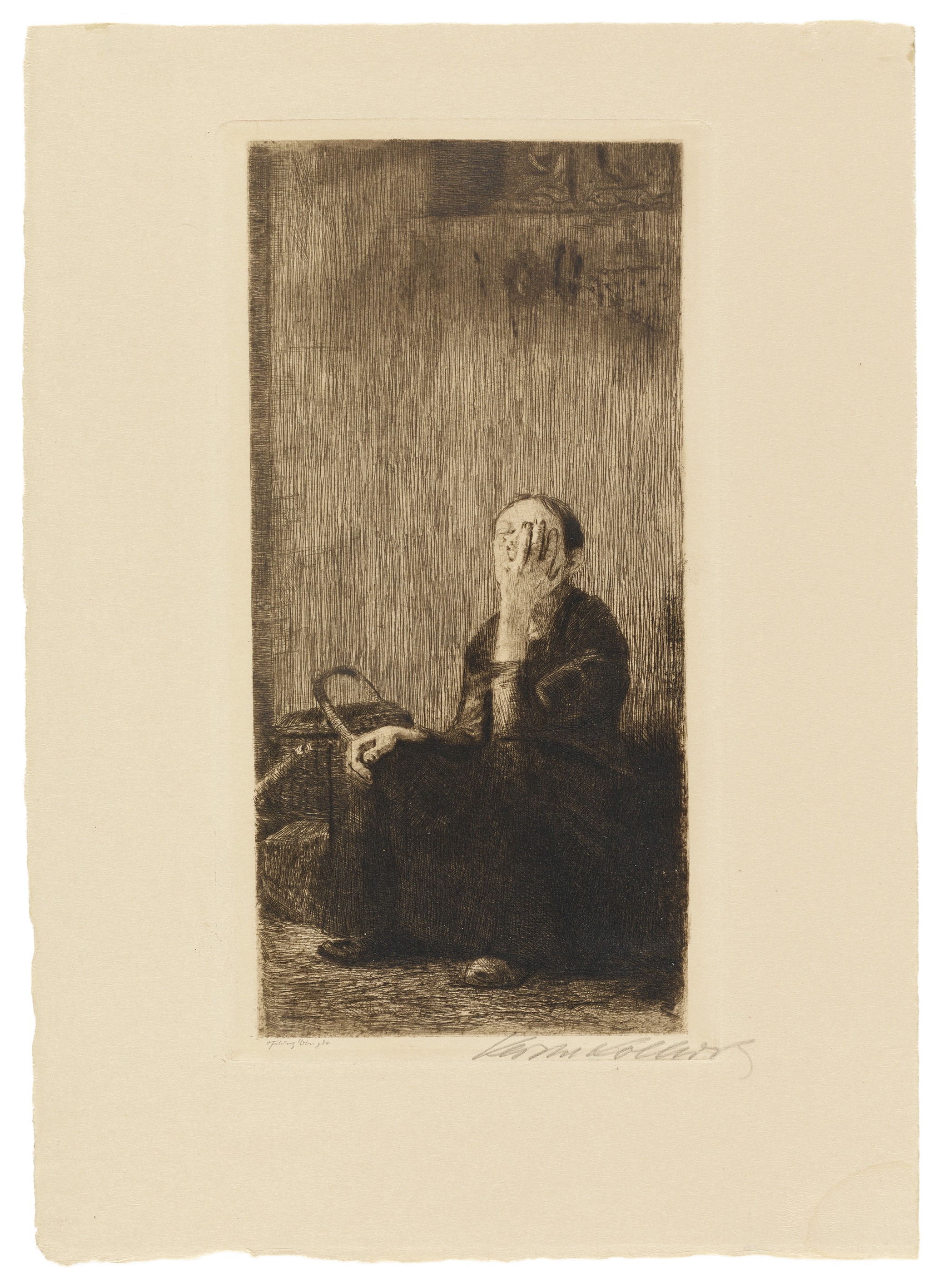
She exhibited the etchings »Welcome«, Kn 13, and »At the Tavern«, Kn 15, at the Great Berlin Art Exhibition. At the same time she was represented at the Free Berlin Art Exhibition with the etching »At the Church Wall«, Kn 17, and with two pastels which are no longer traceable.
At the Free Berlin Art Exhibition the critic and collector Julius Elias (1861-1927) became aware of the artist and wrote an appreciation of her works in his exhibition critique in the magazine Die Nation.
The founding congress of the Social Democratic Workers’ Party of the Kingdom of Poland took place in Warsaw. Among the founding members of the banned party was Rosa Luxemburg (1871-1919).
Publication of the first issue of the magazine Die Frau – a monthly Magazine for all the aspects of life of women in our times. Its editor was the teacher and women’s rights activist Helene Lange (1848-1930).
Edvard Munch (1863-1944) started work on four paintings and one lithograph entitled »The Scream« (1893-1910).
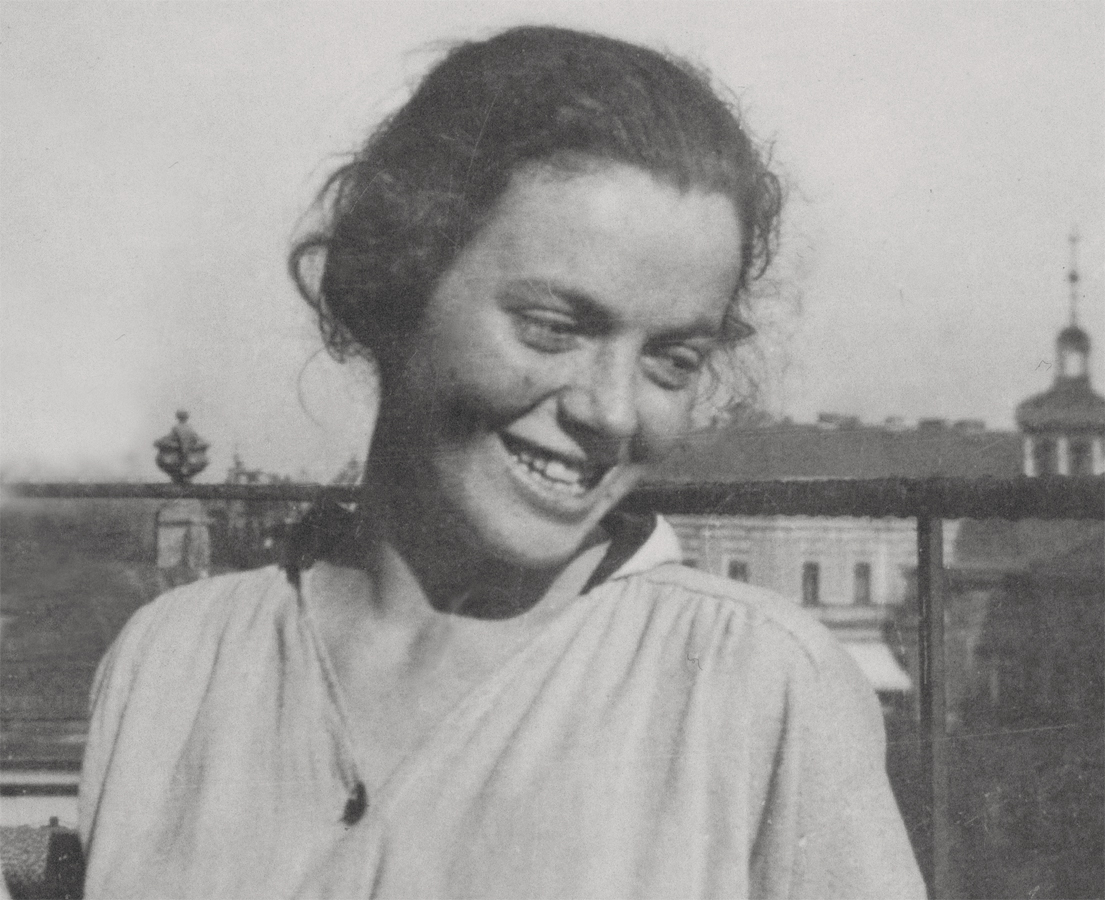
Birth of Käthe Kollwitz’ niece Regula Stern (1894-1978).
The eldest daughter of Lisbeth and Georg, Käthe Kollwitz’ sister and brother-in-law, was an actress. She gave up her acting career in 1922 to become a physician. Being half Jewish, she had to close her surgery in Berlin under the Nazis and was only allowed to work as a nursing auxiliary. Regula Stern gave Karl and Käthe Kollwitz medical care when they were old. After 1945 Regula Stern started working as a doctor again.
In Berlin, the Association of German Women’s Clubs was founded under the aegis of Auguste Schmidt (1833-1902). This umbrella organisation of the middle-class women’s movement aimed at improving communicative networking among the clubs.
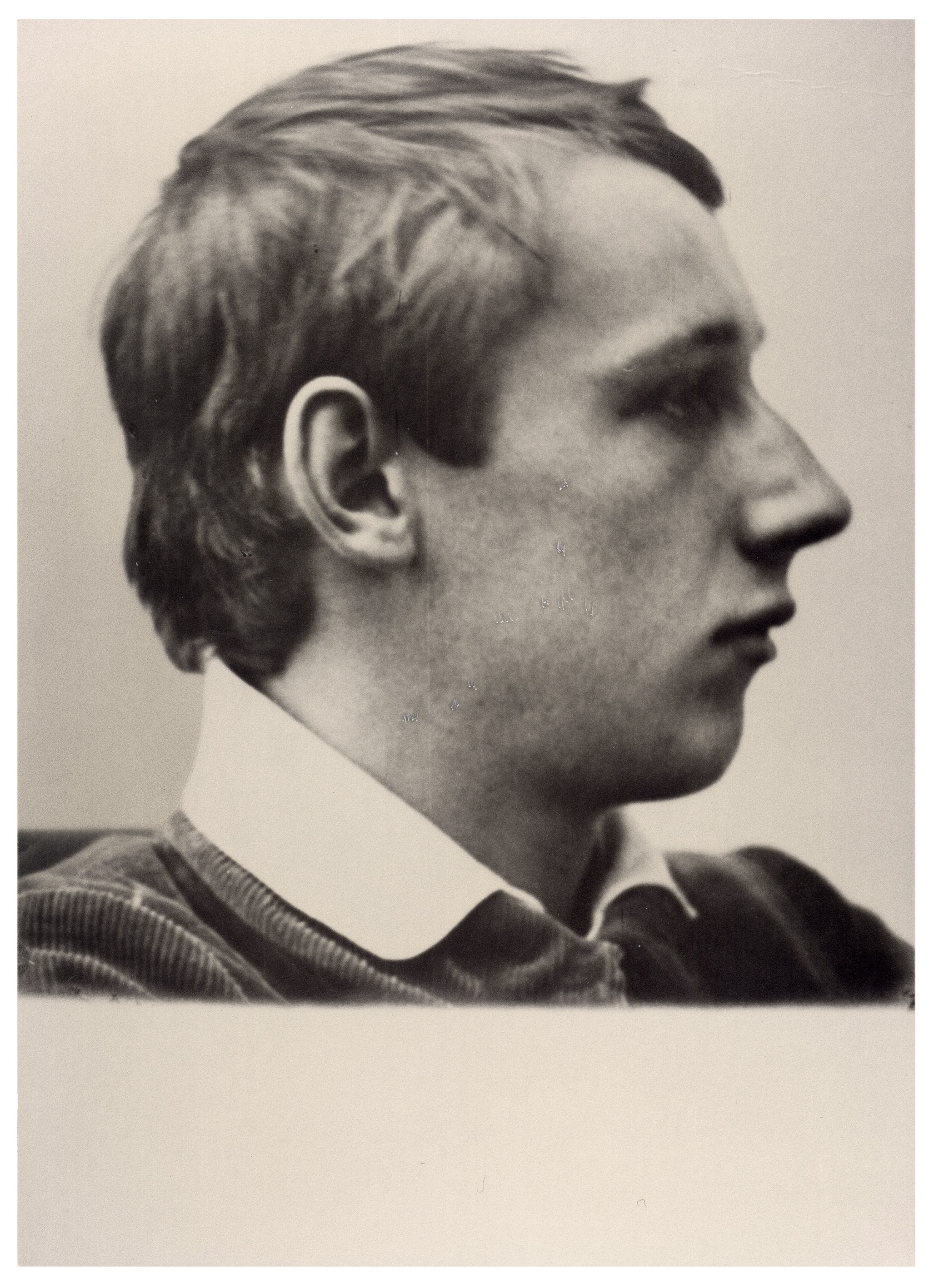
Birth of her second son, Peter Kollwitz (1896-1914)
Käthe and Karl Kollwitz’ youngest son wanted to become an artist. He finished school with a secondary school leaving certificate and in 1912 he enrolled on a training course at the Berlin Museum of Applied Art. In the summer holidays of 1914 Peter and Hans Koch (1897-1995), Erich Kremms (1898-1916) and Richard Noll (d. 1916) embarked on a hiking tour of Norway where Peter learned of the outbreak of the war. This news led the friends to consider volunteering.
Peter Kollwitz was killed on 22 October 1914 near Dixmuide in Belgium.
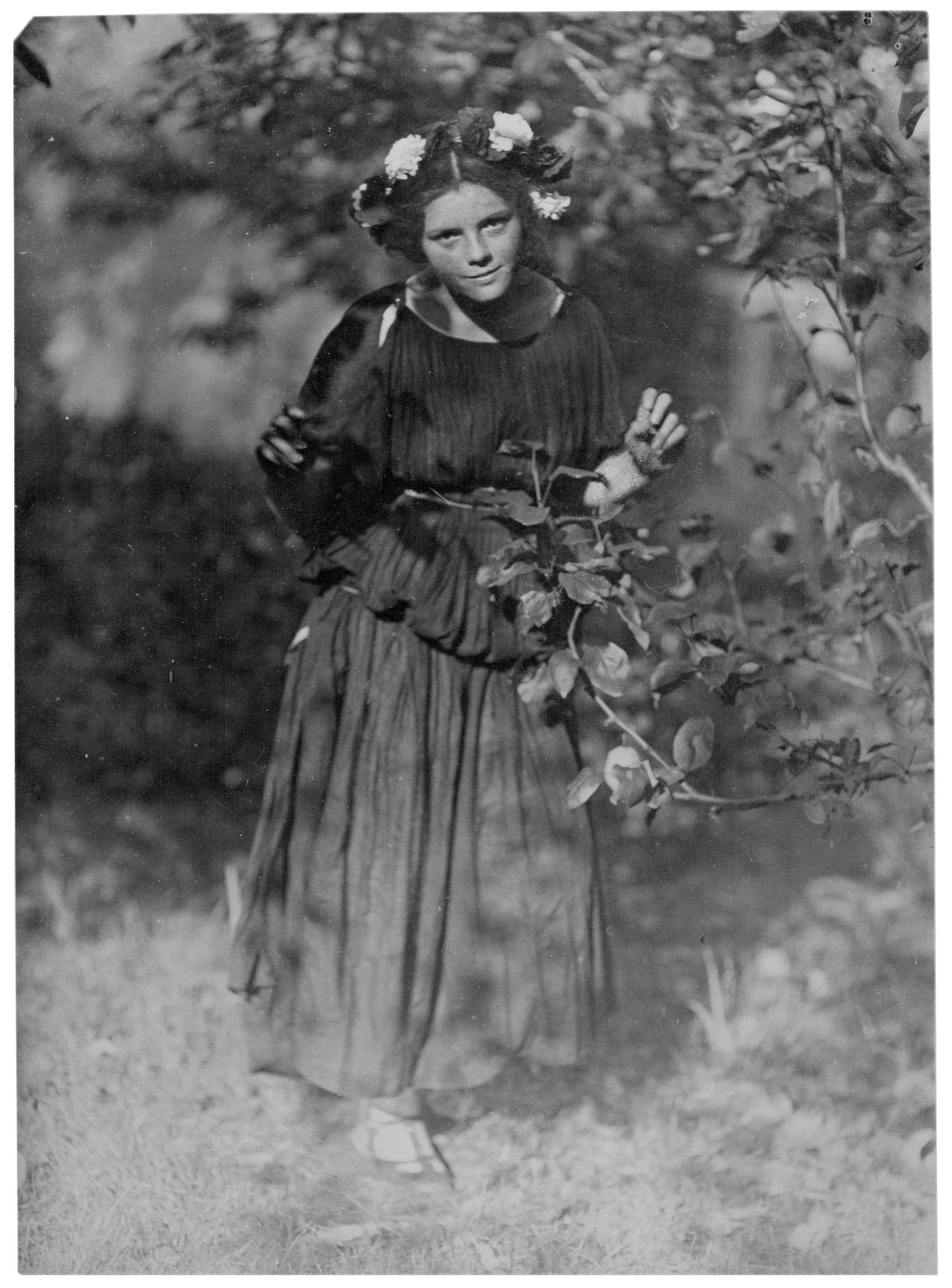
Birth of Kollwitz’ niece Johanna (Hanna) Stern (1896-1988).
The second daughter of Kollwitz’ sister Lisbeth had the stage name Johanna Hofer. Even while still studying to become an actress, Max Reinhardt engaged her for the Deutsches Theater in Berlin. She married her second husband, the actor and director Fritz Kortner, with whom she emigrated to the US in 1933. In 1948 she returned to Germany and had a large number of major roles on stage and TV.
Kollwitz created a lithograph of her son’s portrait »Hans Kollwitz«, Kn 39.
Adoption of the first German civil code (Bürgerliches Gesetzbuch) by the German parliamen.
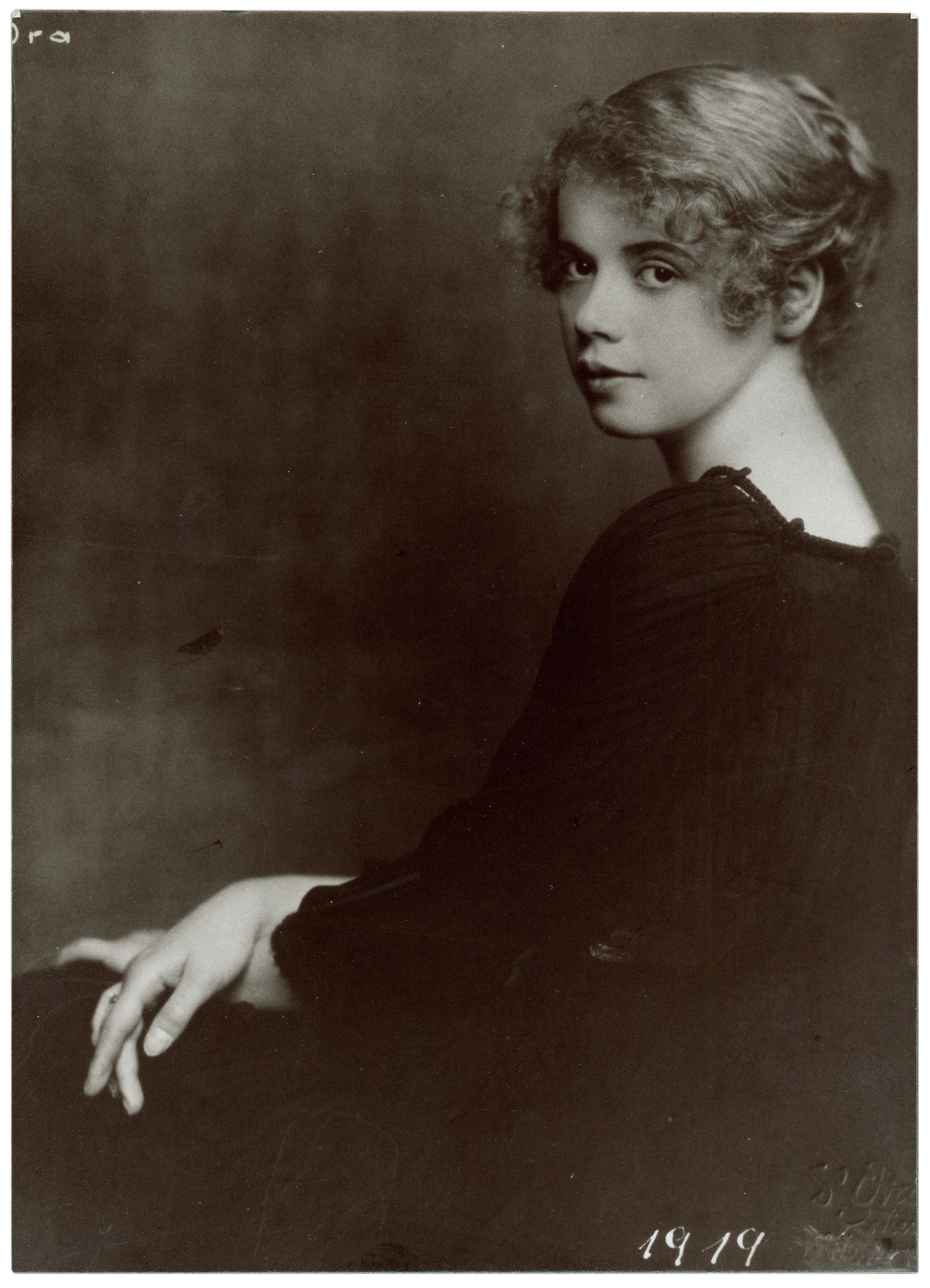
Birth of Käthe Kollwitz’ niece Katharina Stern (1897-1984).
The third daughter of Lisbeth and Georg Stern had a successful career as a dancer under the pseudonym Katta Stern. From 1933, under the Nazi regime, she was prohibited from performing in Germany. Her husband, Walter Herrendörfer (1900 – d. in WW II) was drafted into Organisation Todt (a civil and military engineering organisation using forced labour). As her application for emigration to the US was turned down she had to retire from public life and lived together with her mother whom she looked after until her death.
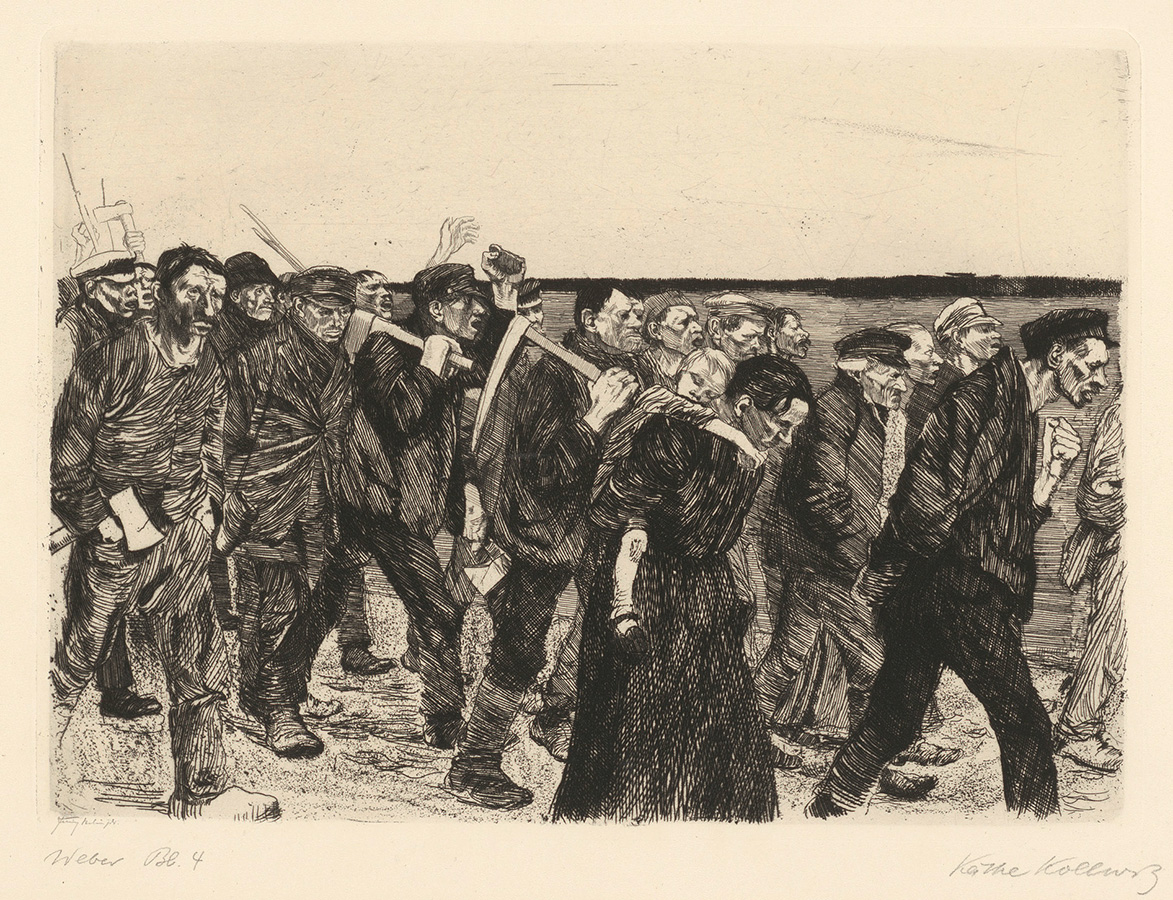
Completion of the cycle »A Weavers’ Revolt« (1893-1897).
The first presentation of this print cycle was received very well at the Grosse Berliner Kunstausstellung in 1898 and she became a young artist of considerable renown.
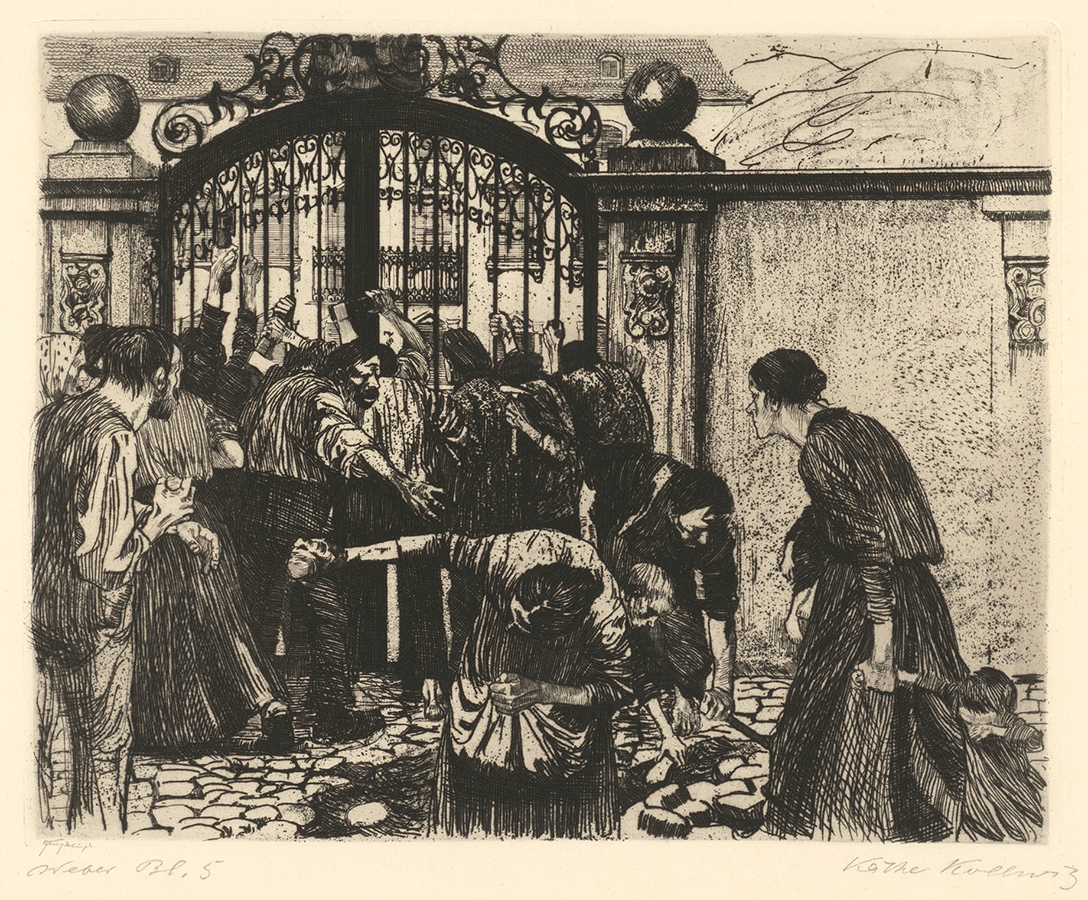
Käthe Kollwitz had an artistic breakthrough with her cycle »A Weavers’ Revolt« (1893-1897) at the Grosse Berliner Kunstausstellung.
Max Liebermann (1847-1935), a member of the awards jury, made sure that the artist was recommended to Kaiser Wilhelm II (1859-1941) for a medal. Due to the socially critical content of the cycle, however, the Kaiser rejected the recommendation stating: »This would mean a disparagement of any high distinction. Decorations and medals have their place on the chests of men of merit.«
From 1898 to 1903 Käthe Kollwitz worked as a teacher for etching and drawing at the Berlin School for Women Artists.
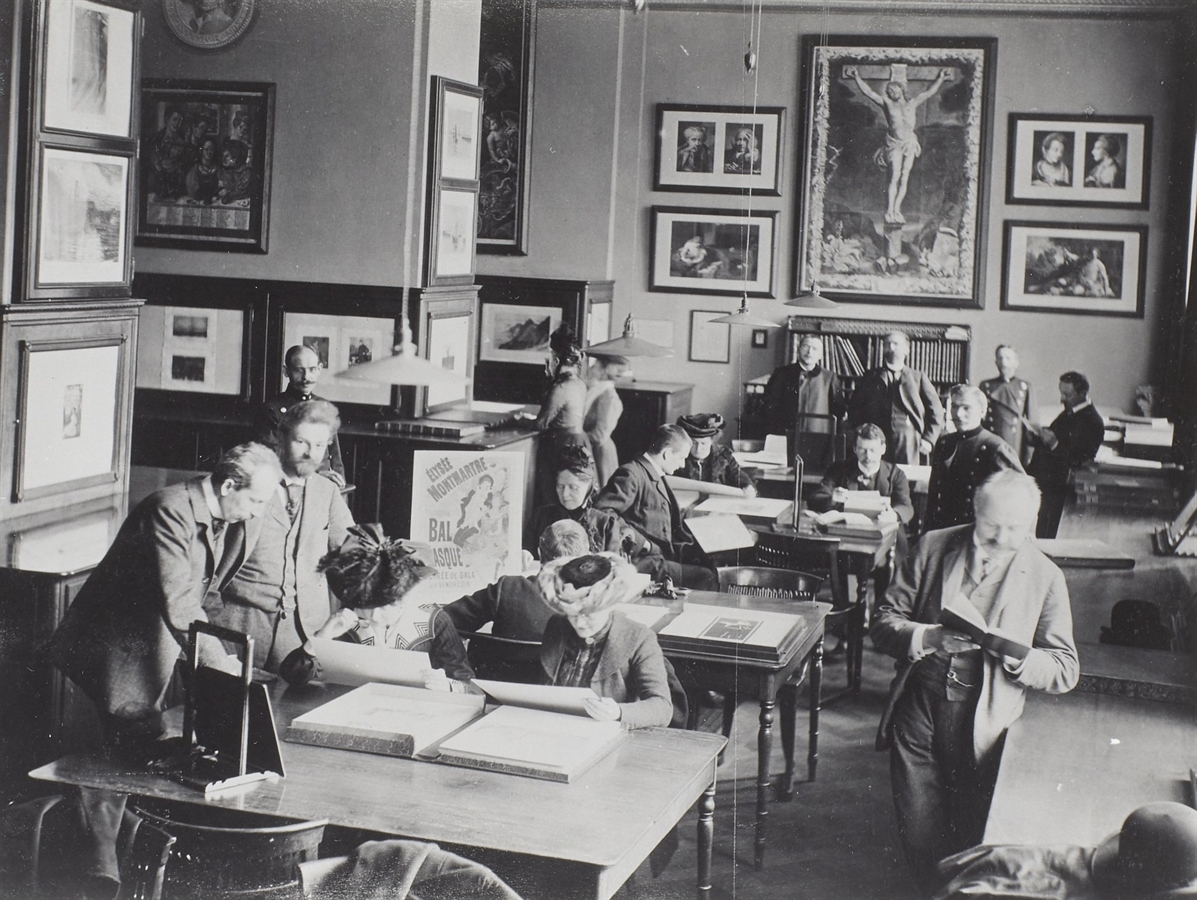
The Dresden Kupferstich-Kabinett under the directorship of Max Lehrs (1855-1938) was the first public collection to start acquiring works by Kollwitz. The art historian Lehrs subsequently became one of the most important patrons of Käthe Kollwitz. There is evidence that a total of 177 prints and 22 drawings were bought until Lehrs’ retirement.
Max Lehrs took over the directorship of the Dresden Print Room in 1896. From 1905 (?) to 1908 he was the director of the Berlin Print Room and from 1908 until his retirement in 1924 he was again in charge of the print collection in Dresden.
The First Naval Agreement came into force.
The naval agreements were the legal basis in the German Reich for the expansion of the imperial navy before the First World War. This statutorily regulated expansion of the navy with the aim of turning it into a powerful high seas fleet led to a German-British arms race and is regarded as one of the causes of the First World War.
Foundation of the Berlin Secession
The foundation of the Berlin Secession under the aegis of Max Liebermann (1847-1935) was conceived as a counter-organisation to the conservative Verein Berliner Künstler (Association of Berlin Artists). It was the first organisation in Berlin to admit women artists.
It broke up as a result of disagreement over the selection of the works of 25 members for the 1913 exhibition. The majority of its members, among them Käthe Kollwitz and the entire executive committee, left the organisation and founded the Freie Secession in 1914 whose members included Max Liebermann, Max Slevogt and Paul Cassirer.
At the instigation of Max Lehrs (1855-1938) and Max Klinger (1857-1920), Kollwitz was awarded a silver plaque at the Deutsche Kunstausstellung (German Art Exhibition) in Dresden.
Participation in the first exhibition of the Berlin Secession.
The fact that Kollwitz was a member of the Berlin Secession enabled her to take part in numerous exhibitions in Germany and abroad. She managed to present two of her works at the 5th Exhibition of the Vienna Secession where the Albertina acquired the folio »The End«, Kn 38, from the Weavers cycle which became the cornerstone for its Kollwitz collection.
It is certain that Kollwitz owed the invitation to join the Berlin Secession to Max Liebermann (1847-1935) who was the director of this organisation which had been founded in the previous year. The Berlin Secession was the first German association of artists to stage Black-and-White Exhibitions from 1901 onwards as a result of a growing interest in artists’ etchings and drawings. Until the dissolution of the Berlin Secession in 1913 Käthe Kollwitz regularly participated in its exhibitions.
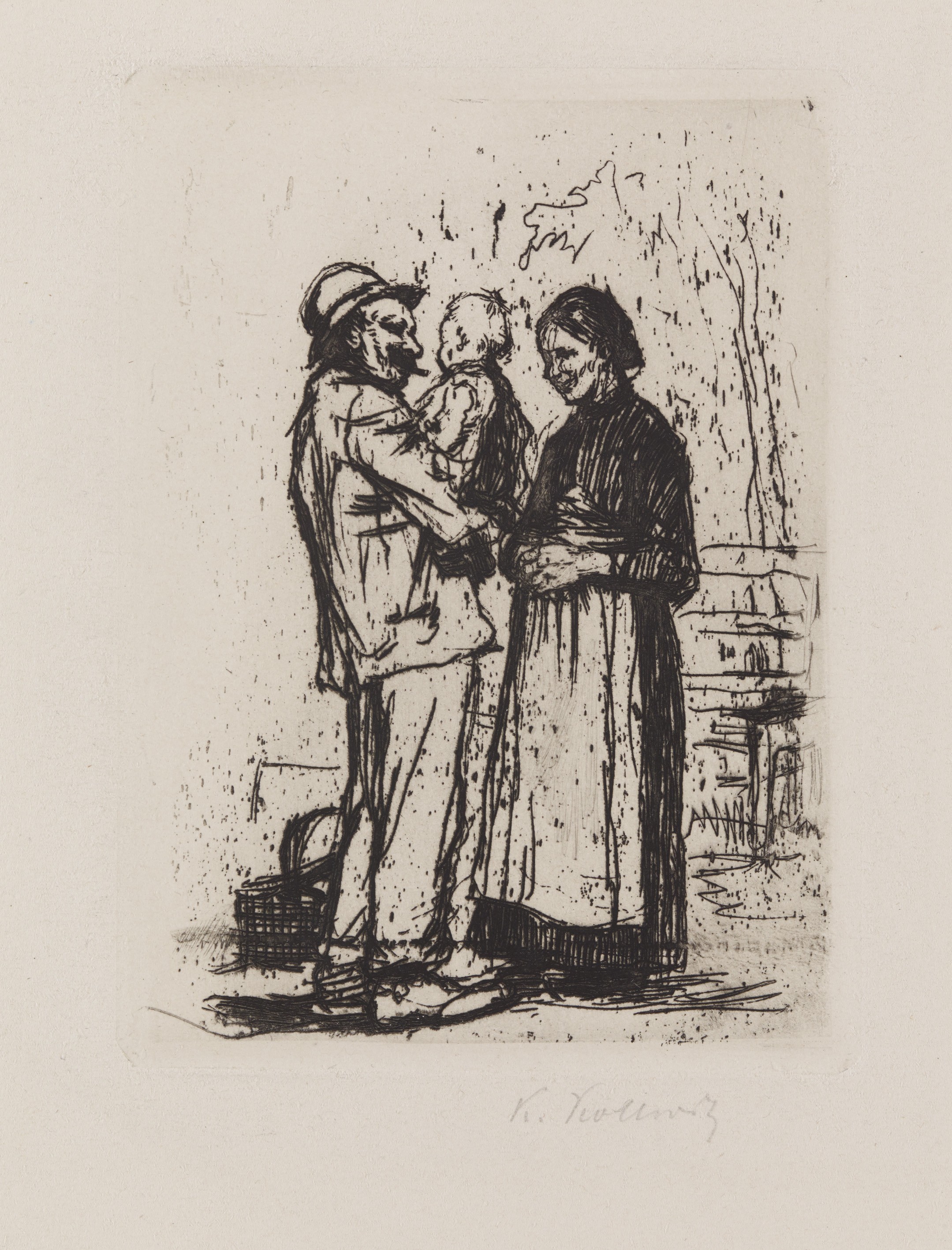
The publication of Kollwitz’ etching »Welcome«, Kn 13, in the magazine Pan representated an appreciation of her work at an early stage in her career.
Her original choice for the publication was a self-portrait as a colour lithograph, Kn 46. As this work – her very first colour lithograph – failed to meet her expectations, she eventually submitted the etching »Welcome« which was created in 1892 on the occasion of the birth of her son Hans.
The Pan magazine for art, poetry, theatre and music, founded in Berlin in 1895, with original prints enclosed, was an important voice of German Art Nouveau.
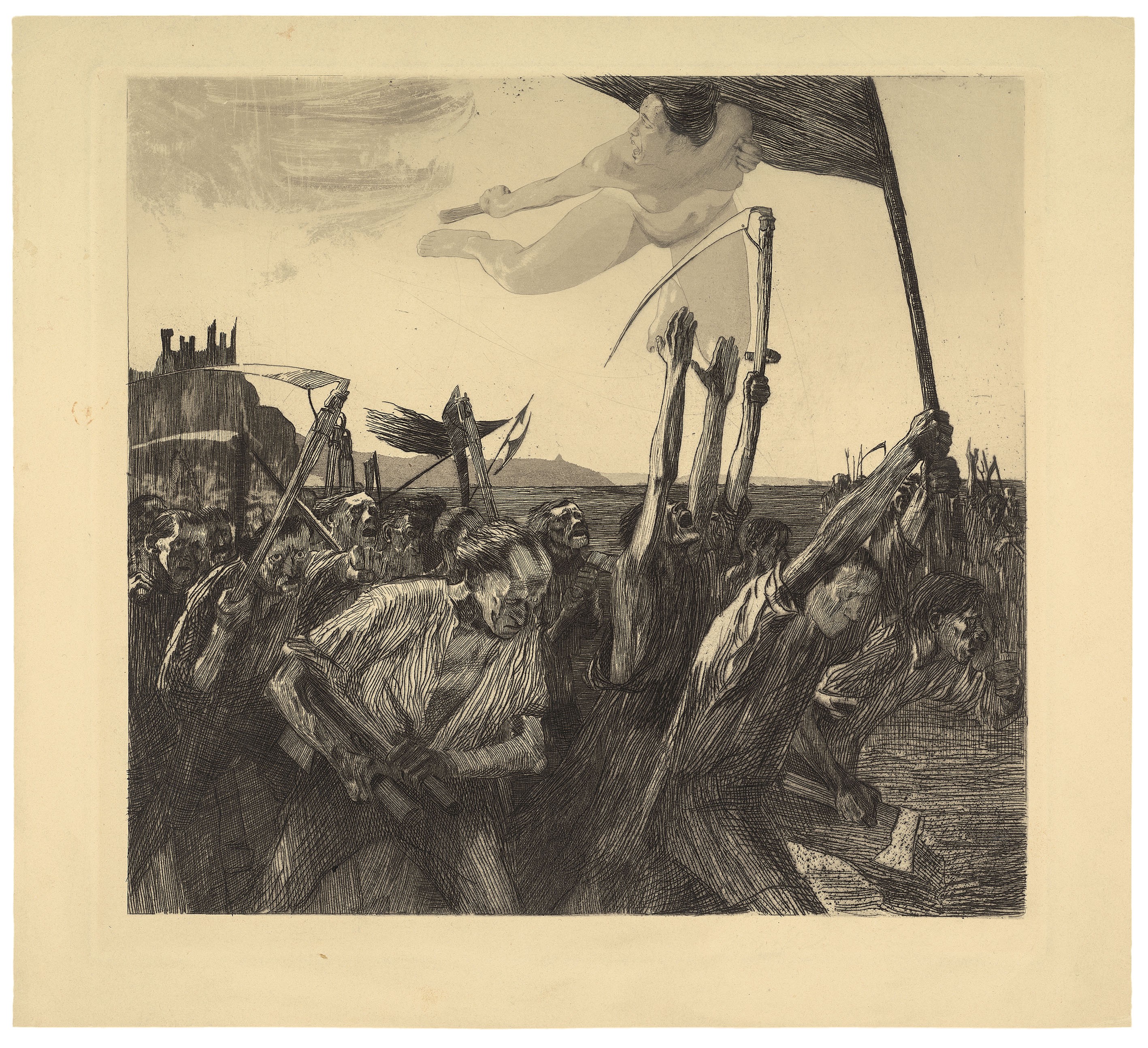
The etching »Uprising«, Kn 46, was Käthe Kollwitz’ first exploration of the Peasants War theme.
The etching with an allegorical personification of ›Liberty‹ leading the fighters on the barricades was originally also published under the title »Peasants’ War« and probably renamed when the eponymous cycle was published in 1908.