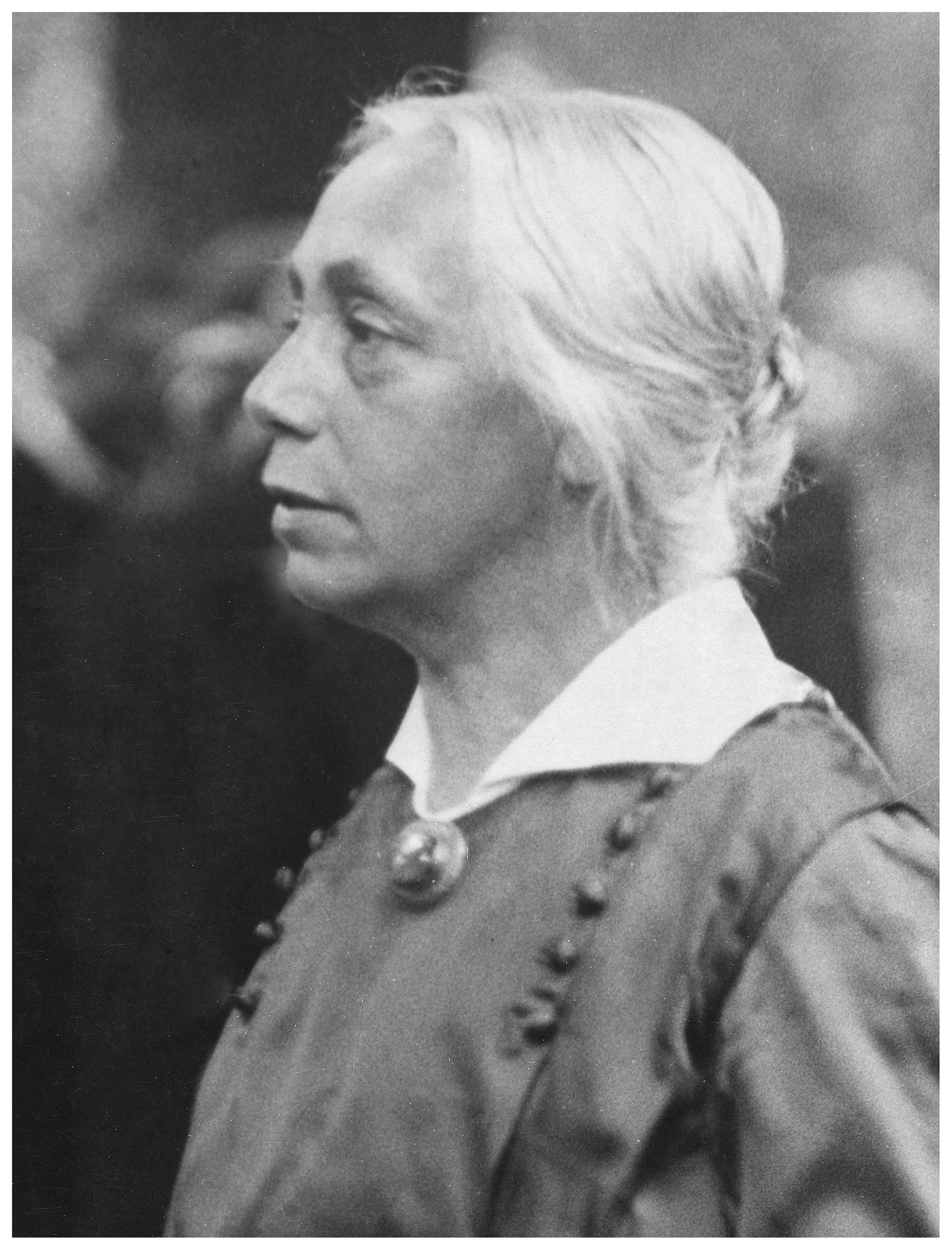
The Prussian Academy of Art appointed Käthe Kollwitz a member and professor – it was the first appointment of a woman artist in over 100 years.
Kollwitz signed the Declaration in the Liebknecht-Luxemburg Case, a protest initiative of the Liga zur Förderung der Humanität (League for the Promotion of Humaneness) against the assassination of Rosa Luxemburg (1871-1919) and Karl Liebknecht (1871-1919). The artist had co-organised the initiative.
The appeal was sent to 1,200 leading public figures and signed by herself and, among others, by Albert Einstein, Magnus Hirschfeld, Maximilian Harden and Walter Rathenau. At a time of death threats and assassinations by secret political organisations, this was a courageous step.
Katharina Schmidt (1837-1925), the artist’s mother moved into the Kollwitz family’s flat in Weissenburgerstrasse.
Science minister Konrad Haenisch appointed Konrad Schmidt (1863-1932), the artist’s brother, honorary professor of history and the theory of Socialism at the Technische Hochschule in Berlin.
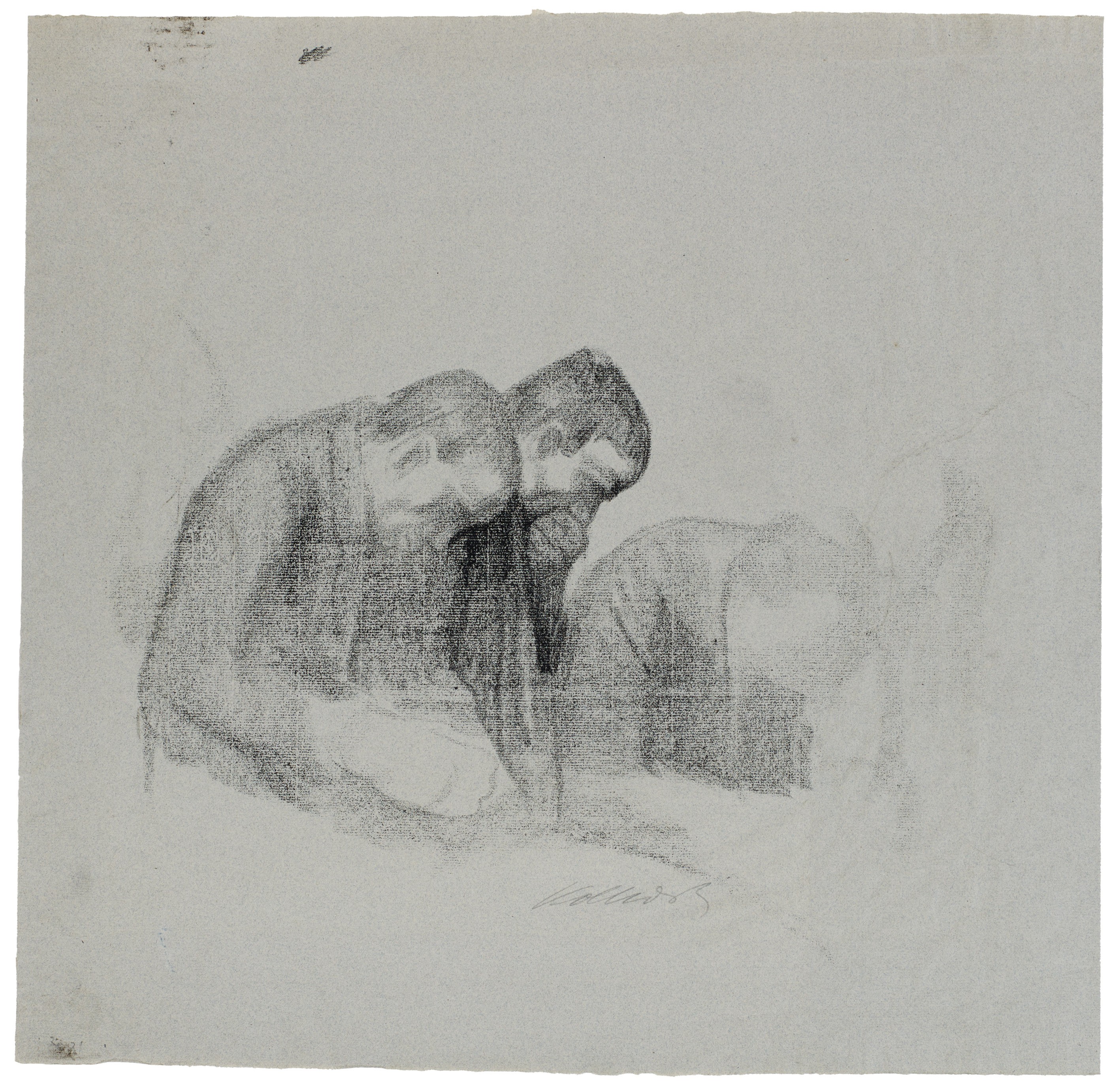
Käthe Kollwitz made a drawing of Karl Liebknecht (1871-1919), assassinated on 15 January, at the request of his family in the mortuary.
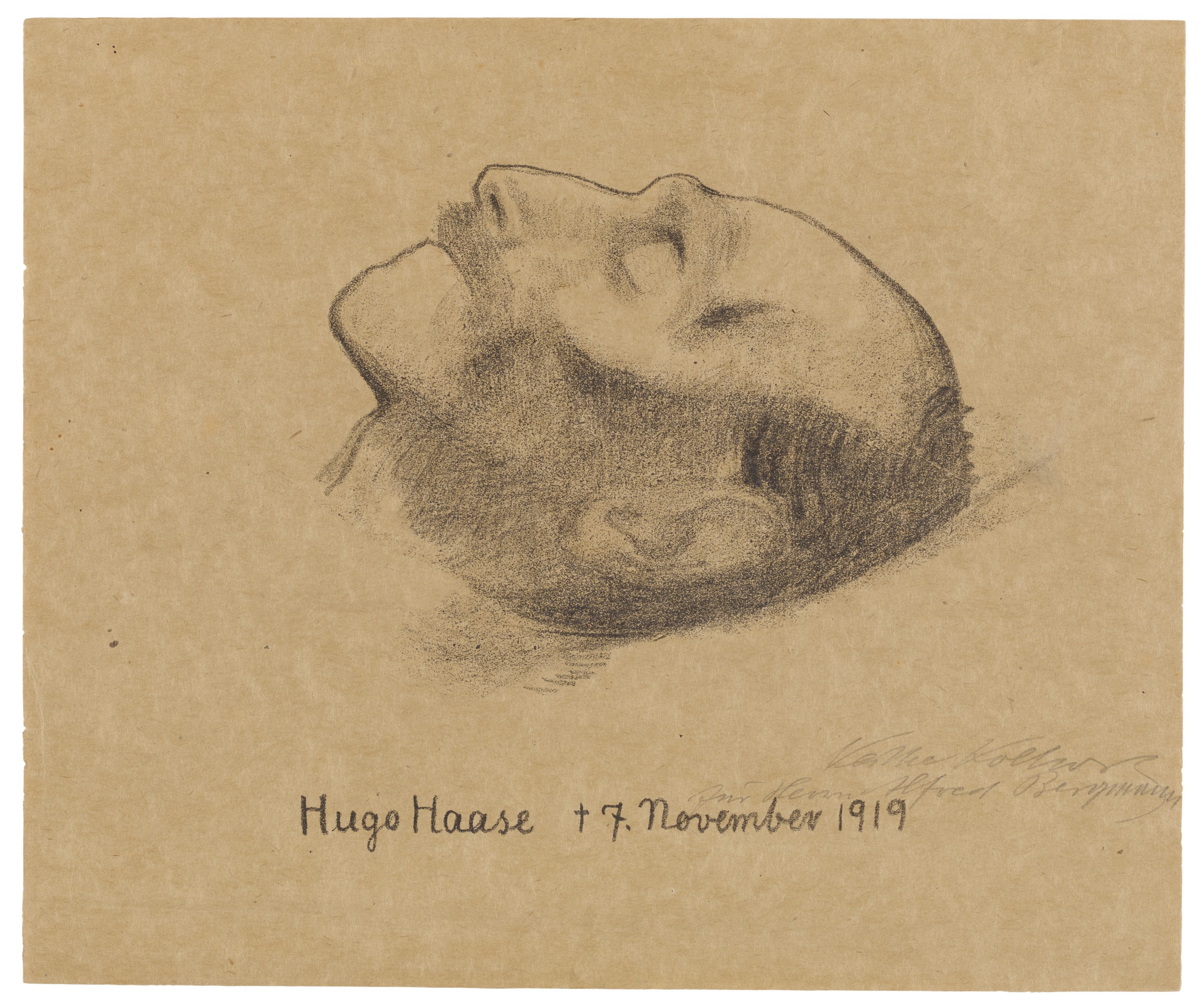
In the same year, she created the lithograph of Hugo Haase (1863-1919), who died on 7 November as a result of an earlier assassination attempt. The artist had known this pacifist and leader of the USPD since her youth.
The artist interrupted her work on a memorial for her fallen son until 1924.
Between 1919 and 1923 Kollwitz designed numerous drawings, prints and posters on the post-war misery.
After the January Revolt with armed street battles in Berlin between 5 and 12 January, which was crushed by the USPD and the KPD, the successor to the Spartakusbund, Rosa Luxemburg (1871-1919) and Karl Liebknecht (1871-1919) and others were assassinated by soldiers from volunteer corps.
On 19 January elections for the German Constituent National Assembly took place. They gave free, secret and equal voting rights for all men and women over the age of 20.
For the first time in Germany, women were permitted to vote. As a result of political turmoil, the National Assembly did not convene in Berlin, but at the Weimar National Theatre where it passed Germany’s first parliamentary-democratic constitution in summer 1919. This place gave the Weimar Republic its name.
Election day. Voted for the first time. Went with Karl. Hans was at the military hospital in the morning, then went later on his own. He, too, was voting for the first time. I had looked forward to this day so much, and now that it has come, indecision once again and only partial conviction. Voted for the Majority Socialists. Not for Scheidemann as a person, who stood at the top of the list. But for the principle of Majority Socialism. Instinctively, I lean further to the left, yet cannot vote according to my own mind, if only because Eichhorn has been put forward as a candidate.
On 19 June the Peace Treaty of Versailles was signed. Germany and its allies as initiators of the war were ordered to pay for all war losses and damage and were burdened with high reparation payments.
On 7 November the USPD politician Hugo Haase (1863-1919) died as a result of an assassination attempt on 8 October.
The following years until 1924 were characterised by political upheavals, putsch attempts by the extreme right, political assassinations and revolts by the KPD and USPD.
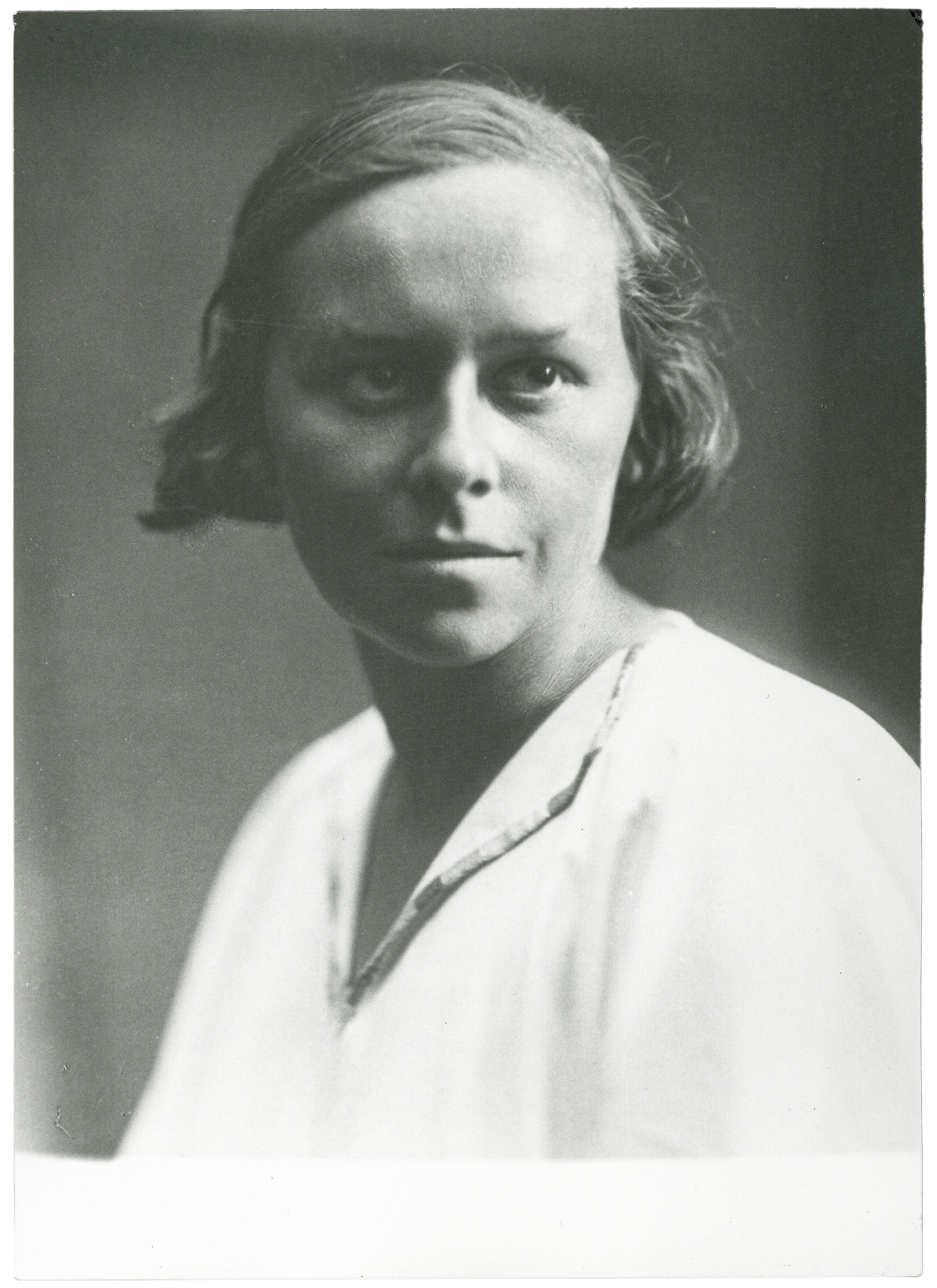
Her eldest son Hans finished his degree course in medicine and married Ottilie Ehlers-Kollwitz (1900-1963).
His wife came from an East Prussian family of land owners. She studied applied graphics at the Reimann School in Berlin and illustrated children’s books and Grimm’s fairy tales together with Hans Baluschek. In 1946, the Henning Gallery in Halle edited an album with 13 of her woodcuts and wood engravings most of which were depictions of East Prussian landscapes.
The couple had four children – Peter (1921-1942), the twins Jördis (1923-2017) and Jutta (*1923-2021), and Arne (*1930). Their first-born son was named after Hans Kollwitz’ younger brother who fell in 1914 aged 18.
Käthe Kollwitz gave a speech at the grave of Max Klinger (1857-1920) at the request of the Free Secession.
Käthe Kollwitz’ speech was transmitted by the architect Hilbersheimer:
We young people flocked to the Print Rooms in Munich and Berlin to see Klinger’s etchings. What thrilled us […] about these prints was not their technical mastery. It was their enormous vital energy, the energy of expression that captivated us. We knew that Klinger did not stick to the surface of things, he dived down into the dark depths of life […]. He pulled out all the stops and captured life in all its sublime splendour and sadness and interpreted it for us.«
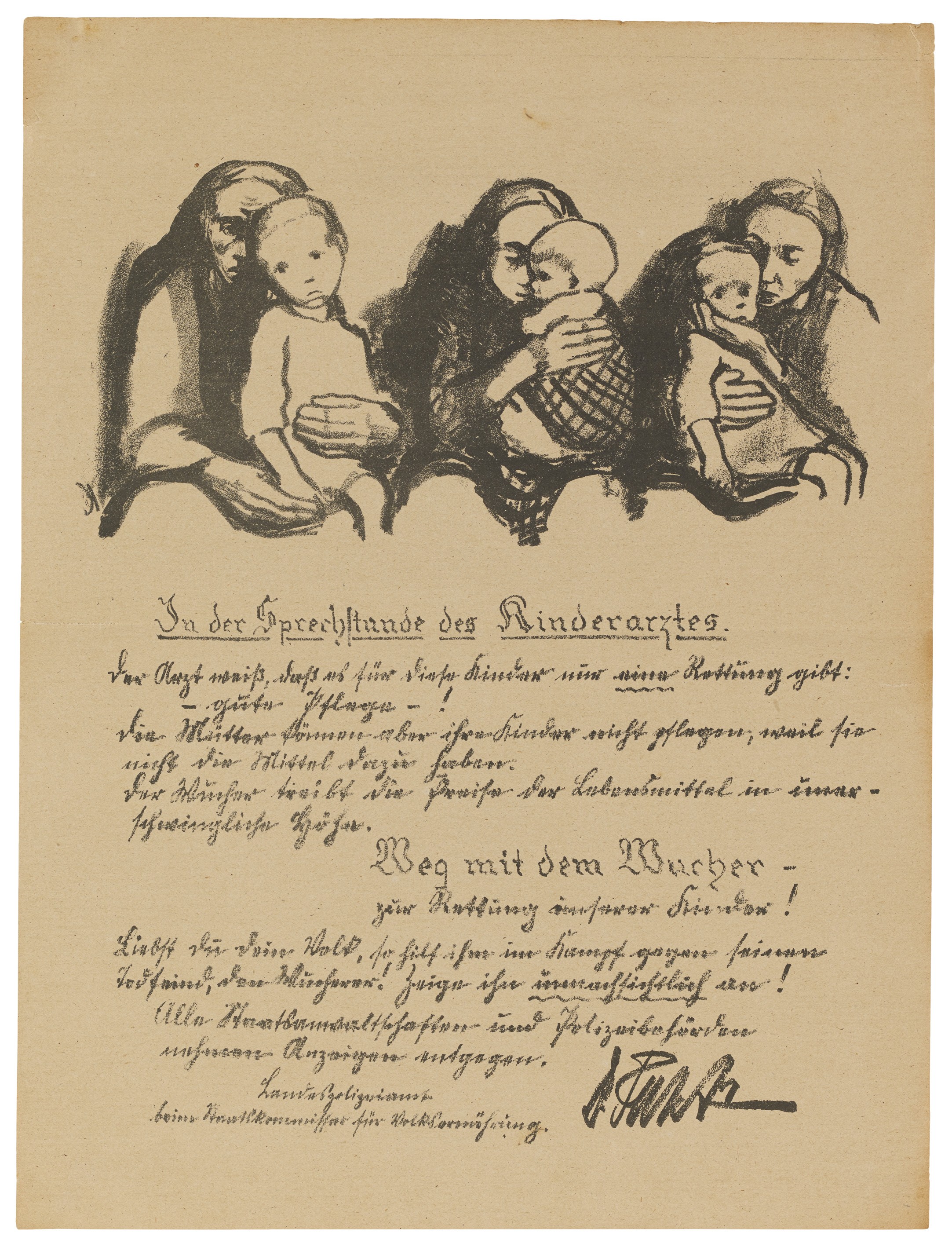
Commissioned by the regional police office of the state commissioner for health and nutrition, Käthe Kollwitz designed three »Pamphlets against Profiteering«.
As a result of food shortages and the onset of inflation, excessive pricing was rife. The population was encouraged to report such cases of usury and profiteering.
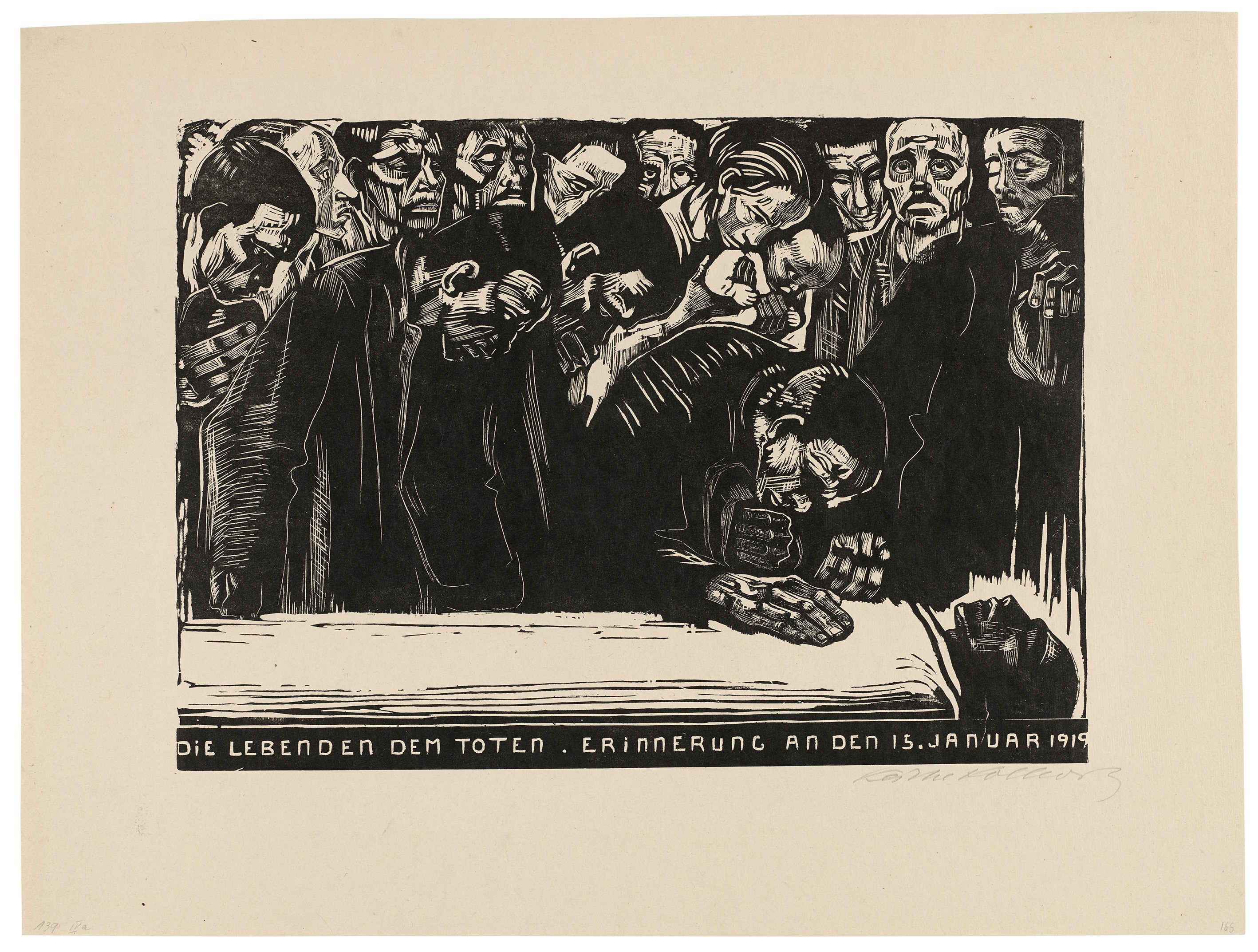
Inspired by Ernst Barlach’s woodcuts at an exhibition of the Free Berlin Secession, the artist created the final version of one of her first works in this technique for a »Memoriam for Karl Liebknecht«.
Kollwitz was outraged by the assassinations of Karl Liebknecht (1871-1919) and Rosa Luxemburg (1871-1919) and impressed by the funeral procession that the USPD and KPD used as an opportunity to stage a mass demonstration. She decided to represent the workers’ farewell artistically without advocating Liebknecht’s political stance.
As an artist, I have the right to extract the emotional value from everything, to let it act on me and then to represent it. Therefore, I have the right to depict the farewell of the workers at Liebknecht’s funeral, even to dedicate the work to the workers, without following Liebknecht’s political path. Or haven’t I?«
On 10 January, the League of Nations – which had its origin in the Paris Peace Conference of 1919 – became operational.
On 13 March the counter-revolutionary Kapp-Putsch was crushed. The country was on the brink of civil war and the government hastily relocated from Berlin to Stuttgart.
Strikes and mass demonstrations in the industrial heartland of the Ruhr.
Max Liebermann (1847-1935) became president of the Prussian Academy of Art.
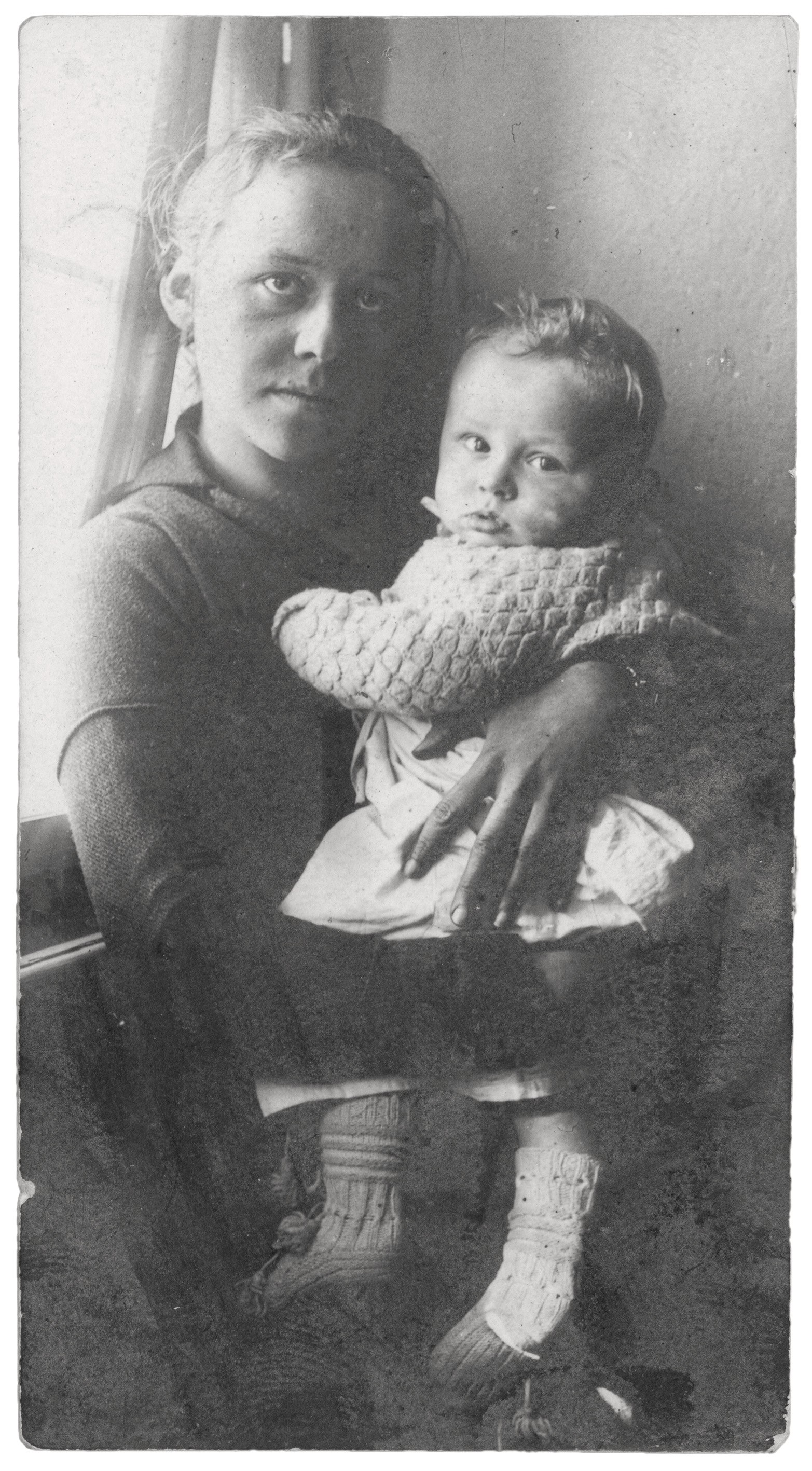
The son of Hans Kollwitz and Ottilie Ehlers-Kollwitz, being the first grandchild of the artist, was given the name of her son who fell in 1914. Peter Kollwitz was drafted in 1940 and fell on 22 September 1942 on the Eastern Front near Rzhev.
The son of Hans Kollwitz and Ottilie Ehlers-Kollwitz, being the first grandchild of the artist, was given the name of her son who fell in 1914. Peter Kollwitz was drafted in 1940 and fell on 22 September 1942 on the Eastern Front near Rzhev.
From 1921 to 1933 the artist was a commission member of the Prussian Academy of Art. The commission was in charge of the programme for special exhibitions and for the selection of artists who were invited to take part in the academy exhibitions staged every six months.
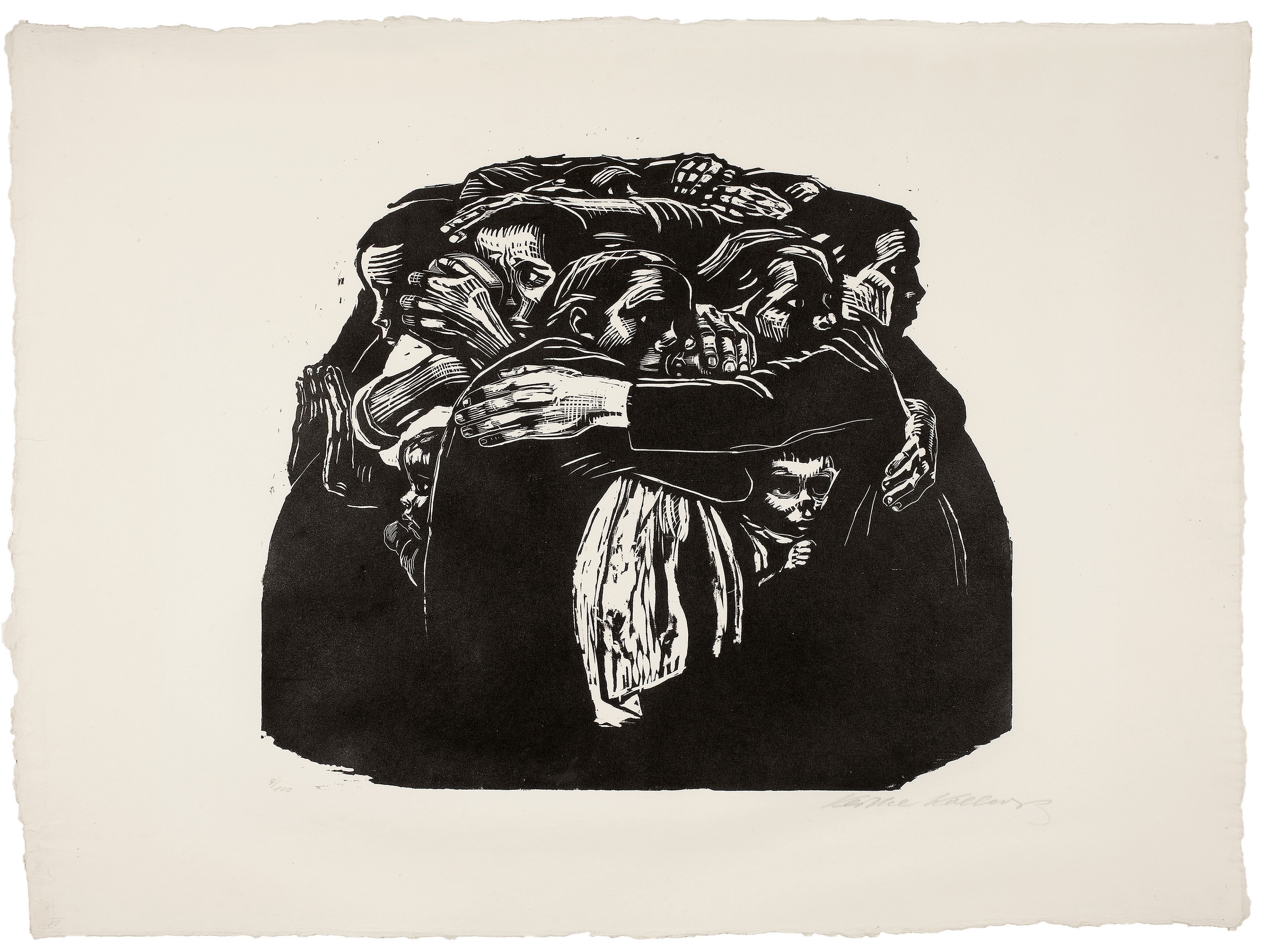
From 1921 to 1922/23 Kollwitz was occupied with the execution of the print cycle »War«.
This first woodcut cycle revealed the inner development of the artist in her attitude towards the First World War – from a supporter to a pacifist. The cycle ended with an appeal to mothers not to let their children join a war. This was a concern that was of great importance to the artist for the rest of her life and which she described in 1941 as her ›testament‹.
I have tried again and again to represent war. I was never able to capture it. Now, finally, I have finished a series of woodcuts that come close to expressing what I have always wanted to express. […] These prints should be sent all over the world and give everybody the essence of what it was like – this is what we all went through during these unspeakably hard times.«
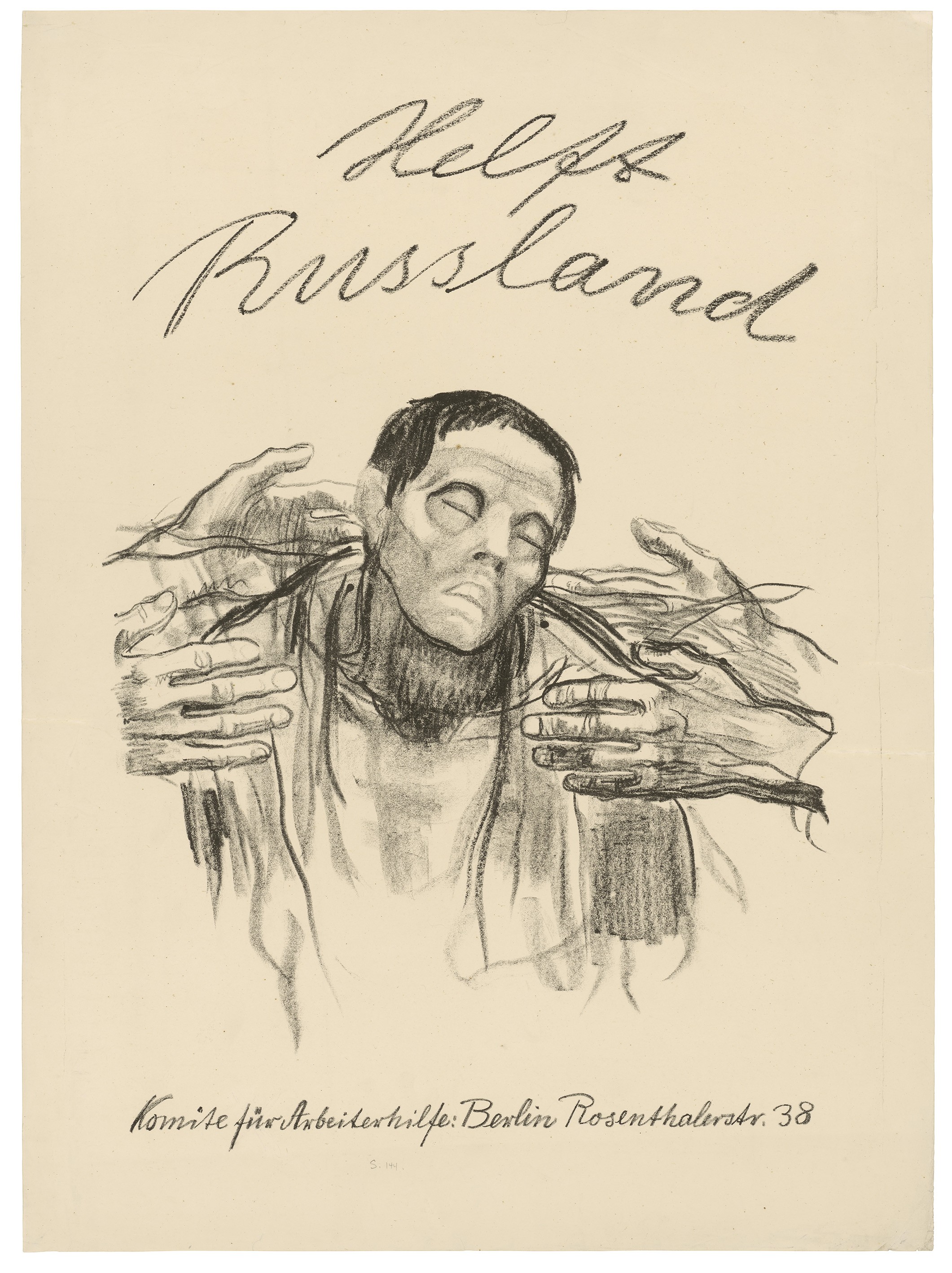
Following an appeal by Lenin in which he asked all progressive artists and intellectuals to contribute to the relief of the catastrophic drought in the Volga region, Kollwitz joined the central and foreign committees of the communist Workers International Relief (WIR) – not, however, for political, but for humanitarian reasons.
The poster »Help Russia«, Kn 170, was created for the Künstlerhilfe (Artists Relief) a subdivision of the WIR that supports their work with posters, exhibitions and other events.
I am cooperating with the Communists to combat the dreadful famine in Russia. As a result, I have once again been drawn into political life, quite against my will. I designed a poster showing a man who is about to collapse and helping hands reaching out towards him. It is a good work – thank God.«
From 1921 to 1934 Käthe Kollwitz took part in the Black-and-White Exhibitions at the Prussian Academy of Art.
Max Liebermann (1947-1935), who had become president of the Academy on 1 October 1920, introduced the Black-and-White Exhibitions to complement the previous exhibitions which mainly featured oil paintings and sculptural works. Käthe Kollwitz participated regularly, from the first presentation in 1921 until 1934.
36 million people were affected by the drought and famine in the Volga region which was the result of revolution, civil war and expropriation. Fridtjof Nansen (1861-1930), who later received the Nobel Peace Prize, appealed to the League of Nations to send an aid expedition to Russia.
The London Reparation Plan set reparation payments to the Allies in the amount of 226 billion gold-marks, payable within 42 years. The German government rejected the demands as unfulfillable and there were protest demonstrations.
An appeal by the Deutsche Liga für Menschenrechte (German League for Human Rights) for a reapprochement with France was signed by Käthe Kollwitz, Albert Einstein and others.
On the Volkstrauertag (National Day of Mourning) – a public holiday introduced in 1919 in honour of the fallen soldiers in the First World War – the artist attended a ceremony that was for the first time held in the Reichstag.
Heinz Bonus, the son of Kollwitz’ friend Beate Bonus-Jeep, moved into the Kollwitz family flat in Weissenburgerstrasse where he stayed as a lodger for three years.
Walter Rathenau (1867-1922) was appointed foreign minister and negotiated the Rapallo Treaty which helped the German Reich to end its international isolation. On 24 June he was the victim of an assassination.
Numerous other assassination attempts unsettled the population. Maximilian Harden (1861-1927), publisher and editor of the weekly Die Zukunft was also severely injured in such an attempt.
Continuous rise of inflation in the German Reich.
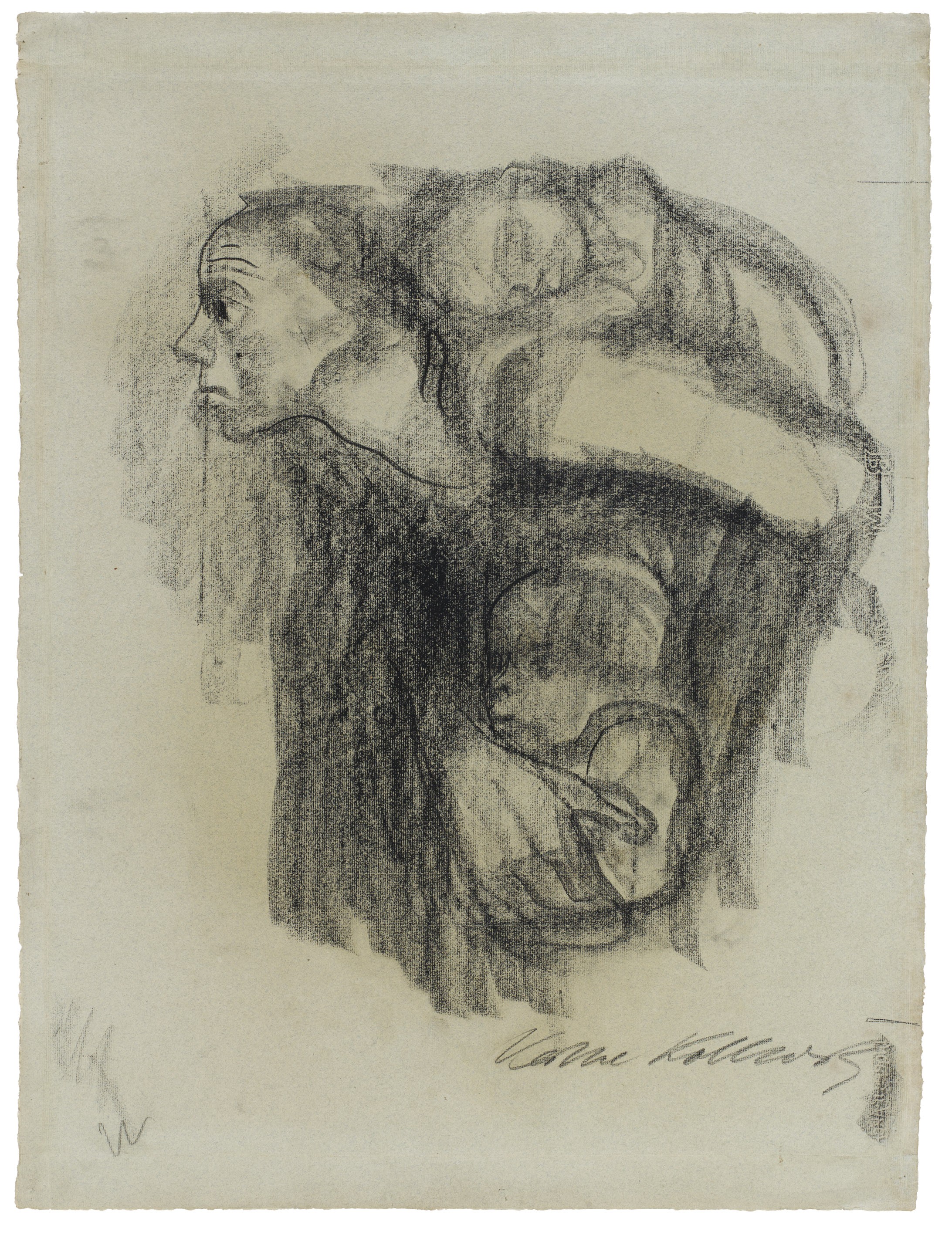
The documentary film maker Hans Cürlis (1889-1982) produced a short film portrait of Käthe Kollwitz for his film cycle Schaffende Hände (creating hands) that he had begun in 1923.
The individual sequences on painters, sculptors and graphic artists such as Lovis Corinth, Max Liebermann and Renée Sintenis documented the artists’ different characteristic methods. Käthe Kollwitz was filmed working on the drawing »Mother with Child on her Back«.
The films were shown individually, but also as part of film matinees or as a supporting programme in cinemas.
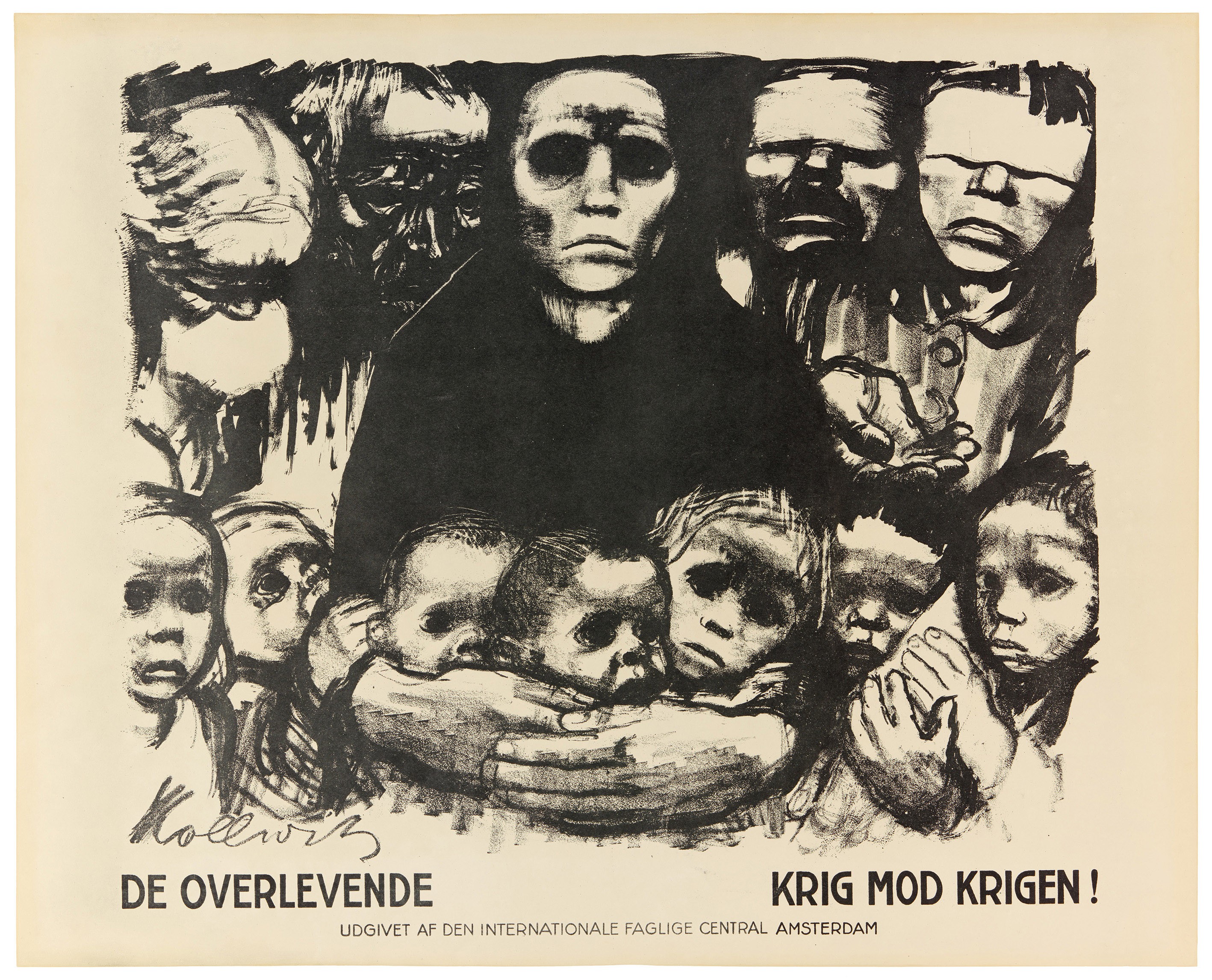
The artist designed the poster »The Survivors – War against War«, Kn 197, which was translated into numerous languages.
She became the second graphic artist – after Théophile Alexandre Steinlen (1859-1923) to be commissioned by the International Labour Union to the design for a poster for the Anti-War Day in September 1924 at which the 10th anniversary of the First World War was commemorated.
In 1923 Käthe Kollwitz had to have gall-bladder surgery.
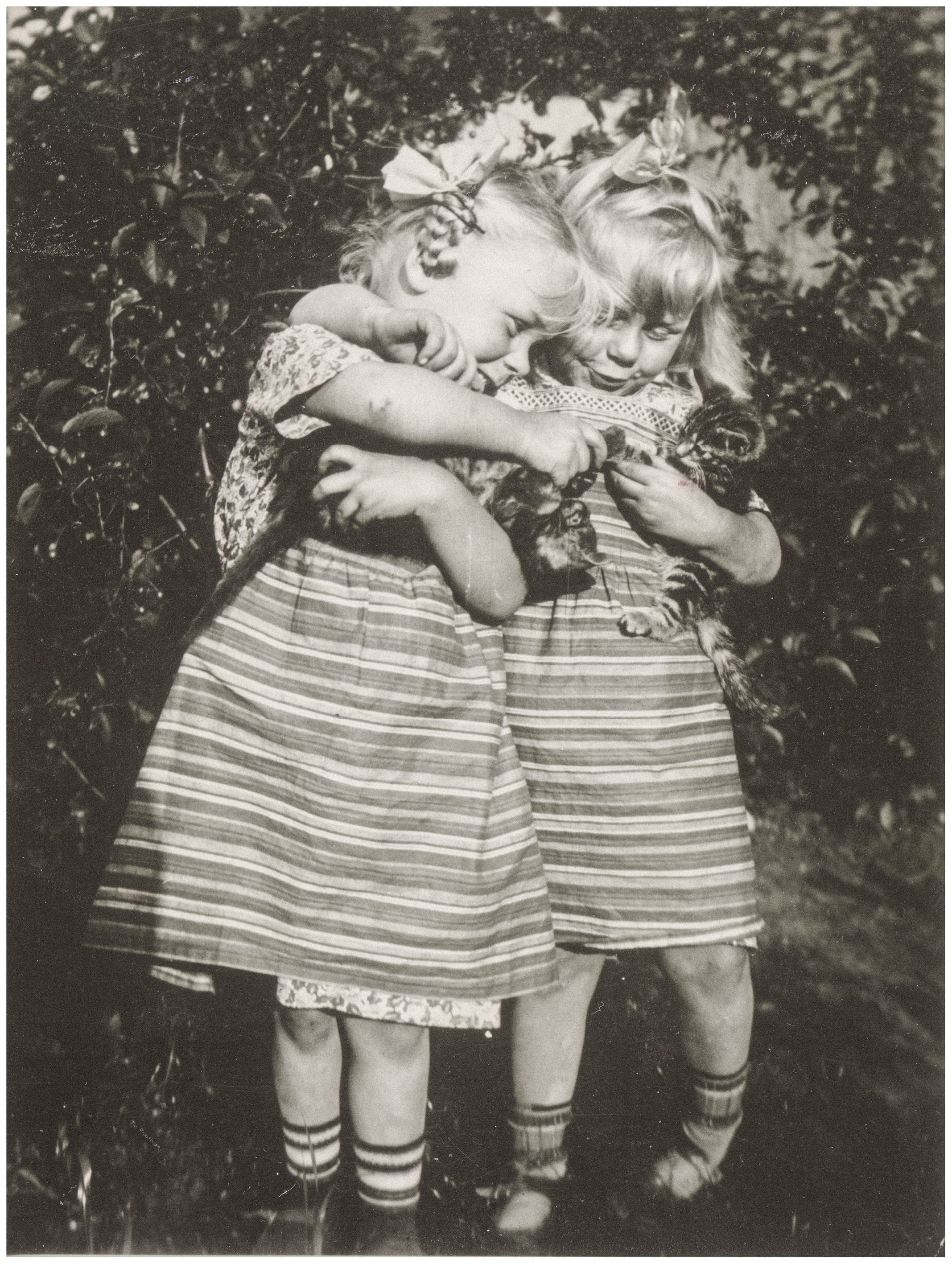
Birth of the twin-grandchildren Jördis (1923-2017) and Jutta (*1923-2021).
Jutta Bohnke-Kollwitz did a degree course in German studies and in 1960 she assumed the task of building up the Cologne Germanica Judaica – Library on the History of Judaism in Germany. From 1985 until the end of 1989 she was the leading founding member of the Käthe Kollwitz Museum in Cologne. In 1989 she published Käthe Kollwitz’ complete diaries and in 1992 a selection of the artist’s letters to her son Hans.
The two daughters of Hans Kollwitz and Ottilie Ehlers-Kollwitz provided care for the artist in the last year of her life at Moritzburg.
Her poster »Germany’s Children are Starving!«, Kn 202, for the Workers international Relief (WIR) addressed the plight of children in Germany during the height of inflation.
When I know that I am collaborating in an international community against the war it gives me a warm and satisfying feeling. Pure art, admittedly, like that of Schmidt-Rottluff, is not my cup of tea. But art generally speaking, yes. […] I agree that my art has a purpose. I want to have an impact in these times in which people are so confused and in need of help.«
The artist published the portfolio ›Farewell and Death‹ with eight facsimile drawings from the period 1910 to 1923. It was printed in offset and its introduction was written by Gerhart Hauptmann (1862-1946). This special edition also contains an original lithograph.
At the Academy Exhibition she showed, for the first time, the complete print series »War« as well as preparatory drawings and folios on the theme of ›Death‹.
I […] presented my woodcut series »War« which I have finally completed alongside many drawings. You know what extremely difficult times these works have emerged from. I did expect a positive reception, but not that the works would resonate in such a way. To know that I have spoken for so many people makes me very happy […]. An additional bonus is that I manage to sell quite a lot and this means that we are not experiencing any hardship at the moment.«
The Occupation of the Ruhr was a military reaction of Belgian and French troops to the German arrears in reparation payments to France.
Inflation reached a climax with over 2 million unemployed people in Germany. From summer 1923 onwards prices went up several times per day. While a loaf of bread cost as much as 1,250 marks in June, by mid-November the price had reached a staggering 5 billion or more in some places. People’s savings were worthless. In order to be able to buy the bare necessities, working class women waited for their husbands at the factory gates on pay day and took the money in laundry baskets or wheelbarrows to the grocer’s. The situation of unemployed people was even worse, and their number rocketed in autumn 1923.
On 15 November 1923 the Rentenmark (a real-estate backed currency) was issued which ended the period of inflation.
The Hitler Putsch on 8 and 9 November 1923 was crushed. It had been an attempt by the NSDAP to topple the government in Berlin.
Käthe Kollwitz became a member of the advisory board of the hostel for adult learners in Prerow on the Darss peninsula which had been founded by the progressive educationalist and draughtsman Fritz Klatt (1888-1945).
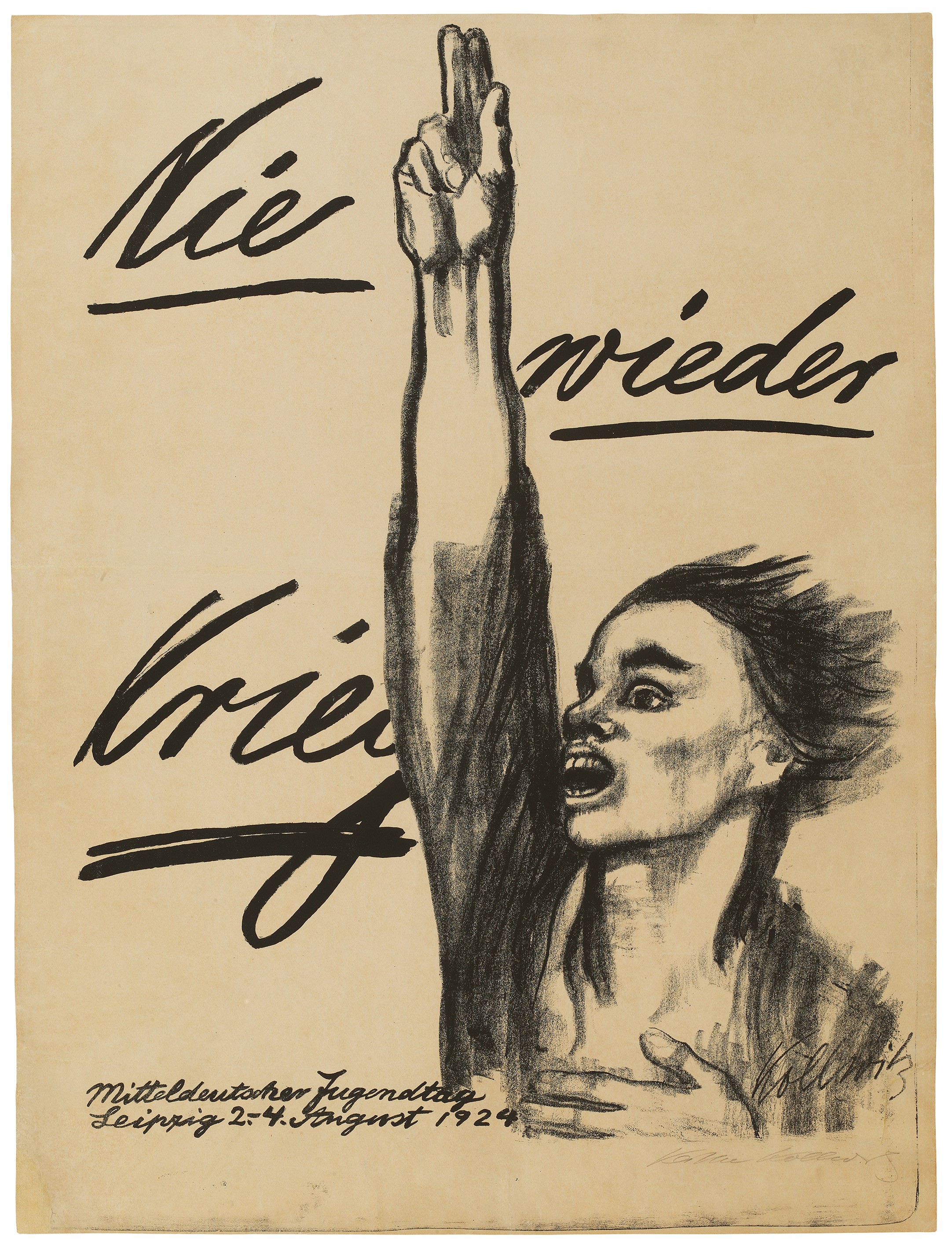
For the occasion of the Central German Youth Day of the Socialist Workers Movement in Leipzig Kollwitz created the poster »Never Again War«, Kn 205. After World War II it became an icon of the peace movement until well into the 1980s.
The lithograph »Bread«, Kn 208, was Käthe Kollwitz’ contribution to the portfolio Hunger – seven original lithographs, published by Otto Nagel (1894-1967) for the Artists Relief of the WIR. The other artists who submitted contributions were Otto Dix, George Grosz, Eric Johansson, Otto Nagel, Karl Völker and Heinrich Zille.
The artist resumed work on the memorial for her son Peter, who fell in 1914, which she had suspended in 1919.
As a result of the inner change that had turned her into a pacifist and made her reject all forms of war, she planned a new concept which no longer included the figure of her fallen son as this would have been too strongly reminiscent of traditional war memorials. In Kollwitz’ new concept, only the mourning parents were represented. She no longer considered the Havelhöhen in Berlin as a location for the memorial, but the war cemetery in Roggefelde, Belgium, where her son Peter was buried.
Participation in the First General German Art Exhibition in Moscow.
Otto Nagel (1894-1967) organised this exhibition with more than 500 works by around 130 artists for the Workers International Relief (WIR) and accompanied Kollwitz to Moscow. The show gave an overview of more recent trends in art, beginning with Expressionism. The only representatives of the Free Secession were Hans Baluschek, Ernst Barlach, Käthe Kollwitz and Heinrich Zille.
The Dawes Plan was a revision of German reparation payments to the victorious powers in the First World War.
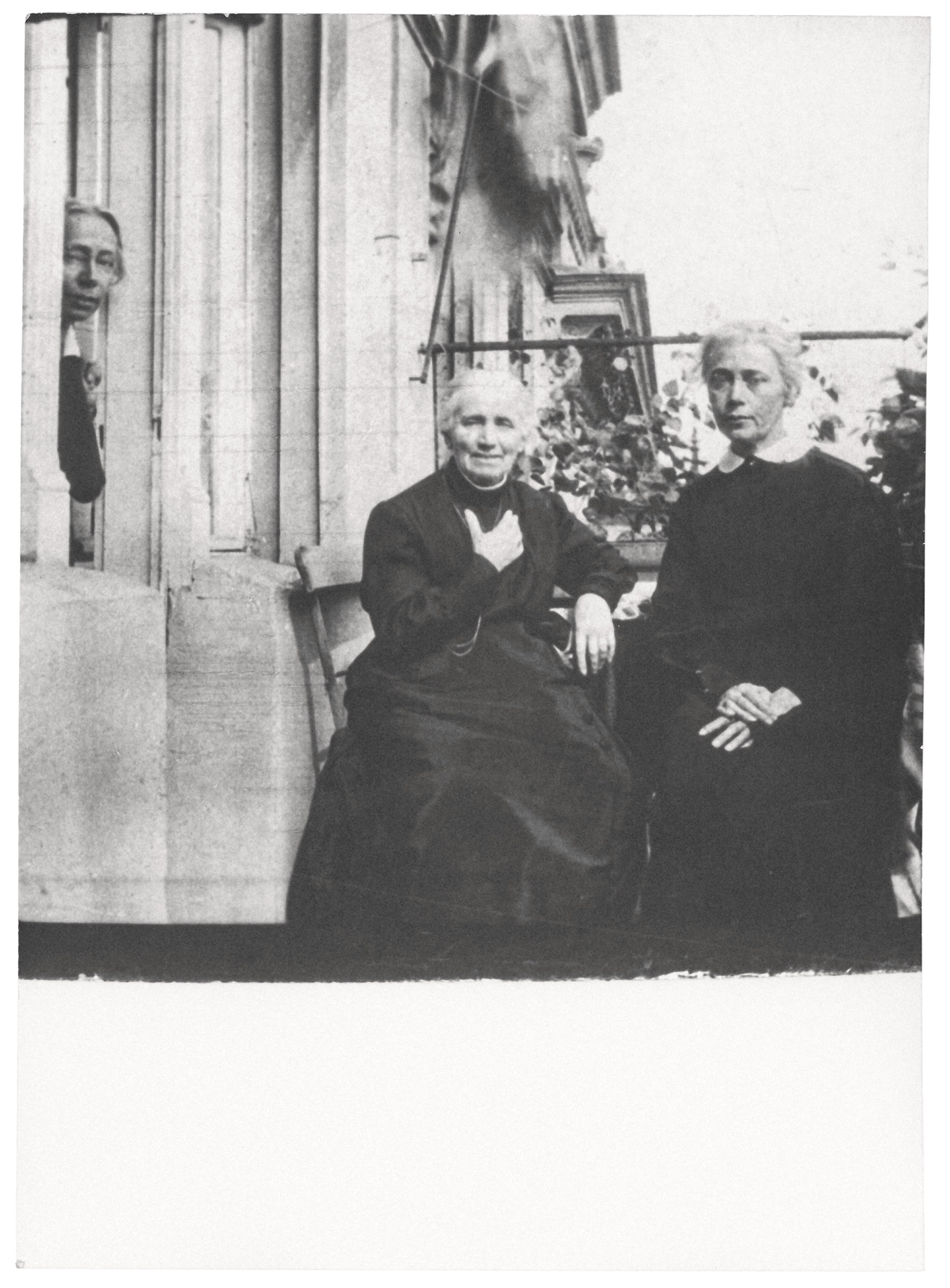
Death of Katharina Schmidt (1837-1925), the artist’s mother who had lived at the flat of the Kollwitz family in Weissenburgerstrasse from 1919.
Death of Anna Butzke (1863-1925), wife of her brother Konrad. After Anna’s death he moved in with Käthe and Karl Kollwitz.
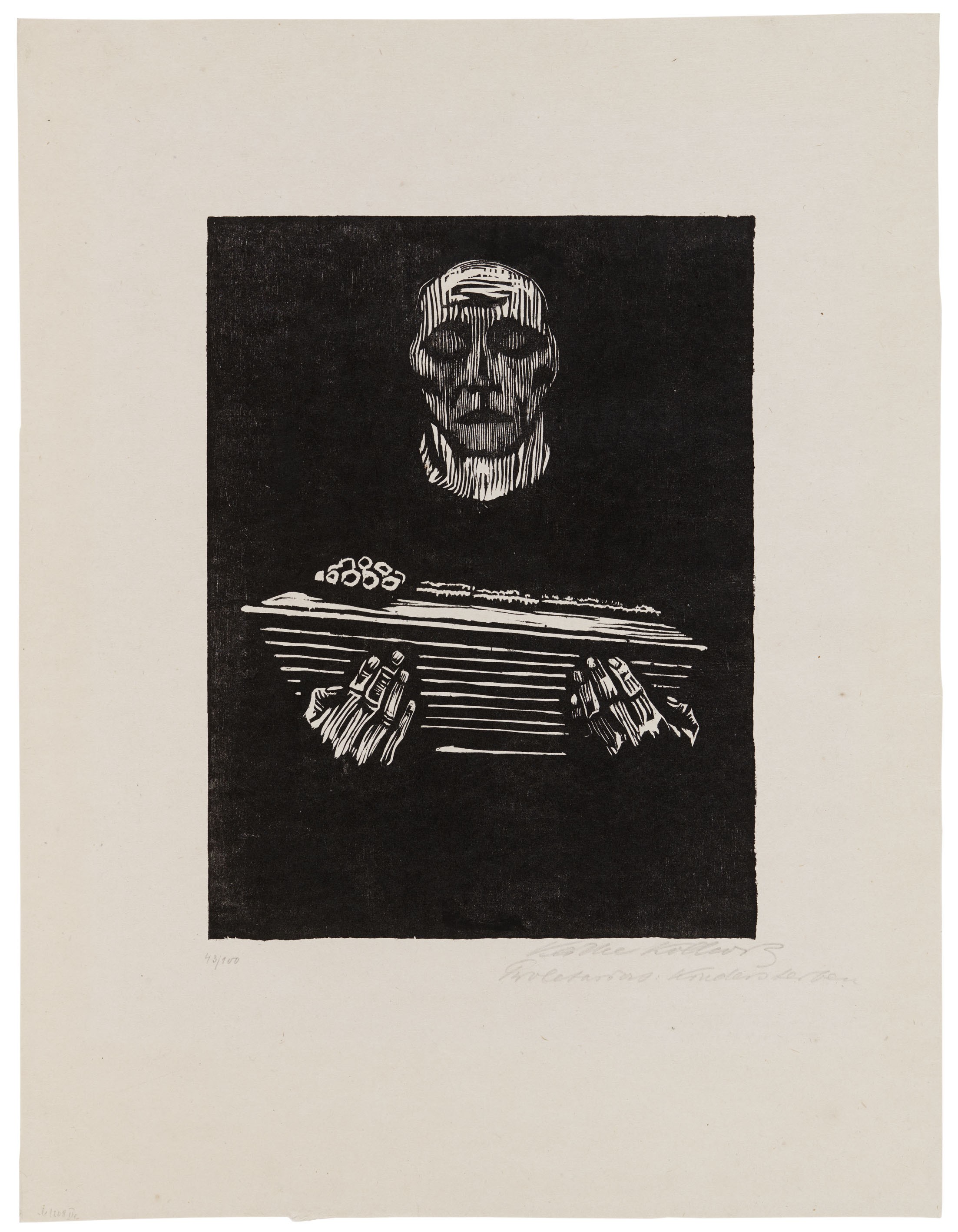
Creation of the woodcut series »Proletariat«, Kn 215, Kn 216, Kn 222.
Paul von Hindenburg (1847-1934) became the second president of the Weimar Republic after the death of Friedrich Ebert (1871-1925).
After his release from prison in December 1924 Adolf Hitler (1889-1945) founded the National Socialist Workers Party (NSDAP) in February 1925.
Käthe Kollwitz was a member of the committee for the preselection of artists for the Great State Prize for Sculptors and Architects donated by the Prussian Academy of Art.
Fides Rüstow, daughter of the sociologist Alexander Rüstow (1885-1963), a close friend of the Kollwitz family, moved in as a lodger.
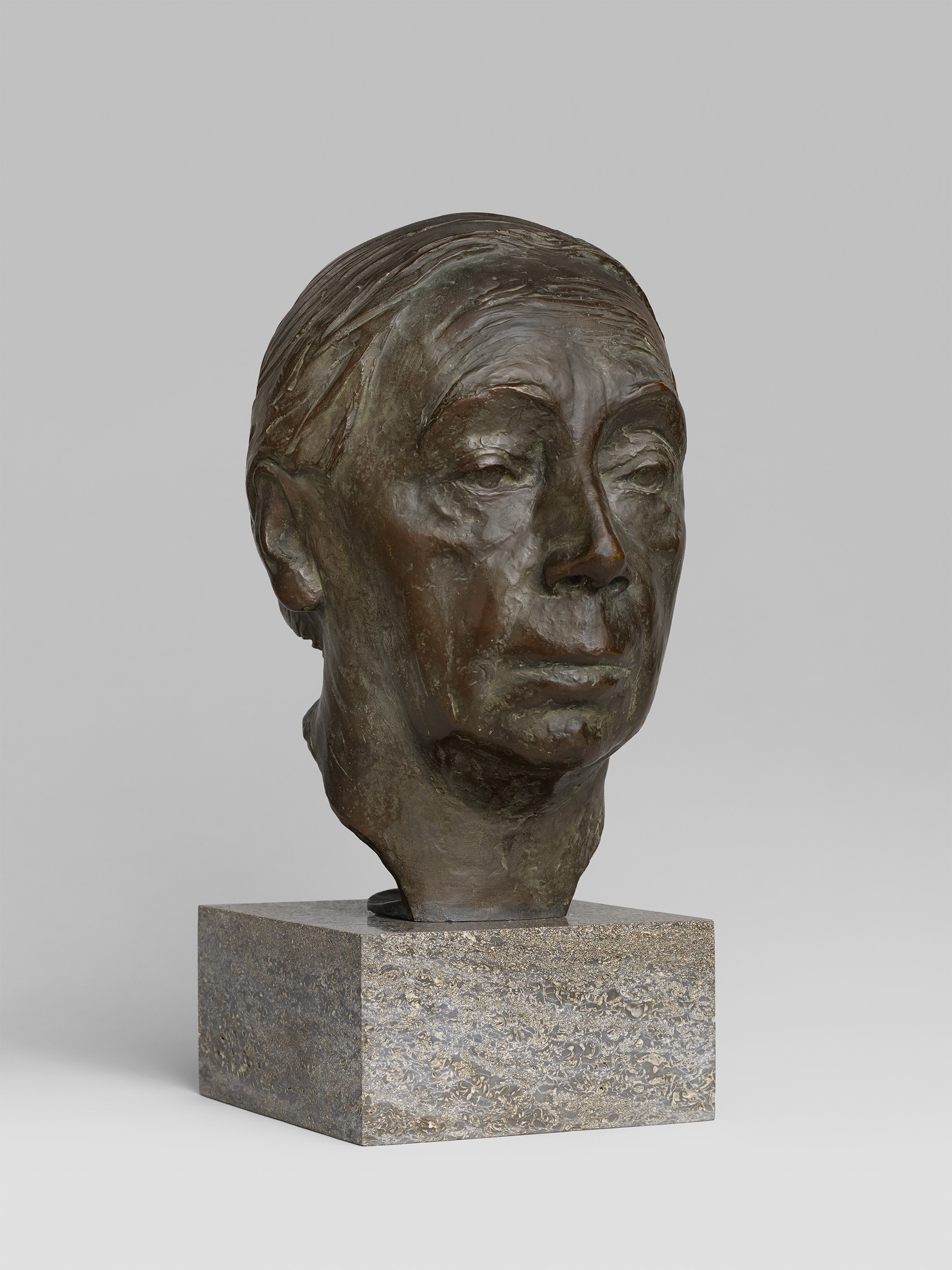
Käthe Kollwitz worked on her sculptural self-portrait from 1926 to around 1936.
One of the probably three bronze casts of this bust that were made during the artist’s lifetime was acquired in the 1930s by the New York collector Erich Cohn (1898-1972), (today: private collection, Berne); another cast was bought by Joseph Katz (no biographical data) (today: Baltimore Museum of Art, USA); the third cast has been part of the collection at the Käthe Kollwitz Museum Köln since 2016.
The Berlin journalist and Kollwitz collector Louise Diel (1893-1967) curated a Kollwitz solo exhibition in 1925. The show was conceptualised as a travelling exhibition with shows in New York in 1925/26, Geneva and Berne in 1926, and finally, on the occasion of the artist’s 60th birthday, in several German cities.
Visit to the grave of her son Peter Kollwitz (1896-1914), who fell in the First World War, at the war cemetery in Roggefelde, Belgium. The artist subsequently began work on the final version of the memorial »Mourning Parents«.
Admittance of Germany into the League of Nations.
Joseph Goebbels (1867-1945) was appointed National Socialist Gauleiter in Berlin. This radicalised the political disputes.