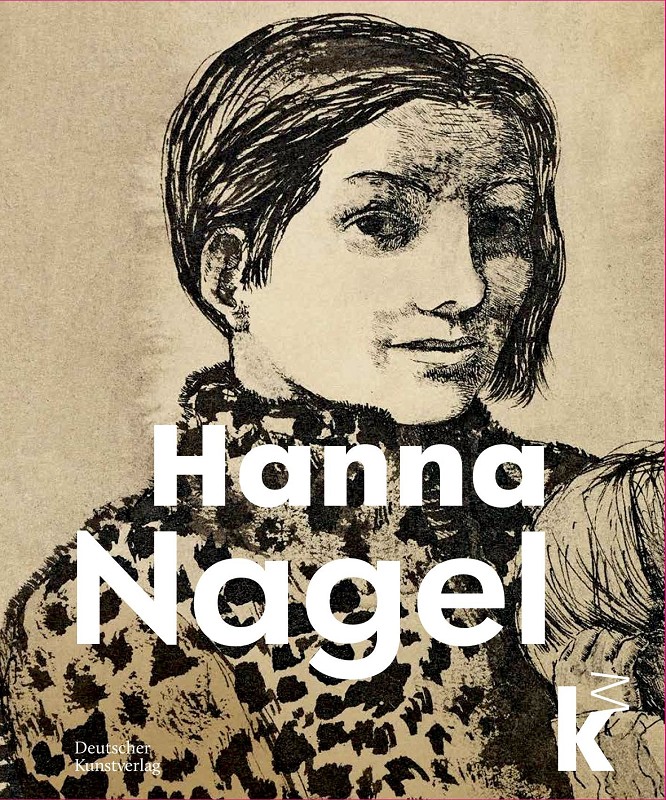
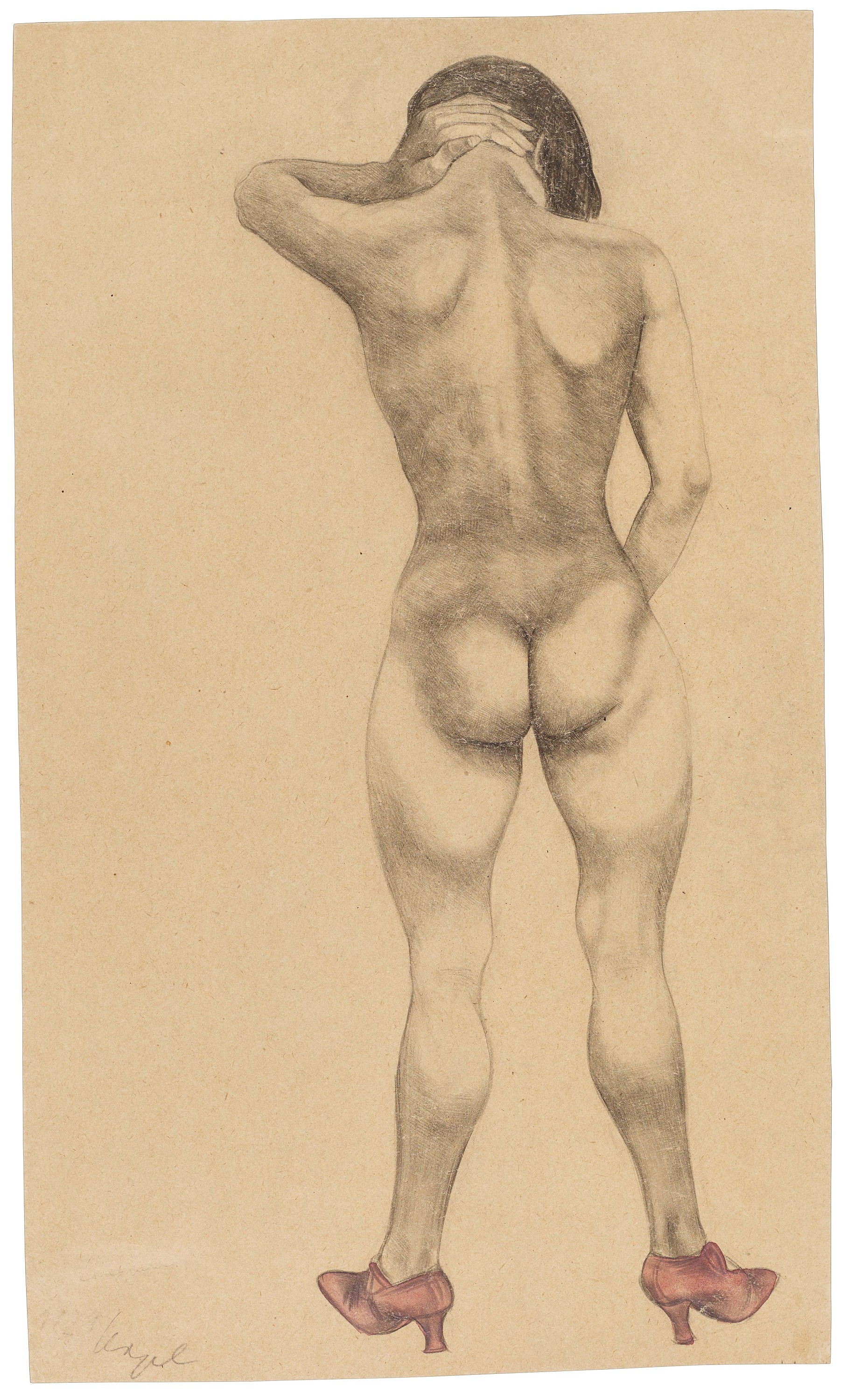
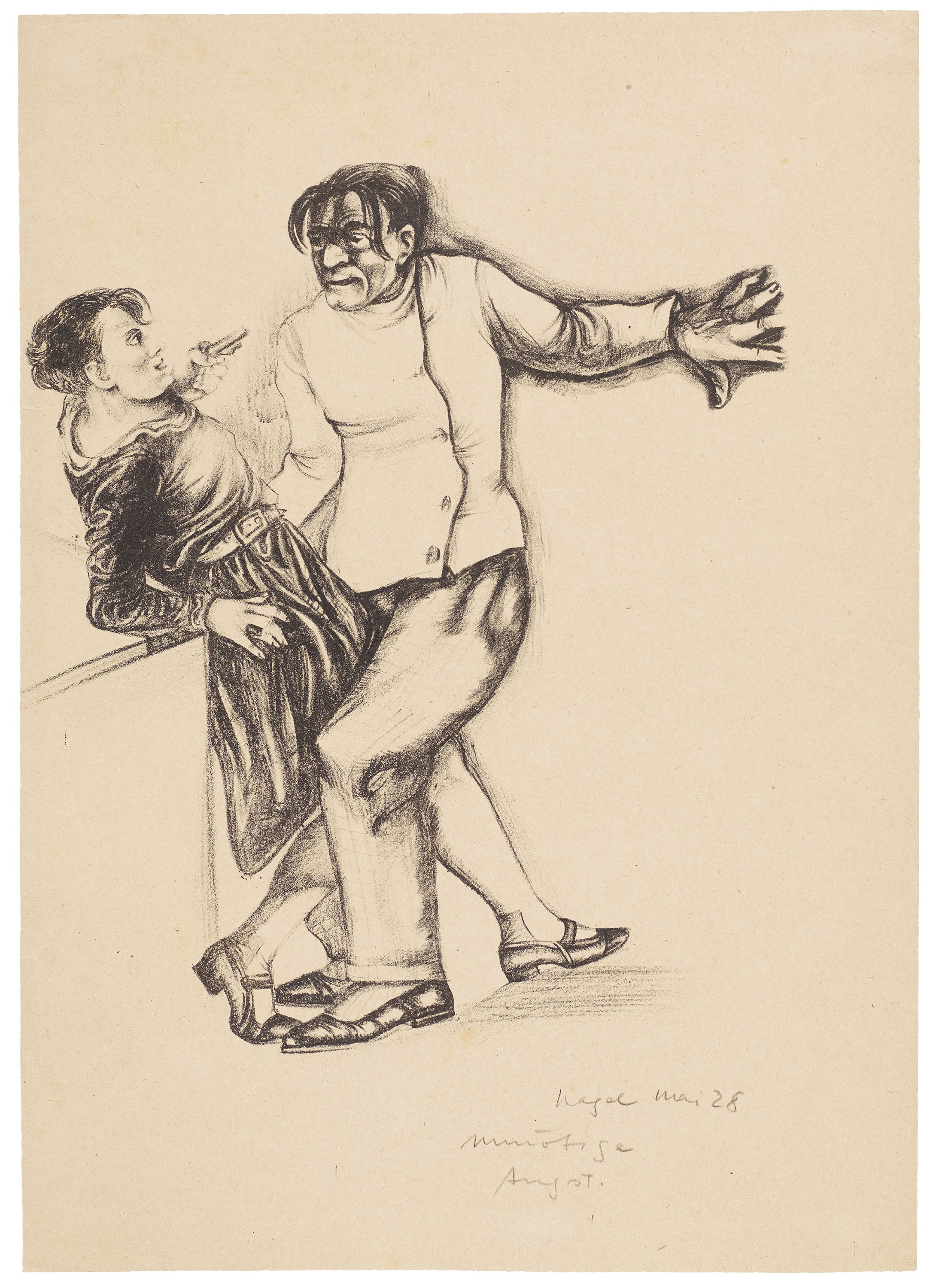
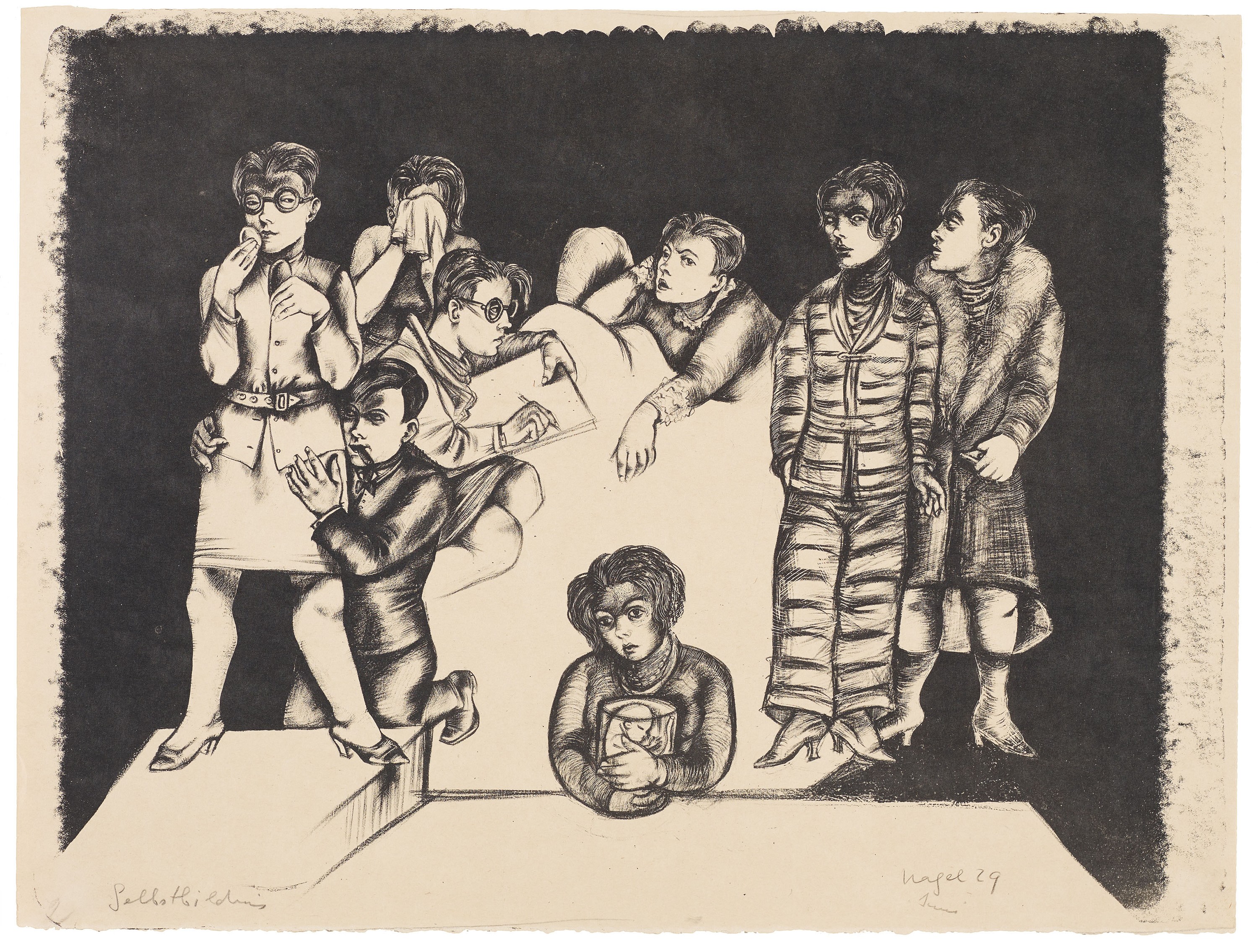
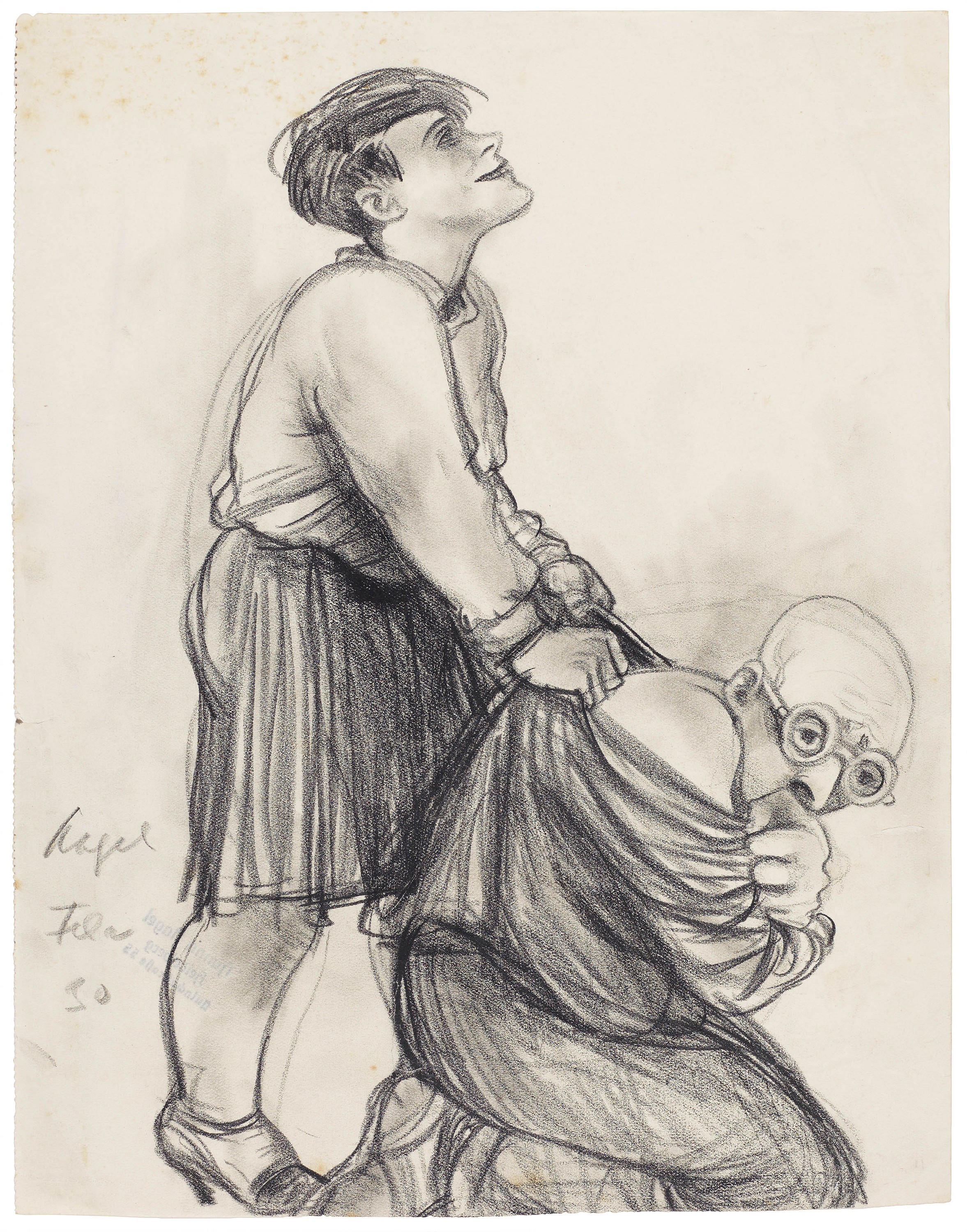
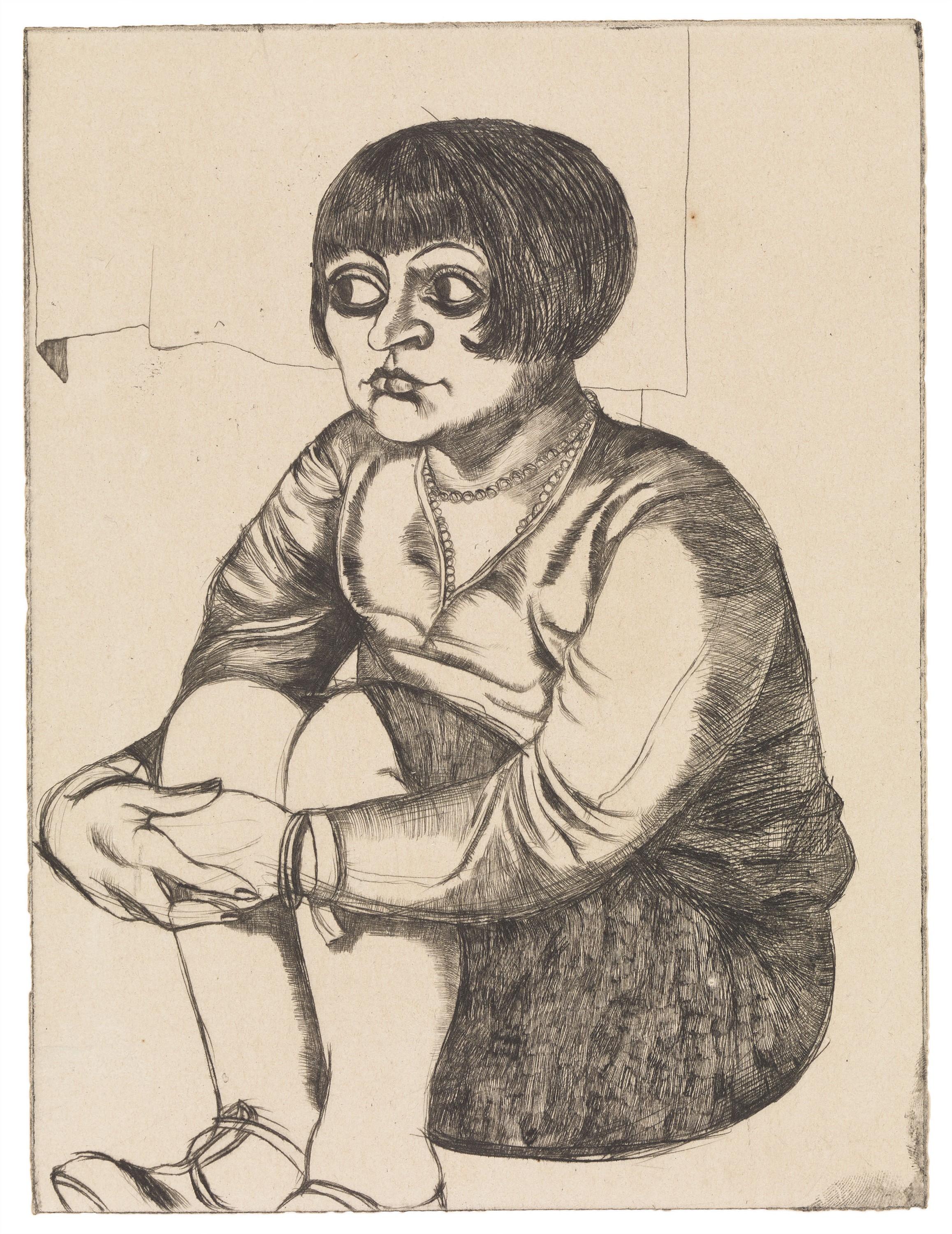
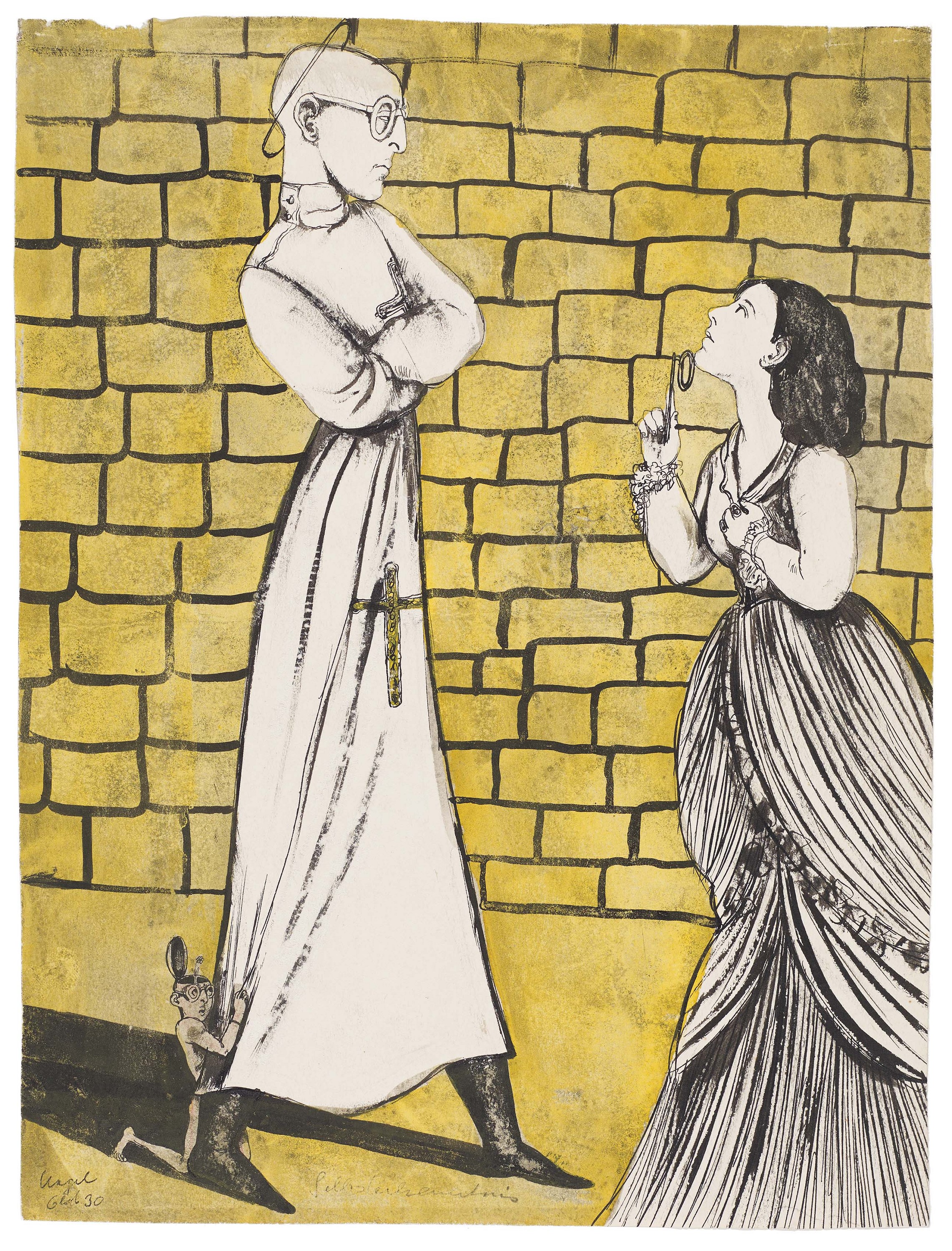
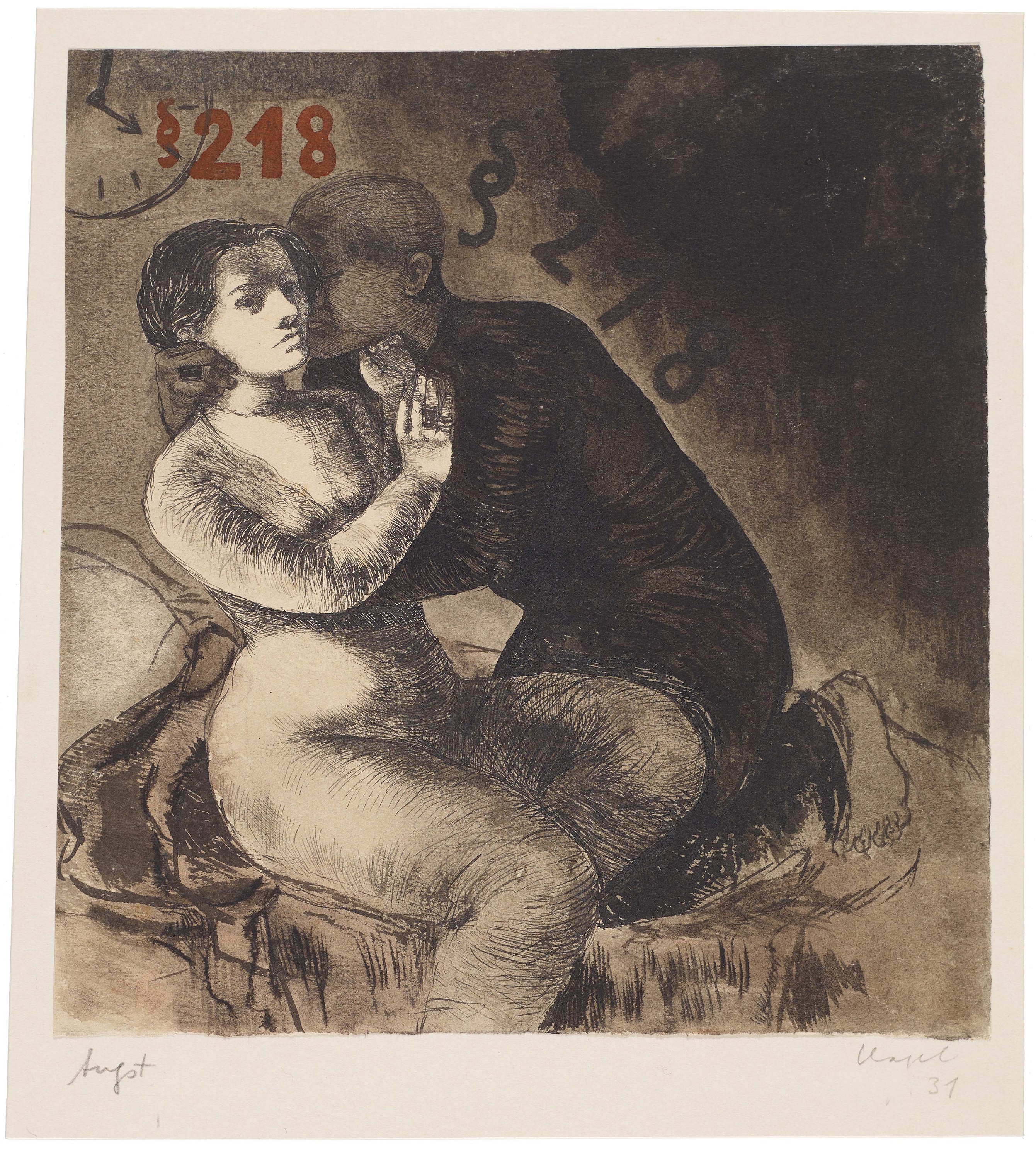
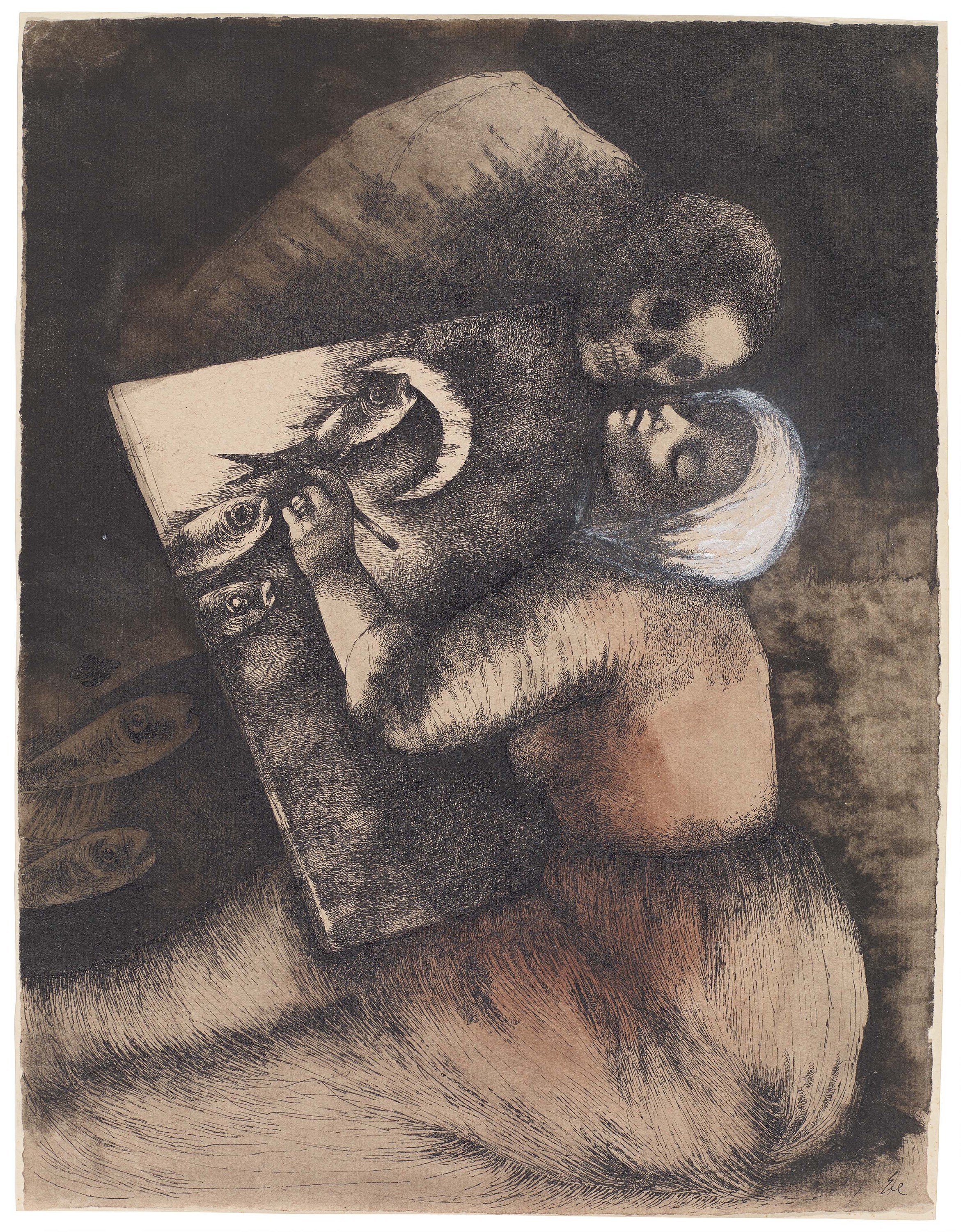
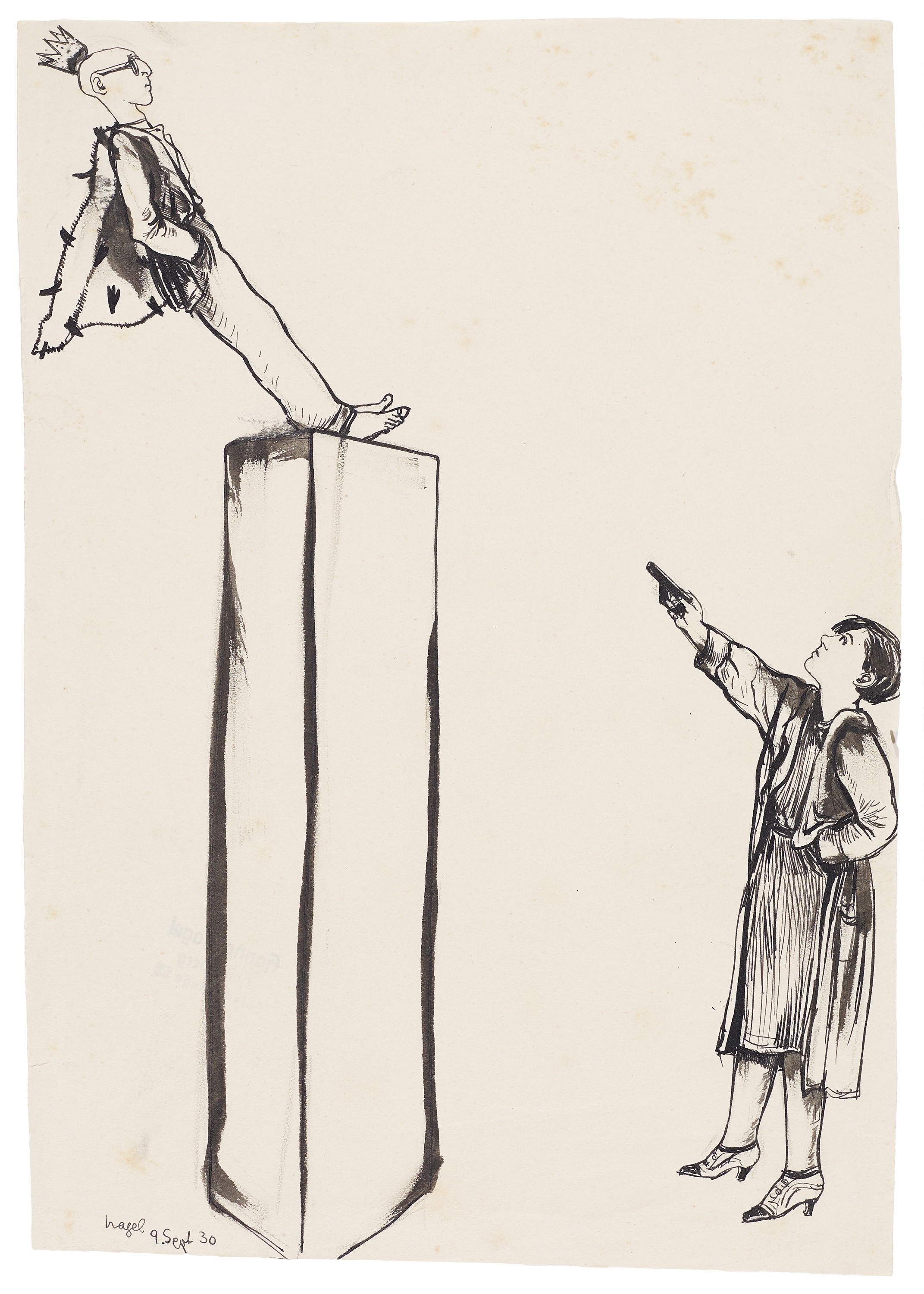
Unconventional, incisive and far ahead of her time: with her pointy pen, Hanna Nagel (1907–1975) exposes gender roles, abuses of power and social injustices. Her feminist and anti-discriminatory views only came to light after her death; today, the political impact of these works is revealed in all its relevance.
From 27 November 2026 to 20 February 2027, the Kollwitz Museum Köln will be bringing this extraordinary artist back into the public eye with around 100 drawings and prints from the 1920s and 1930s — in an exhibition that demonstrates just how precise, powerful and relevant Hanna Nagel’s works are.
Drawing is my passion, my vice, my addiction, for as long as I live.«
With a Keen Eye
From a young age, Hanna Nagel closely observes people, faces and gestures. In 1925, she begins her studies at the Badische Landeskunstschule in Karlsruhe, the centre of New Objectivity, where she develops her incisive visual language under Wilhelm Schnarrenberger and Karl Hubbuch. Her works are directed in particular against hierarchies, violence, unemployment and poverty, as well as their consequences.
As a woman and an artist, she questions role models and power dynamics, including the dependence of female students on their male teachers at their own art schools, but also marriage, motherhood and family, which she does not portray as an idyll, but rather as areas of tension between closeness and distance, care and overwhelm, self-realisation and social pressure.
Concepts that are discussed today as care work, mental load and structural discrimination are already explored in precise yet uncomfortable imagery in Nagel’s work decades earlier. In her art, she depicts the realities of women’s lives in the Weimar Republic, addressing both her own desire for children and the limits of female self-determination – for example, in unsparing self-portraits.
In 1929, she transfers with her husband, Hans Fischer, to the Vereinigte Staatsschulen für freie und angewandte Kunst Berlin and becomes a master student under Emil Orlik, who sees in her a »new Kollwitz«.
Myth, Death and Dream
In the early 1930s, Hanna Nagel distances herself from the austerity of New Objectivity. Her style becomes more painterly, her imagery more fairy-tale-like. During several stays in Rome, she develops her »Dark Sheets« – symbolically charged, sombre dream worlds featuring mythological elements and historicising motifs. The theme of death occupies a special place in these works.
Although Hanna Nagel is able to continue working and exhibiting under the National Socialists, she nevertheless keeps her critical early work under lock and key. It is not until after her death in 1975 that it is discovered in its entirety in her estate, thus revealing the political dimension of her work.
An exhibition in collaboration with the Kunsthalle Mannheim
Hanna Nagel
Ed. by Inge Herold and Johan Holten,
Kunsthalle Mannheim
216 pages, 196 colour illustrations,
27 × 22.5 cm, hardback, German/English,
Deutscher Kunstverlag 2022,
ISBN: 78-3-422-98949-8
A peek inside the book
Museum price: € 30
Available from our museum shop
or by email to museum@kollwitz.de