Today, the museum boasts the largest Kollwitz collection worldwide and conveys a well-rounded picture of the draughtswoman, graphic artist and sculptor. Like no other artist, Kollwitz emphatically addressed the themes of war, poverty and death in her works, but there was also a strong focus on love, protection and the pursuit of peace. There is hardly a better place than this museum to get a close understanding of Käthe Kollwitz.
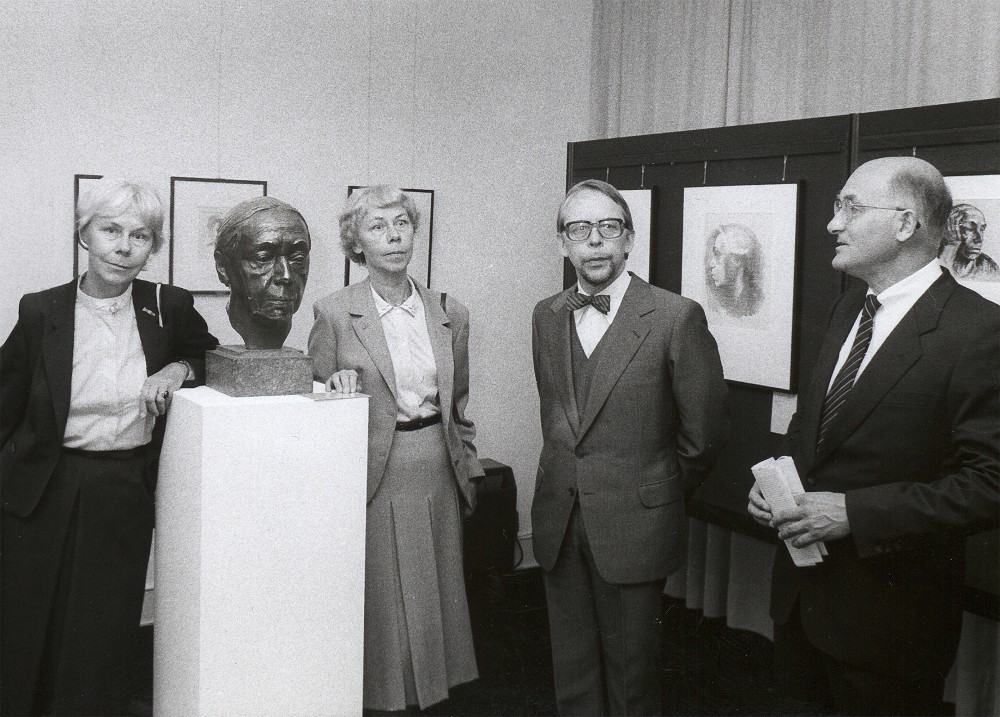
In 1983, the Kreissparkasse Köln – Cologne Savings Bank – acquired a portfolio of 60 drawings that would form the collection’s foundation stone. These works are from the artist’s estate and were in her possession until her death. Acquisition by the Print Collection of the municipal Wallraf-Richartz-Museum was not possible, but the commitment of the Kreissparkasse Köln – in line with the Cologne tradition of art patronage – saved the works from being scattered across the globe when they were being auctioned.
In 1984 another set of works from a private collection was added so that the Kreissparkasse Köln was able to exhibit 112 drawings when the museum was opened in 1985.
By 1985, as a result of further acquisitions and donations, the collection had grown to comprise a total of 120 drawings, 60 prints and all 15 of the artist’s sculptures than can be exhibited indoors. An agreement with the joint heirs of the Kollwitz estate stipulates that the collection must not be sold, but should be completed and made accessible to academic research and editing, and be presented to the general public.
A first and important step was the presentation of the Käthe-Kollwitz-Collection of the Kreissparkasse Köln, which was the official name of the collection on the 40th anniversary of the artist’s death on 22 April 1985. For this purpose, the Kreissparkasse Köln converted the office space on the former executive floor – roughly 800 square metres – into small exhibition rooms.
This first exhibition also marked the birth of the museum. Many visitors as well as the press referred to it as the first Käthe Kollwitz Museum.
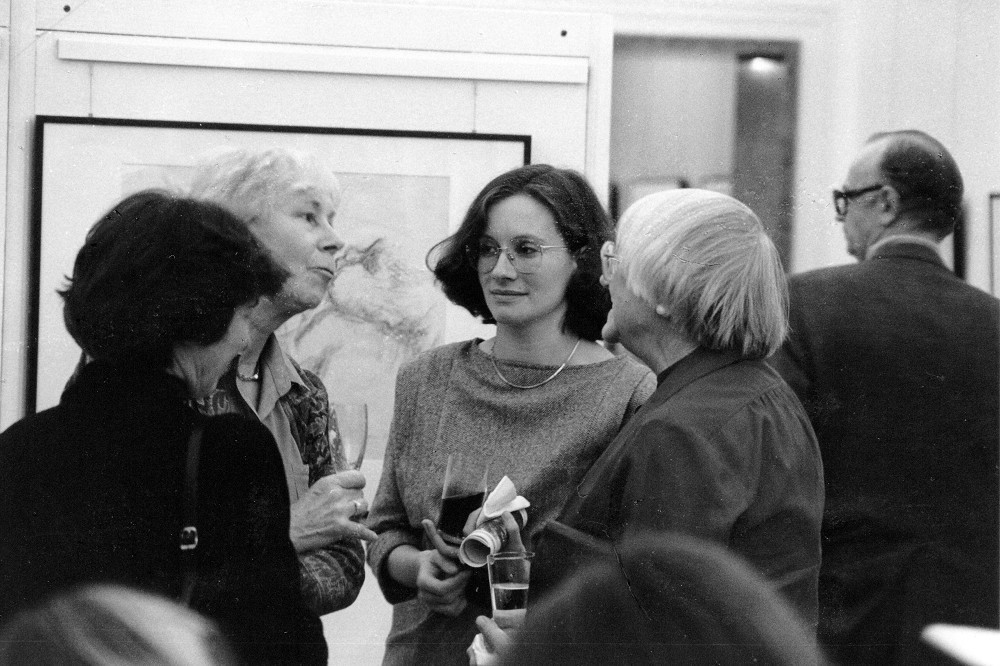
The founding director of the Käthe Kollwitz Museum Köln was Dr. Jutta Bohnke-Kollwitz (1923–2021), a granddaughter of the artist.
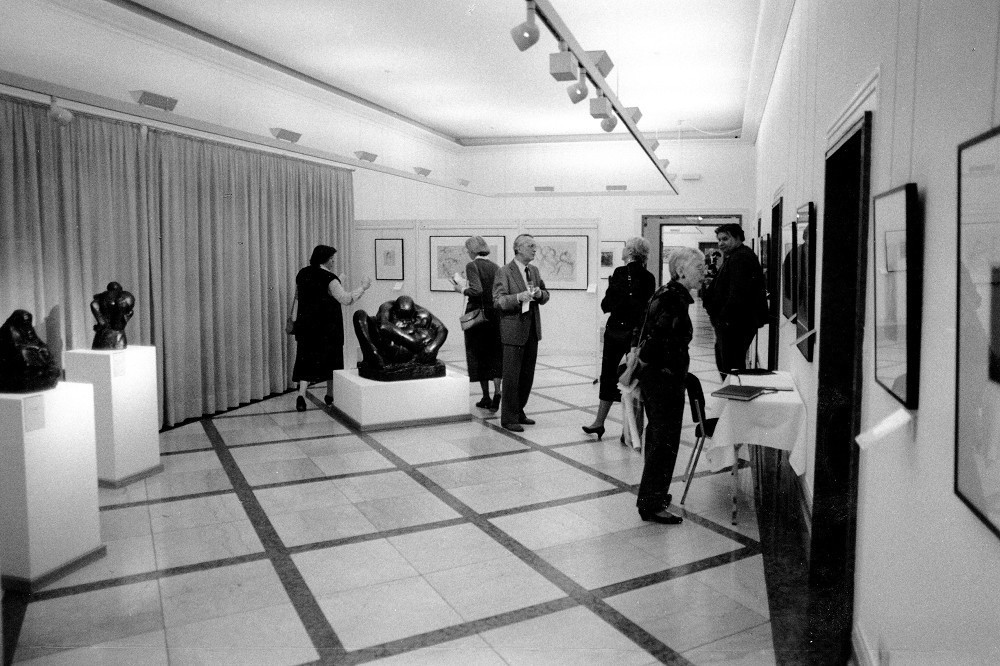
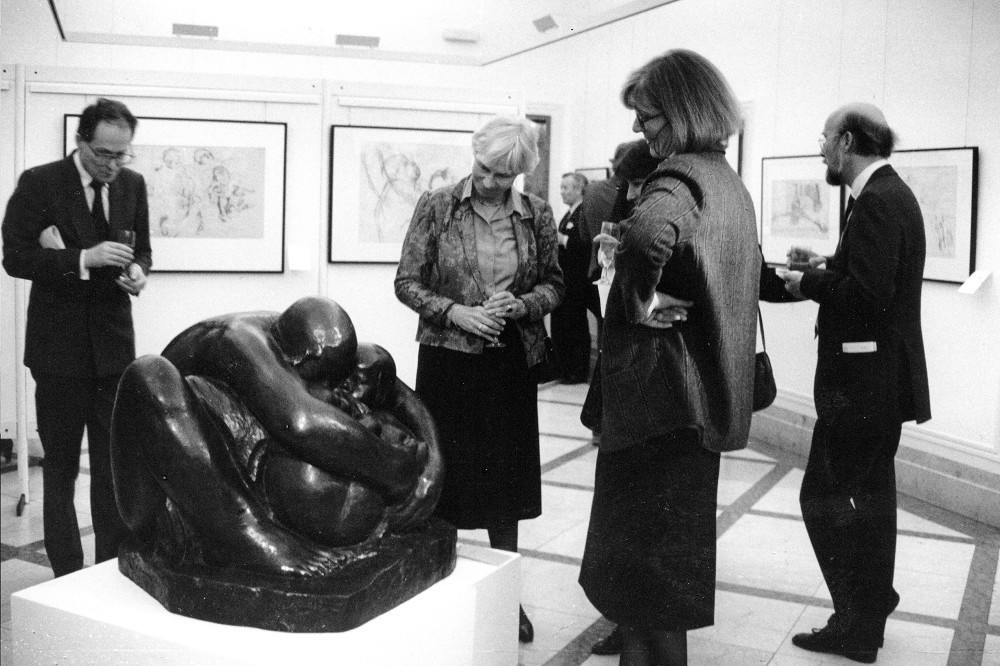
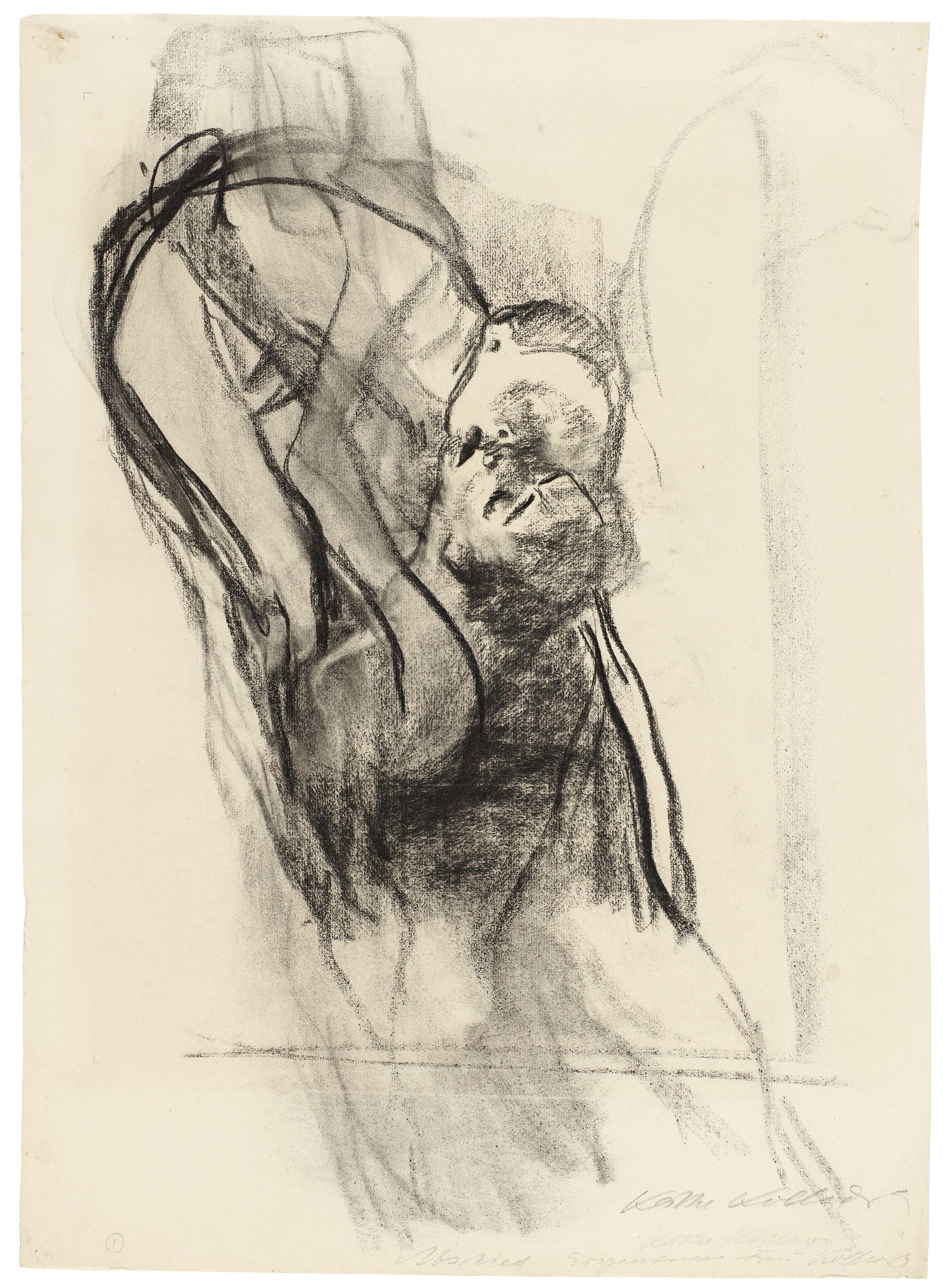
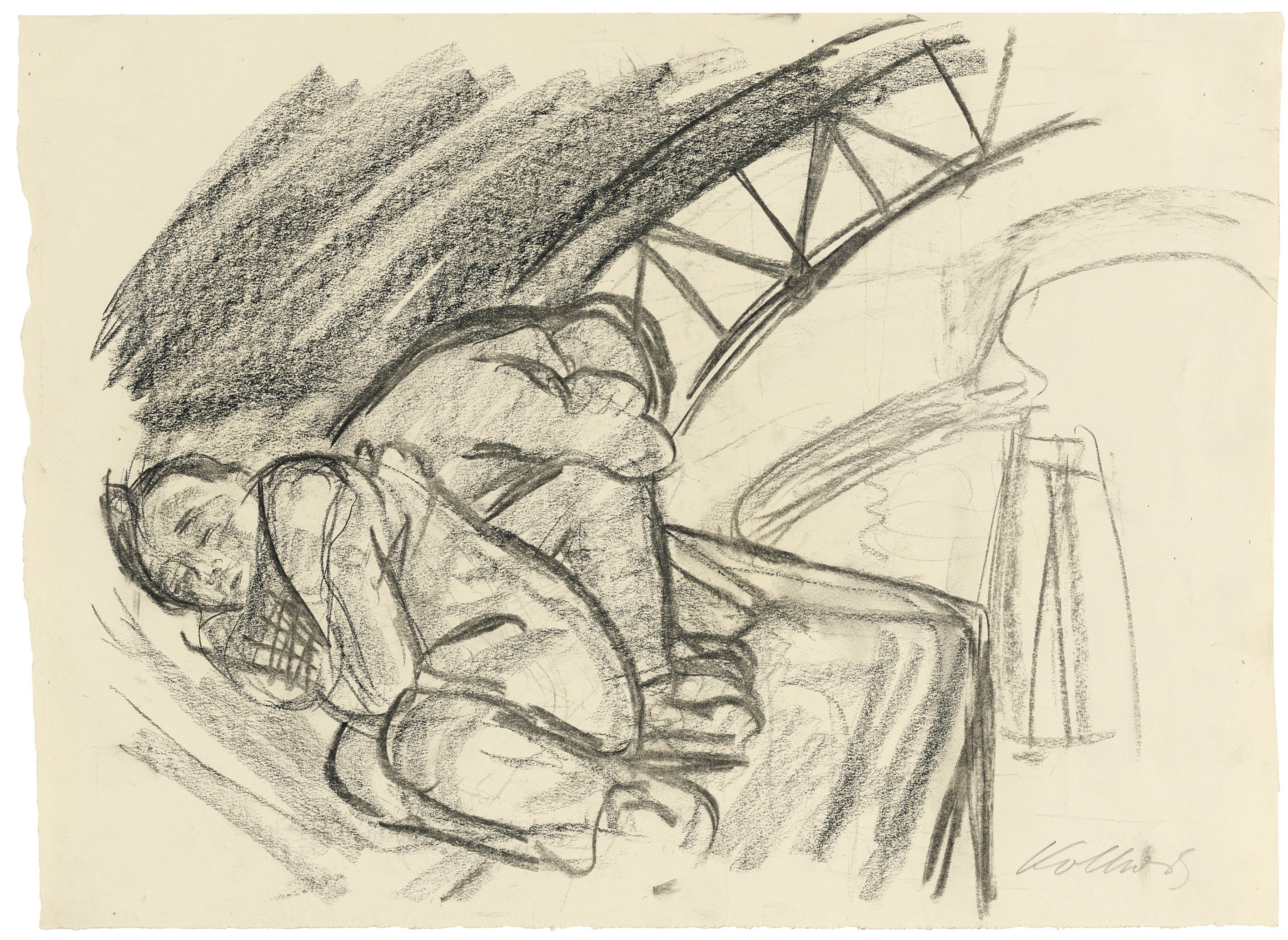
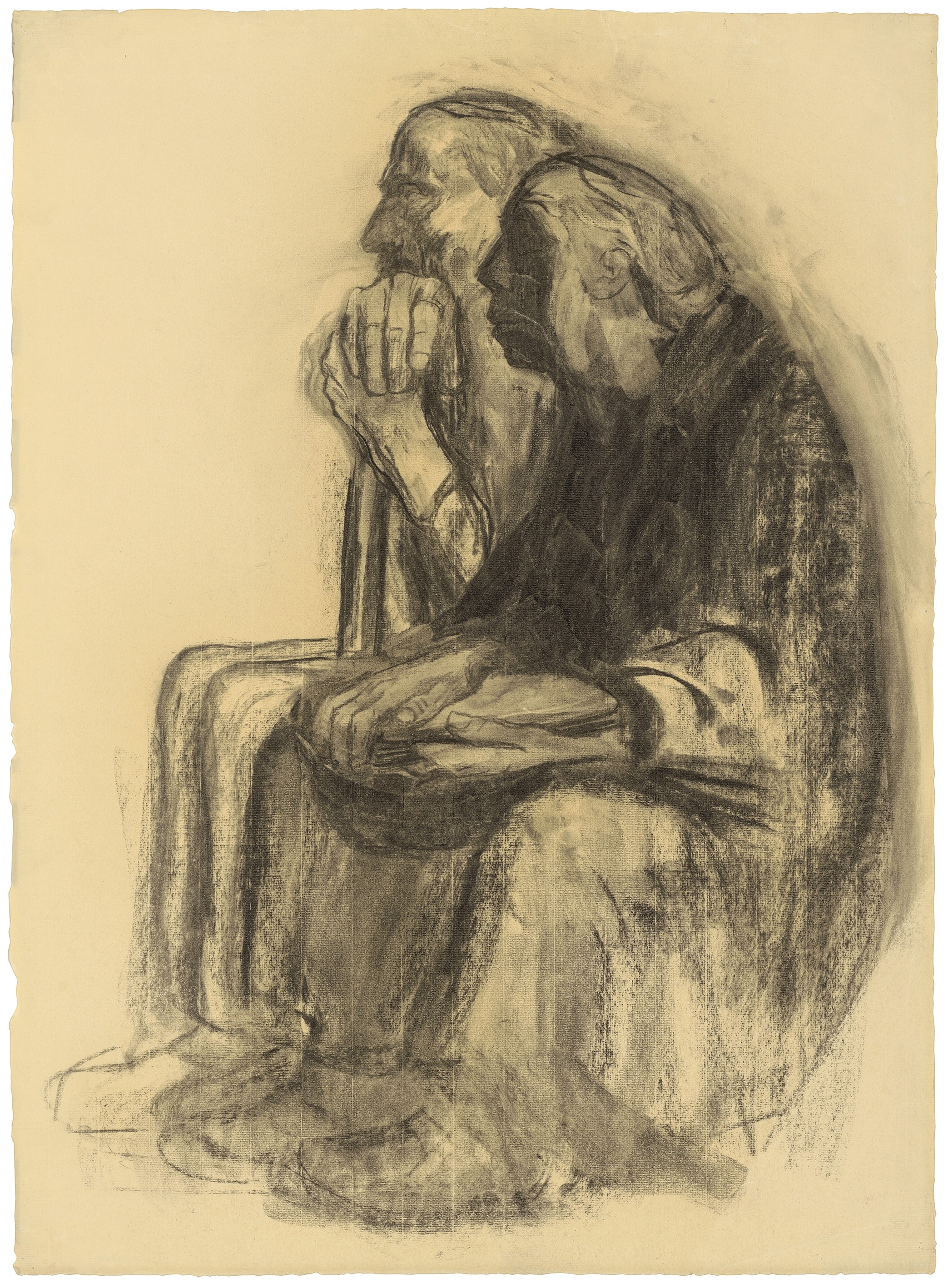
After the collection had found its temporary home on the administrative floor at the main branch of the Kreissparkasse which could only be visited during opening hours, a new, purpose-built venue was made available in early 1989.
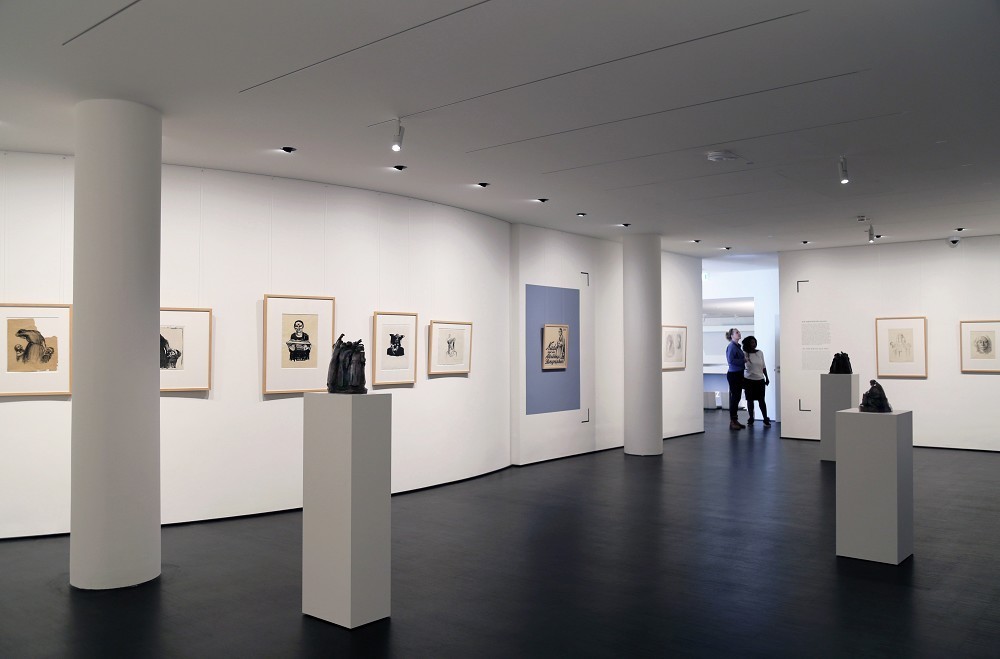
On 26 January 1989 the new museum, designed by the architect Hans Schilling was opened. It is located on the 4th floor of the Neumarkt Passage shopping gallery and offers 1,000 square metres of exhibition space where the works can be presented in an ideal environment and where excellent modern conservational care is ensured.
From 1990 to 2022, the museum is under the direction of Hannelore Fischer, who has been involved in the groundwork for the museum's development since the very beginning. During her 32-year tenure, she developed the Kollwitz Collection with great commitment into the most extensive and self-contained collection worldwide – and the presentation from an initially rather improvised institution into a graphic arts museum with an international reputation. At the end of March 2022, the long-time director and Kollwitz expert retired.
From April 2022, the art historian Katharina Koselleck will be director of the Kollwitz Museum Köln. She has already been a research assistant in Hannelore Fischer's team since 2008 and, as curator, is responsible for numerous special exhibitions. With her appointment as director, the board of Kreissparkasse Köln as the museum's sponsor, is making a promise of continuity for the successful future of the museum.
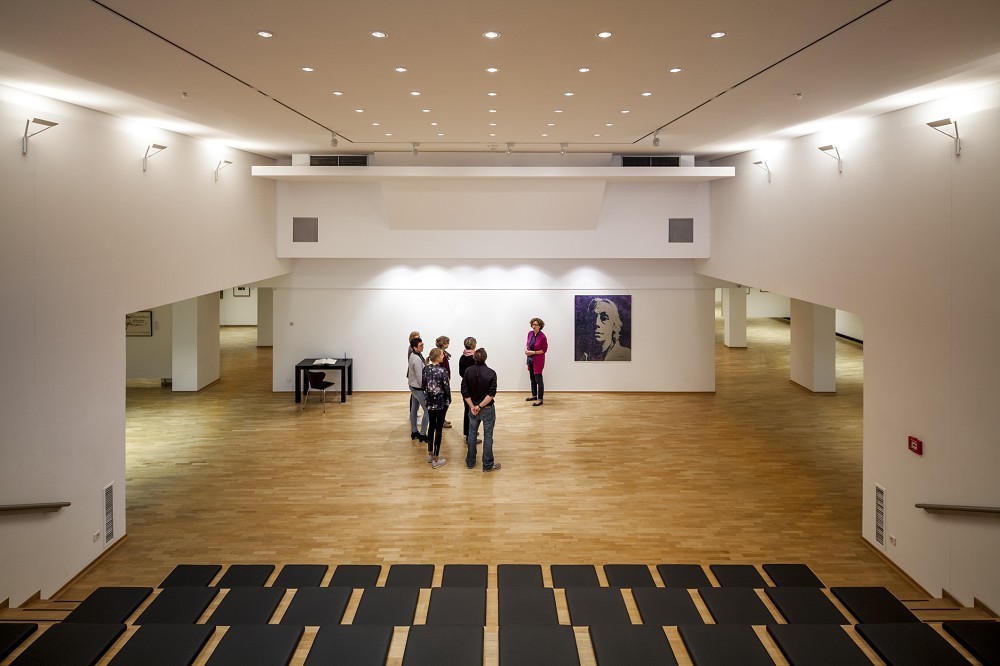
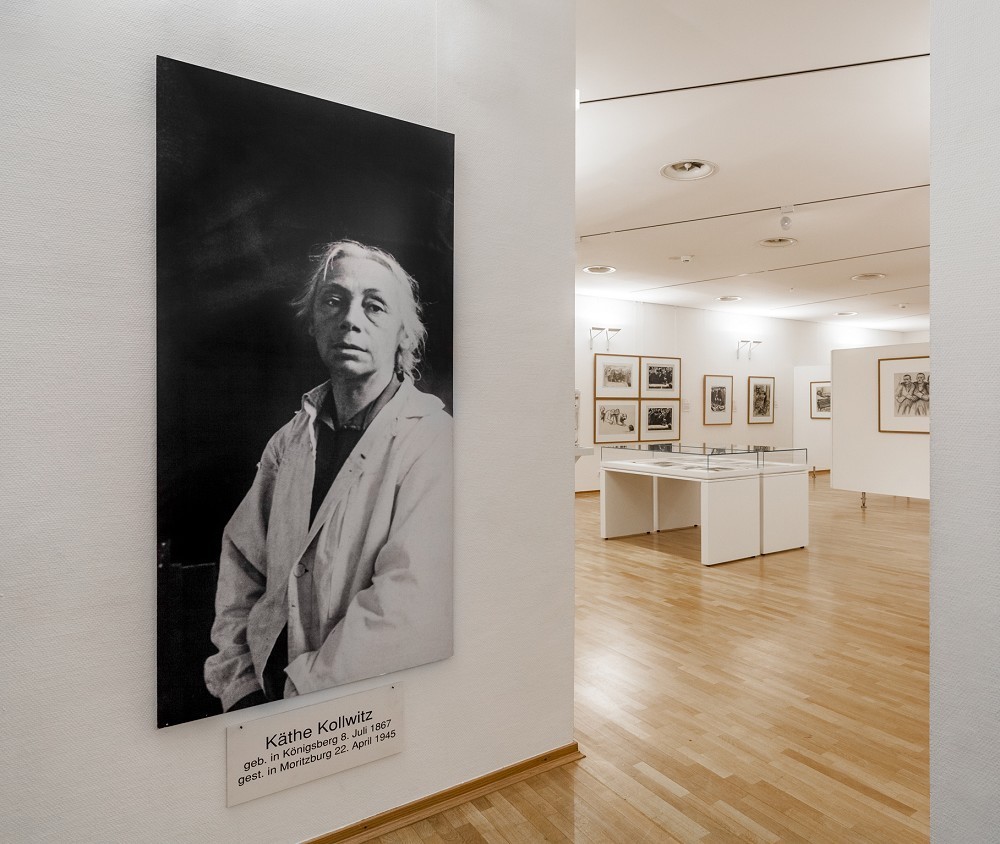
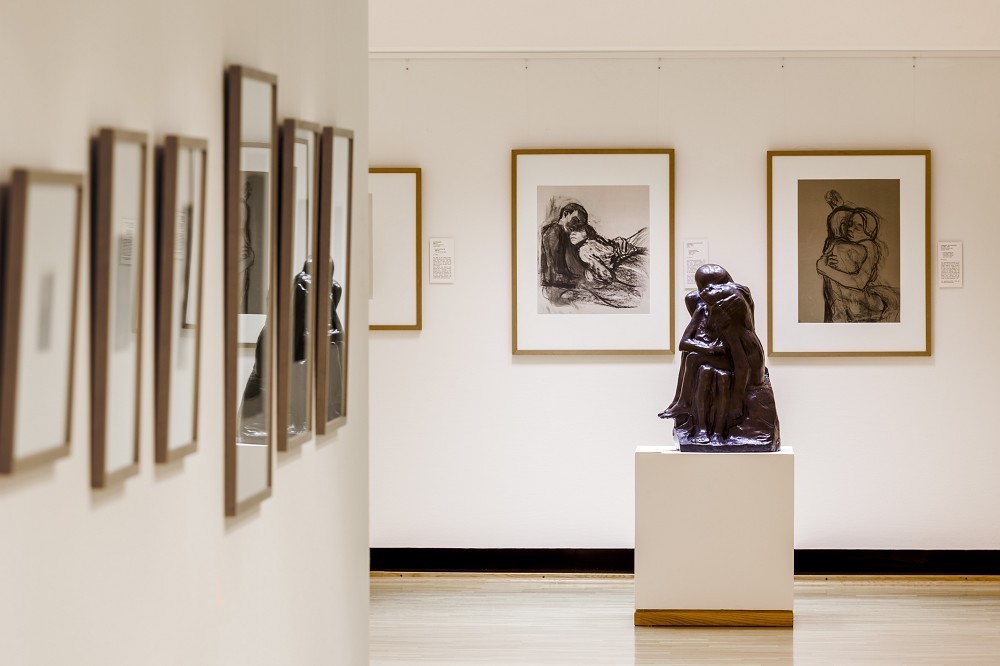
One of the first tasks facing the new director and her team is a special challenge: At the beginning of 2023, the Kreissparkasse Köln will give the go-ahead for the general renovation of the museum's exhibition spaces after almost 40 years. The museum will be closed for several months.
In the meantime, the main works of the Cologne Kollwitz Collection will travel around the world, to major exhibitions in New York, Zurich, Bielefeld and Frankfurt, among other places. Despite the construction work, the artist remains visible in Cologne: the series »Encounters — Käthe Kollwitz as a Guest ...« presents selected works in the Museum Ludwig, the Wallraf-Richartz-Museum & Fondation Corboud and the Cologne Cathedral Treasury. The outreach project »TRANSIT. Chorweiler x Kollwitz« in the Chorweiler District Library brings the artist's work to the outer north-west of the city with reproductions selected by young people.
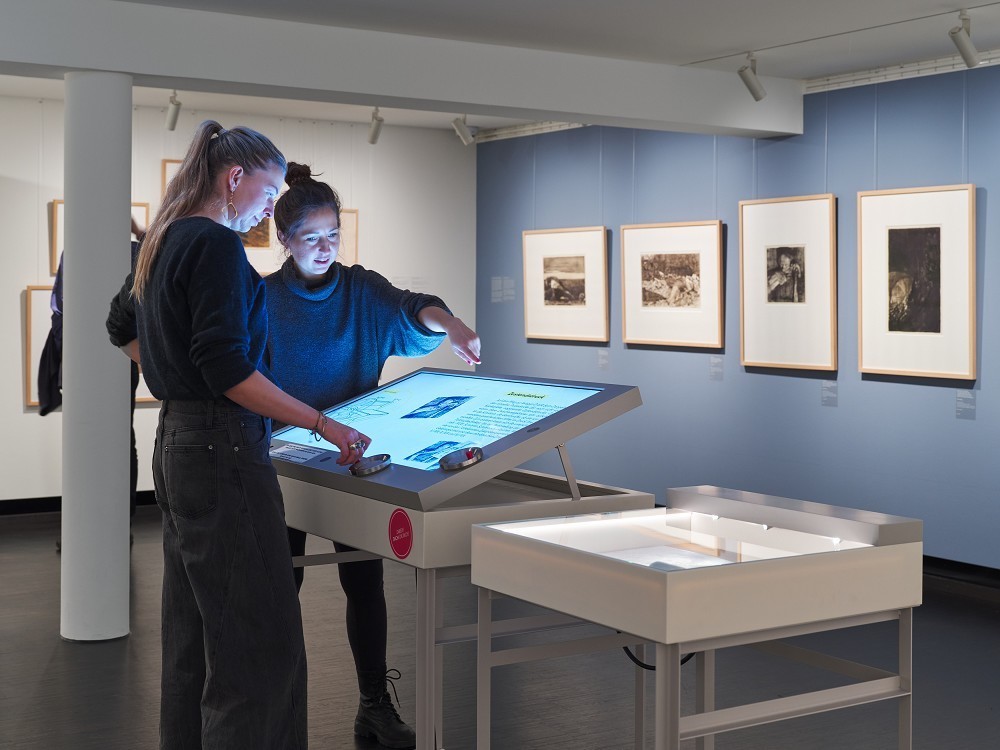
But that's not all. In the museum pop-up RAUM FÜR NEUES, open from January 2023 until March 2024, the art educators welcome visitors even after the museum closes. In a shop on the ground floor of the Neumarkt Passage, they show what the team is working on behind the scenes for the new presentation of the collection: From a virtual studio of the artist, to analogue and digital background information on the life and work of Käthe Kollwitz, to interactive and museum educational offers that help visitors understand her artistic techniques.
In October 2025, after just under three years of intensive construction work, the refurbishment will be complete. New features include not only modernisations invisible to visitors, such as the installation of state-of-the-art, more efficient and sustainable air-conditioning systems, modern security systems and fire safety measures, but also new wall cladding, new flooring and, above all, the lighting system specially designed for the museum’s galleries, which casts the art in a new light.
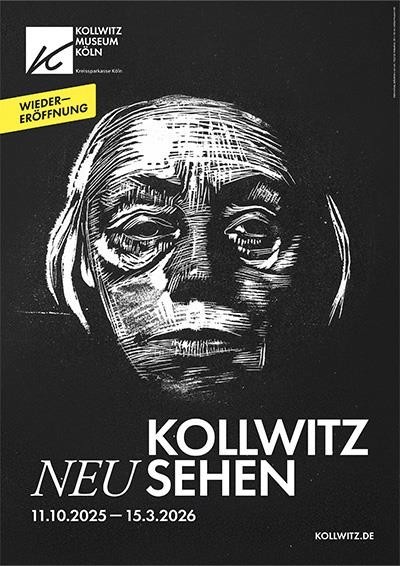
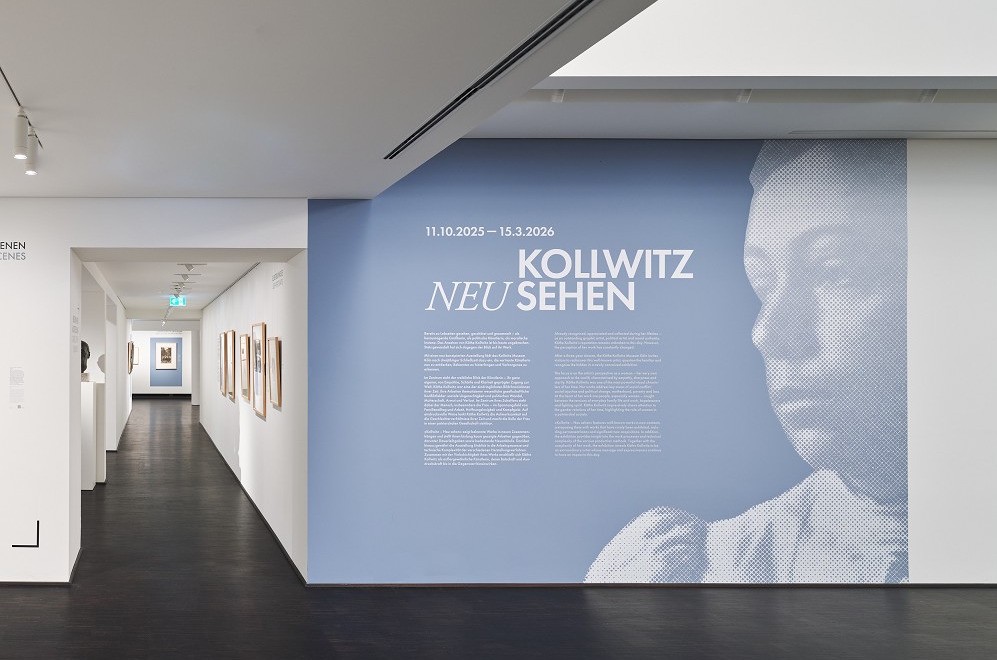
In October 2025, we will reopen our doors. Coinciding with the commemorative year marking the 80th anniversary of Kollwitz’s death and the museum’s 40th anniversary, the major exhibition of the collection, entitled KOLLWITZ NEU SEHEN, focuses on the themes that preoccupied the artist throughout her life: social inequality, political upheavals, gender roles and the lives of women in difficult times.
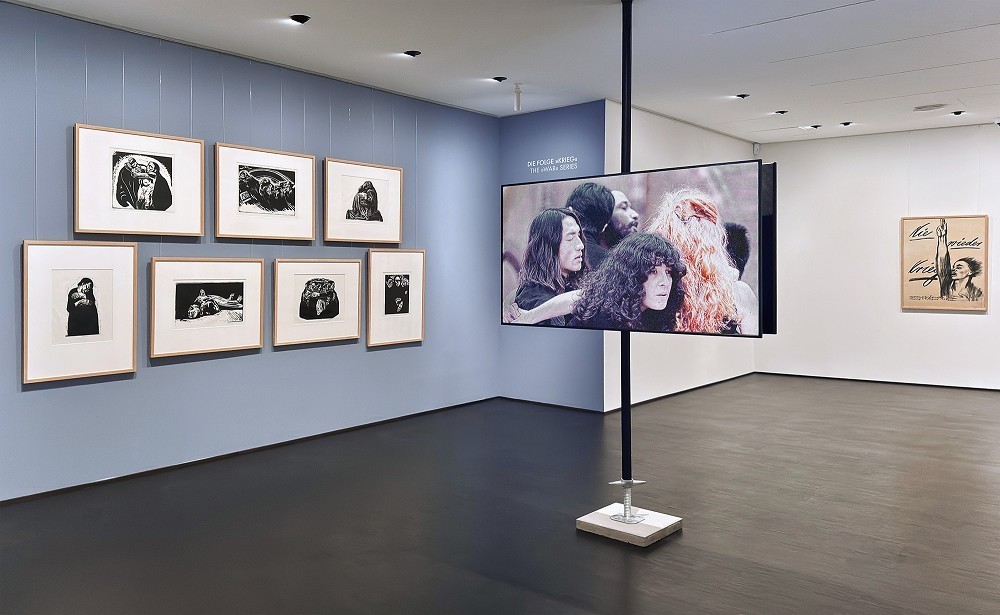
The newly conceived exhibition layout brings the works – including around 20 new acquisitions and 10 new permanent loans – into often surprising dialogues. Thematic, technical and motivic connections open up new perspectives and contexts. KOLLWITZ NEU SEHEN brings to life the artist’s effort to find the right technique for her message and enables a deeper understanding of her working process and her body of work.
The question arises what is the motivation of a savings bank such as the Kreissparkasse Köln to become so closely involved in the life and work of Käthe Kollwitz.
One of Käthe Kollwitz’ dominant themes is working life and deprivation. This is also where the communal and independent savings banks have their historical roots. They were created in the late 18th and early 19th centuries as institutes for the relief of and care for the poor. The first German Savings Banks Convention in 1882 was still held in conjunction with a conference of care workers for the poor.
A savings bank that turns its attentions to the work of Käthe Kollwitz thus goes back to its origins. This recollection seems all the more appropriate as it sometimes appears difficult to recognise the former ›poor people’s banks‹ in the large organisations involved in the savings banks sector – and the Kreissparkasse Köln is one of these organisations. It would be dishonest – and in the long term fatal – to ignore these origins – irrespective of the fact that, owing to changing social and economic conditions, savings banks can today no longer style themselves as banks for the poor.«
Presenting. Apart from the presentation of major works from the permanent collection, the Käthe Kollwitz Museum Köln offers special exhibitions focusing on historical and thematic connections, artistic techniques and photography, as well as monographic exhibitions of artists with a particular relationship to the works of Kollwitz.
Conserving. The works at the Cologne Kollwitz collection are – where this becomes necessary – restored by renowned specialists according to modern standards of conservational conditions with regard to climate control, air monitoring and light protection. Conserving the objects also includes appropriate art-handling as well as all aspects of safety and security.
Researching. Research into the provenance of the works at the Cologne Kollwitz collection has highest priority, both for academic and for legal reasons. The museum’s research activities – above all the publication of catalogues raisonnés of sculptural works, prints and drawings (in process) – set the benchmark and awaken international interest in the artist. These activities are based on an excellent library – including a photo library – and research archives.
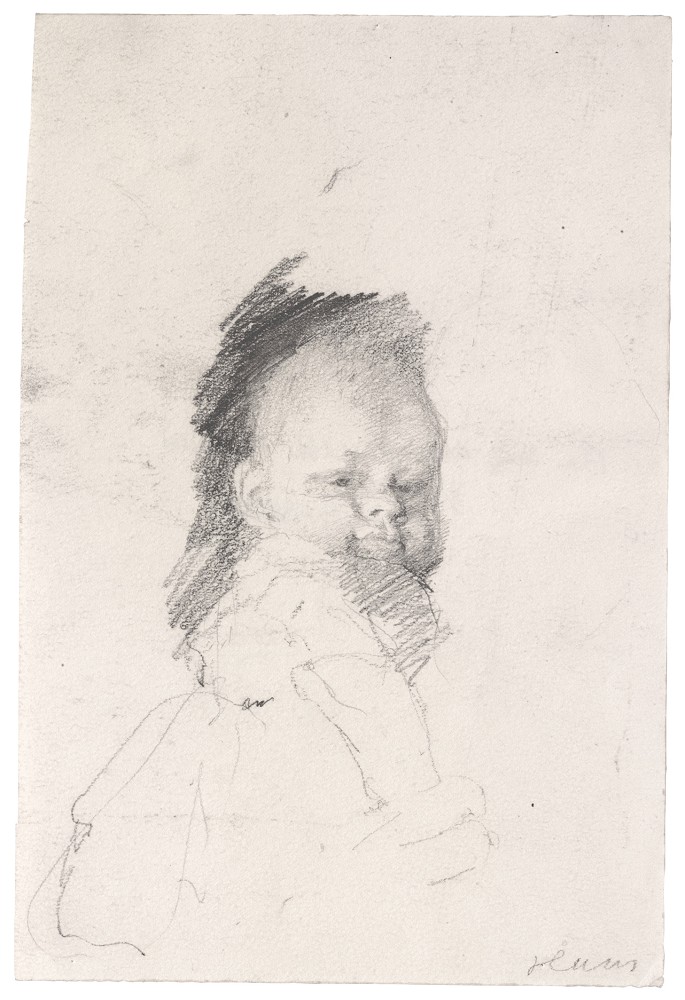
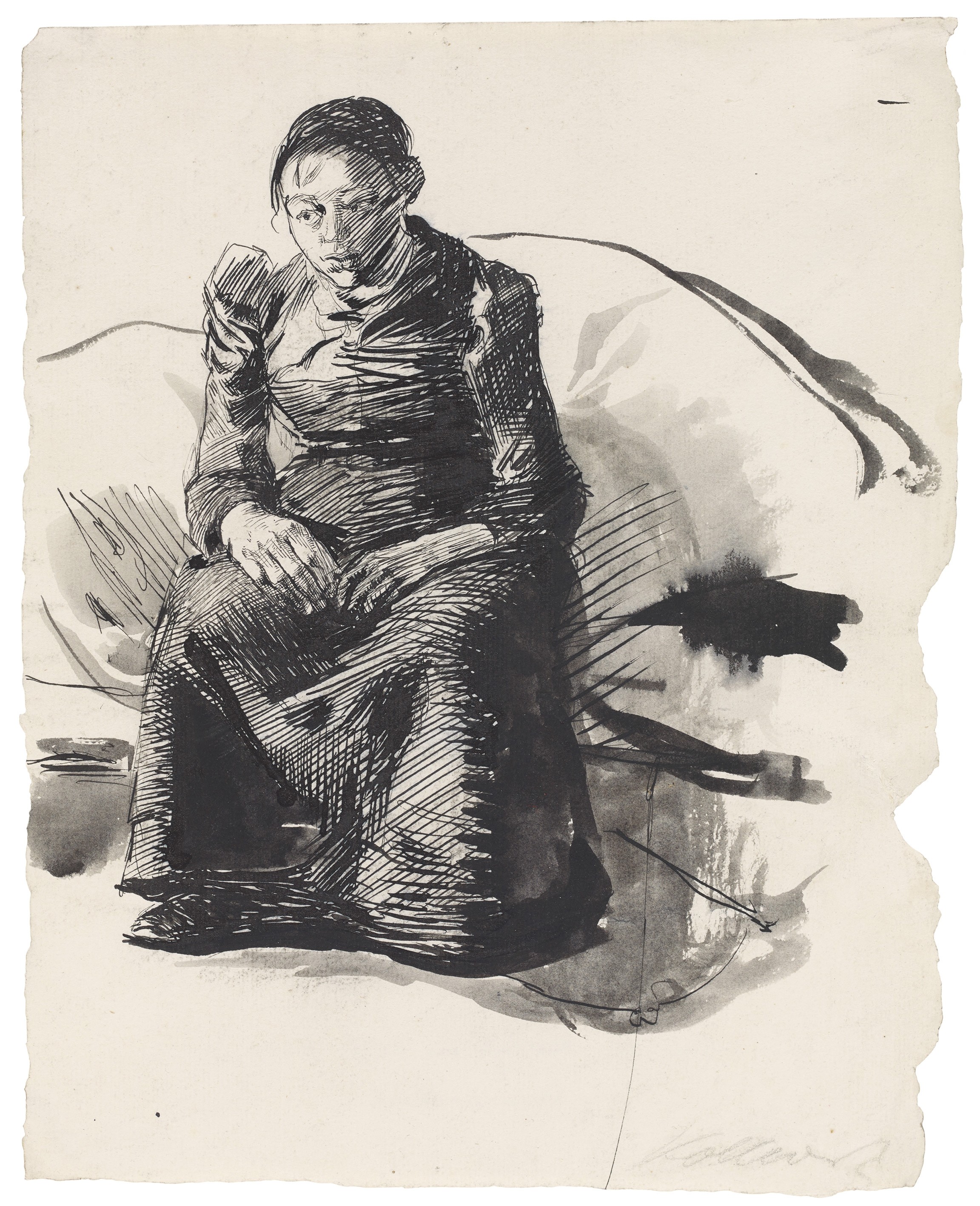
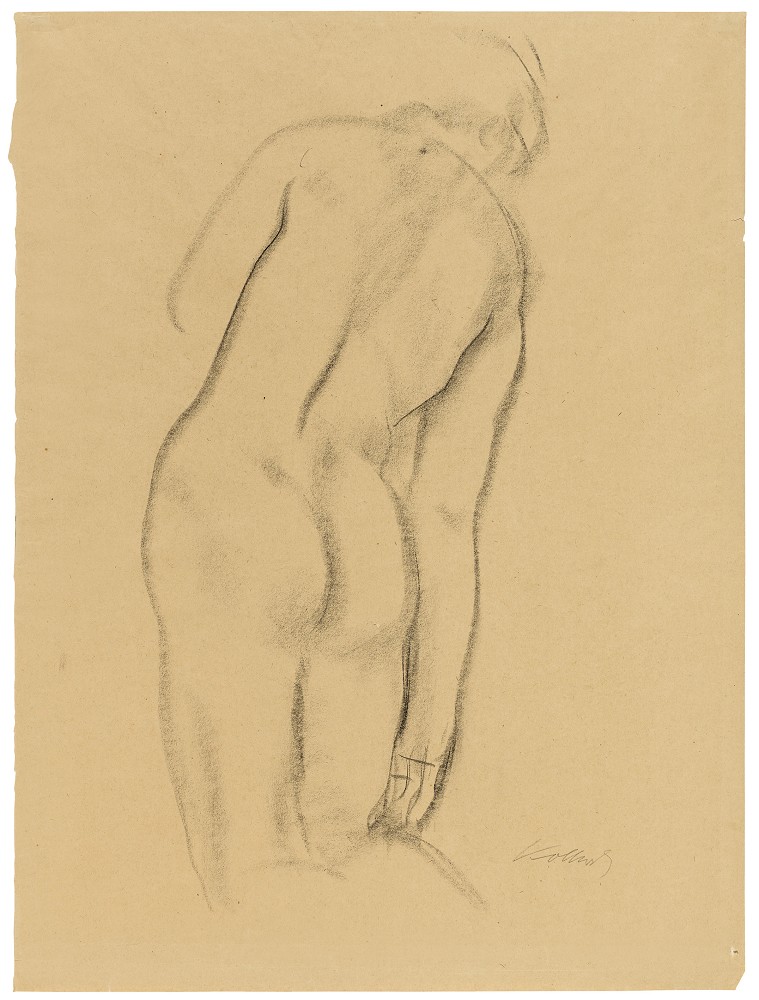
Collecting. The concept behind the museum’s collecting activities is to complement the collection, making it accessible to academic research and to present a comprehensive image of the artist and her works. The focal points are above all the drawings from her early period and folios documenting the artist’s approach to her work. For this reason, the Kollwitz collection has a large number of preparatory drawings and proofs for the cycles »A Weavers’ Revolt« (1893–97), »Peasants War« (1902/03–1908) and »War« (1921/22). Another collection focus are preparatory works for the etching »Death, Woman and Child« (1910) – a theme which the artist thoroughly explored, above all during the especially productive period of 1910/1911.
Informing. The Kollwitz Museum’s educational programme with its guided tours and workshop for various different target groups, public lectures and discussion groups, as well as the publication of catalogues, aims at communicating the importance of the artist on a local level. At the same time, the museum regards itself as an ambassador. Numerous requests for loans from museums outside Cologne demonstrate the importance of the Cologne Kollwitz collection on a national and international level and reflect the continuing interest in Käthe Kollwitz worldwide.
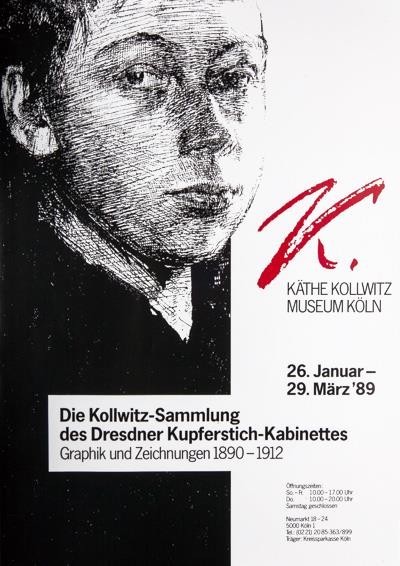
26 January — 29 March 1989
The first exhibition in the museum’s new premises: more than 60,000 visitors attended the meticulously organised East-West German collab exhibition
The Kollwitz Collection of the Dresden Kupferstich-Kabinett
Prints and drawings 1890–1912
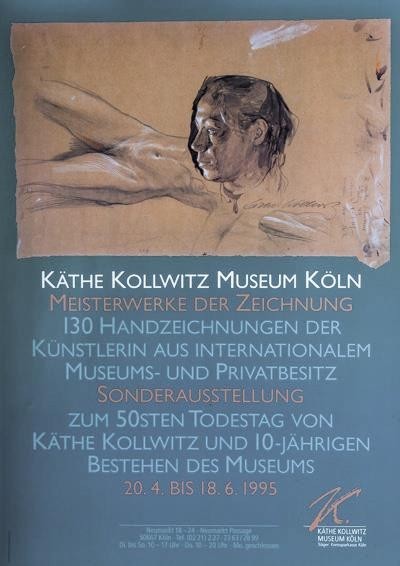
20 April — 18 June 1995
To mark the museum’s 10th anniversary, the Cologne Kollwitz Collection is presenting a special exhibition in collaboration with more than 50 international lenders:
Käthe Kollwitz
Masterpieces of Drawing
29 October — 12 December 1999
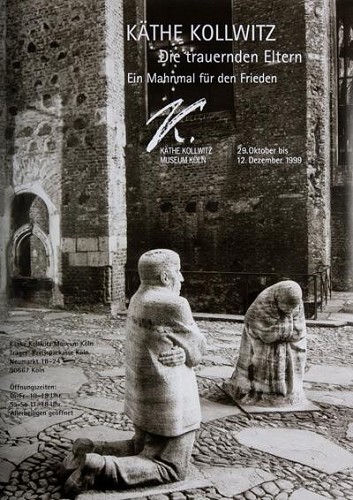
The exhibition marking the 40th anniversary of the installation of the sculptures in the ruins of the former St Alban’s Church in Cologne highlights the long process that led to the creation of this significant memorial:
Kollwitz — The Grieving Parents
A Memorial to Peace
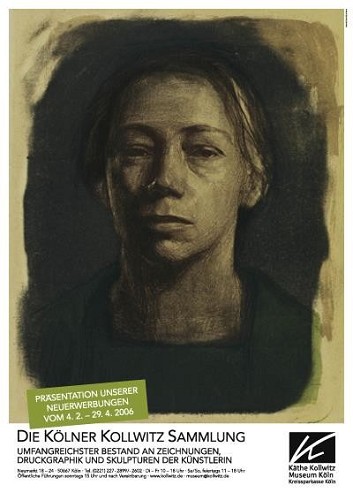
4 February — 29 April 2006
20 years of the Kollwitz Museum Köln: The Cologne Kollwitz Collection regularly showcases its new acquisitions, such as the works acquired in 2005 to mark the museum’s 20th anniversary, which were presented in 2006. Thanks to its sponsor, the Kreissparkasse Köln, the collection continues to be expanded to this day.
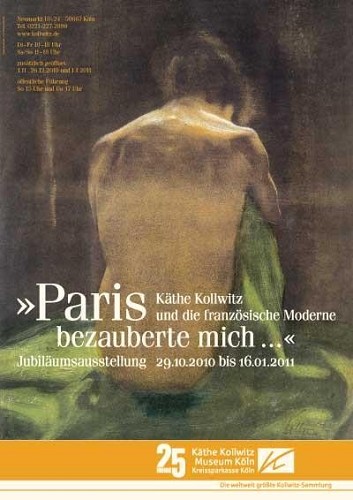
29. Oktober 2010 — 16. Januar 2011
»Paris enchanted me…«
Käthe Kollwitz and French Modernism
Colour in the work of Käthe Kollwitz! To mark its 25th anniversary, the Kollwitz Museum Köln is publishing its research into the influence of French Modernism on the work of its artist.
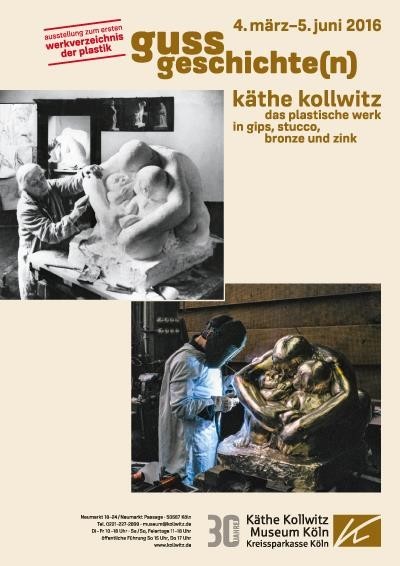
4 March — 5 June 2016
GUSSGESCHICHTEN
The sculptural works of Käthe Kollwitz in plaster, stucco, bronze and zinc
A milestone in Kollwitz research: to mark the museum’s 30th anniversary, the first catalogue raisonné of Käthe Kollwitz’s sculptures is being presented – accompanied by the special exhibition GUSSGESCHICHTEN.
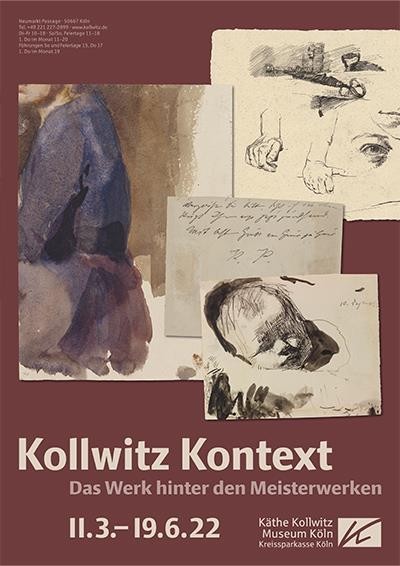
11 March — 19 June 2022
KOLLWITZ KONTEXT
The works behind the masterpieces
The monograph KÄTHE KOLLWITZ – AN SURVEY OF HER WORK is due to be published in 2022. Featuring more than 200 illustrations, the volume presents key works from the extensive collection of the Kollwitz Museum Köln. At the same time, the farewell exhibition honouring the museum’s long-serving director, Hannelore Fischer, will focus on the Kollwitz works behind the masterpieces: highlights of the collection, fragile and rarely exhibited drawings and prints, reverse sides and curiosities.
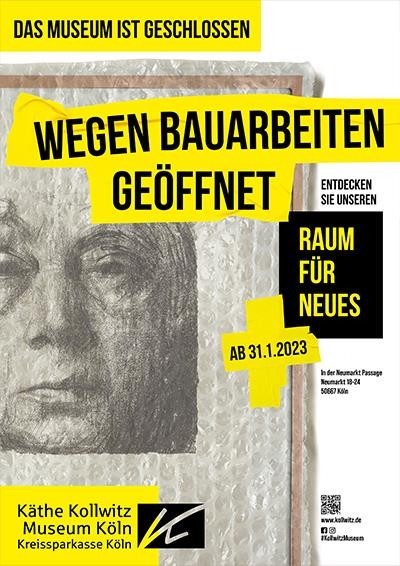
31 January 2023 — 16 March 2024
RAUM FÜR NEUES
After nearly 40 years, the museum is temporarily closing its exhibition spaces for a complete refurbishment. Under the slogan EXPERIENCE KOLLWITZ!, the team, led by the new director Katharina Koselleck, is organising a pop-up exhibition. This will showcase the work being carried out behind the scenes during the closure: from a virtual studio of the artist, through analogue and digital background information on the life and work of Käthe Kollwitz, to interactive activities that allow visitors to explore her artistic techniques.
11 October 2025 — 15 March 2026
KOLLWITZ NEU SEHEN
Reopening Exhibition
On 11 October 2025 – the year marking the 80th anniversary of Kollwitz’s death and the museum’s 40th anniversary – the exhibition galleries will reopen. The first exhibition will showcase the collection’s most important works, alongside around 20 new acquisitions and 10 new permanent loans, presented in a new layout. In its presentation, KOLLWITZ NEU SEHEN deliberately highlights the artist’s female perspective – on motherhood, loss and grief, but also on solidarity and hope.