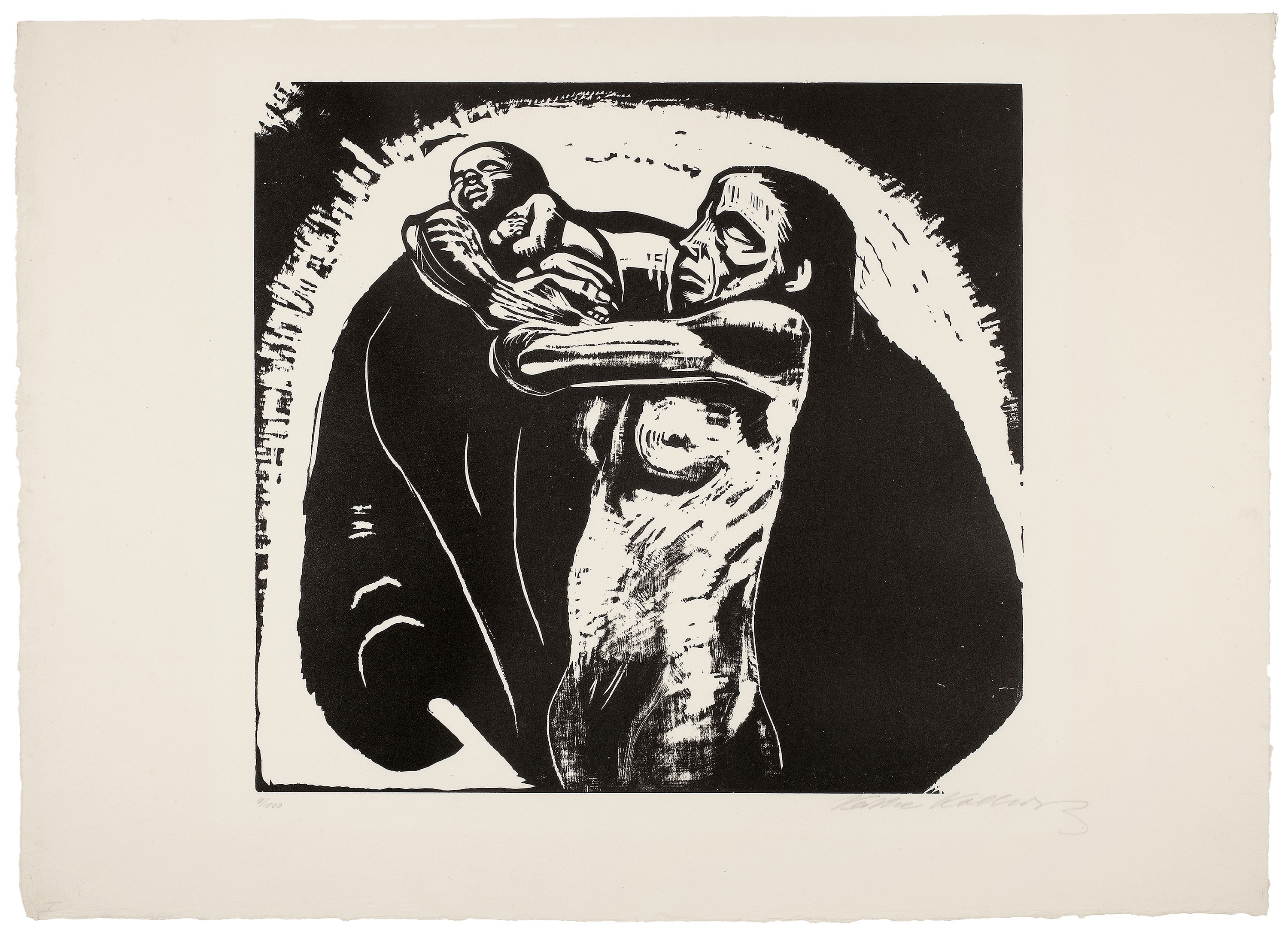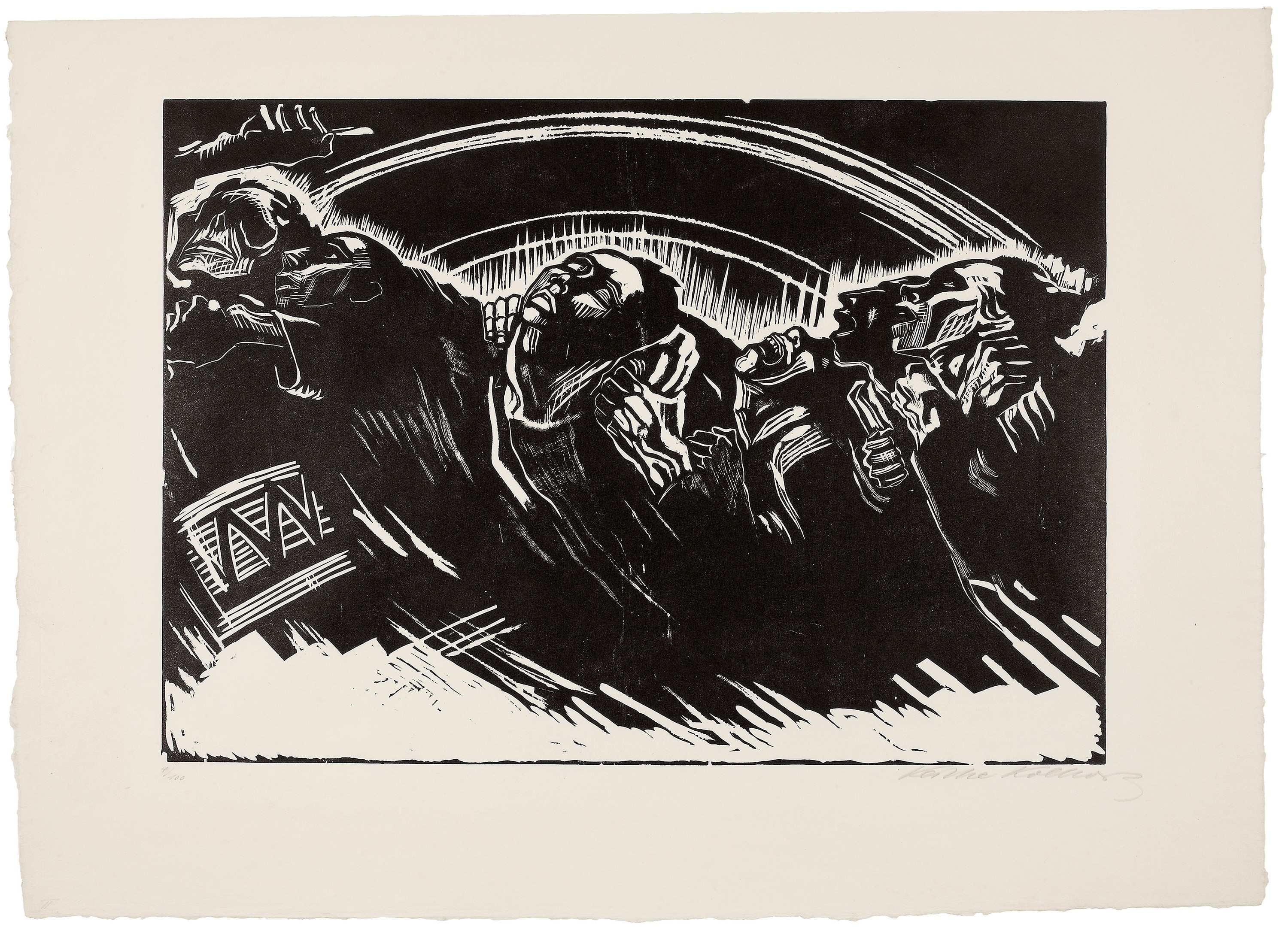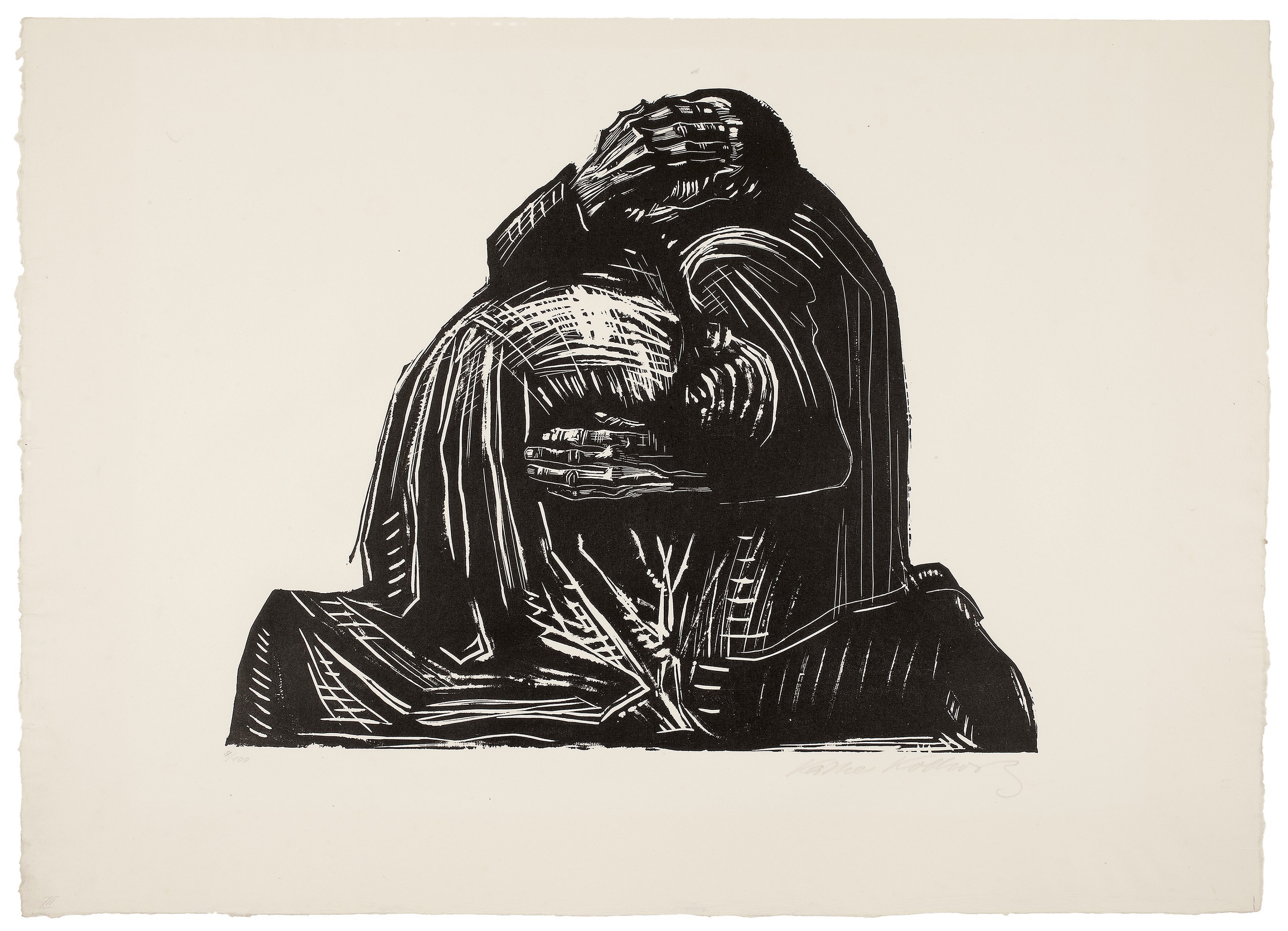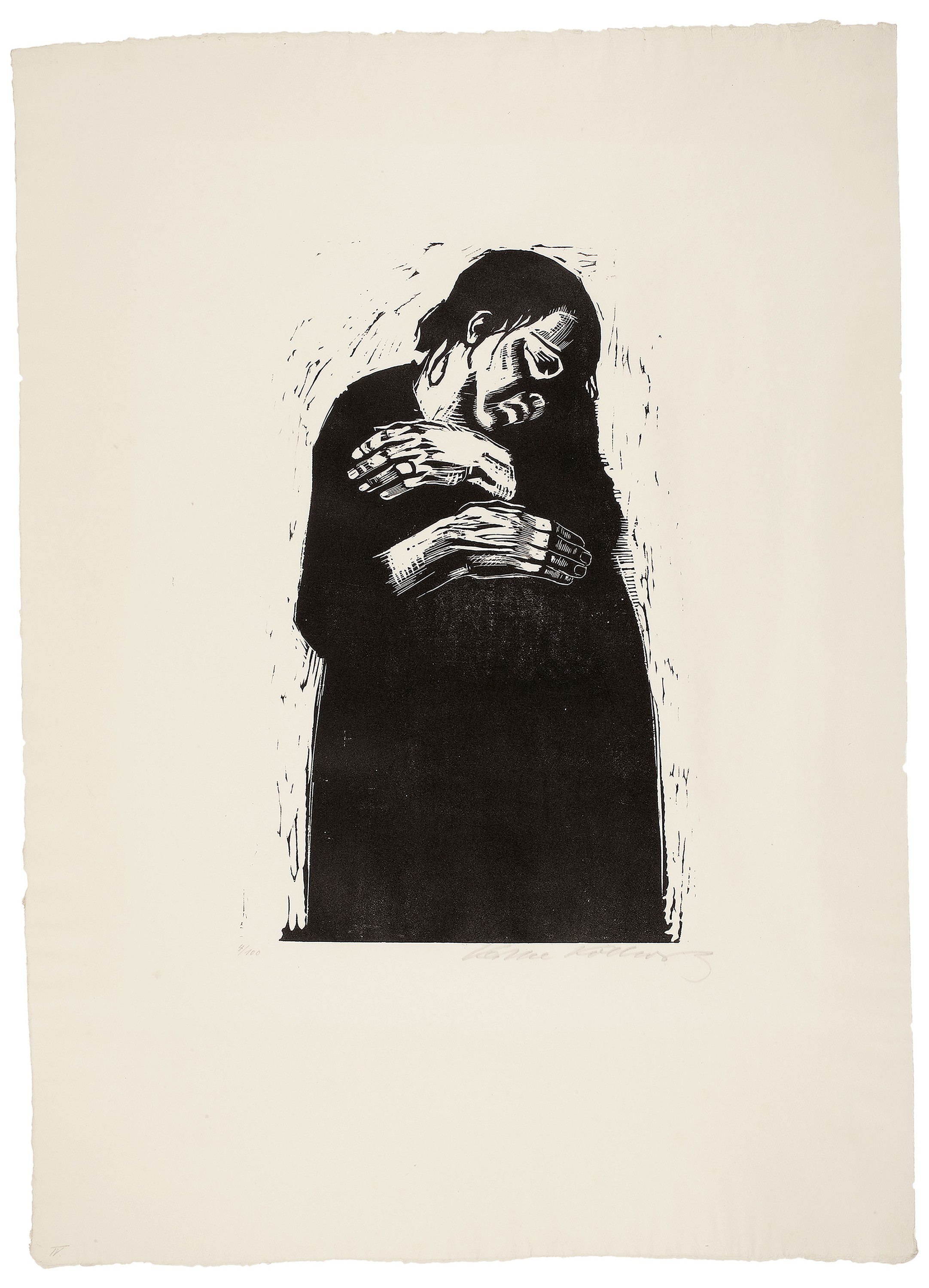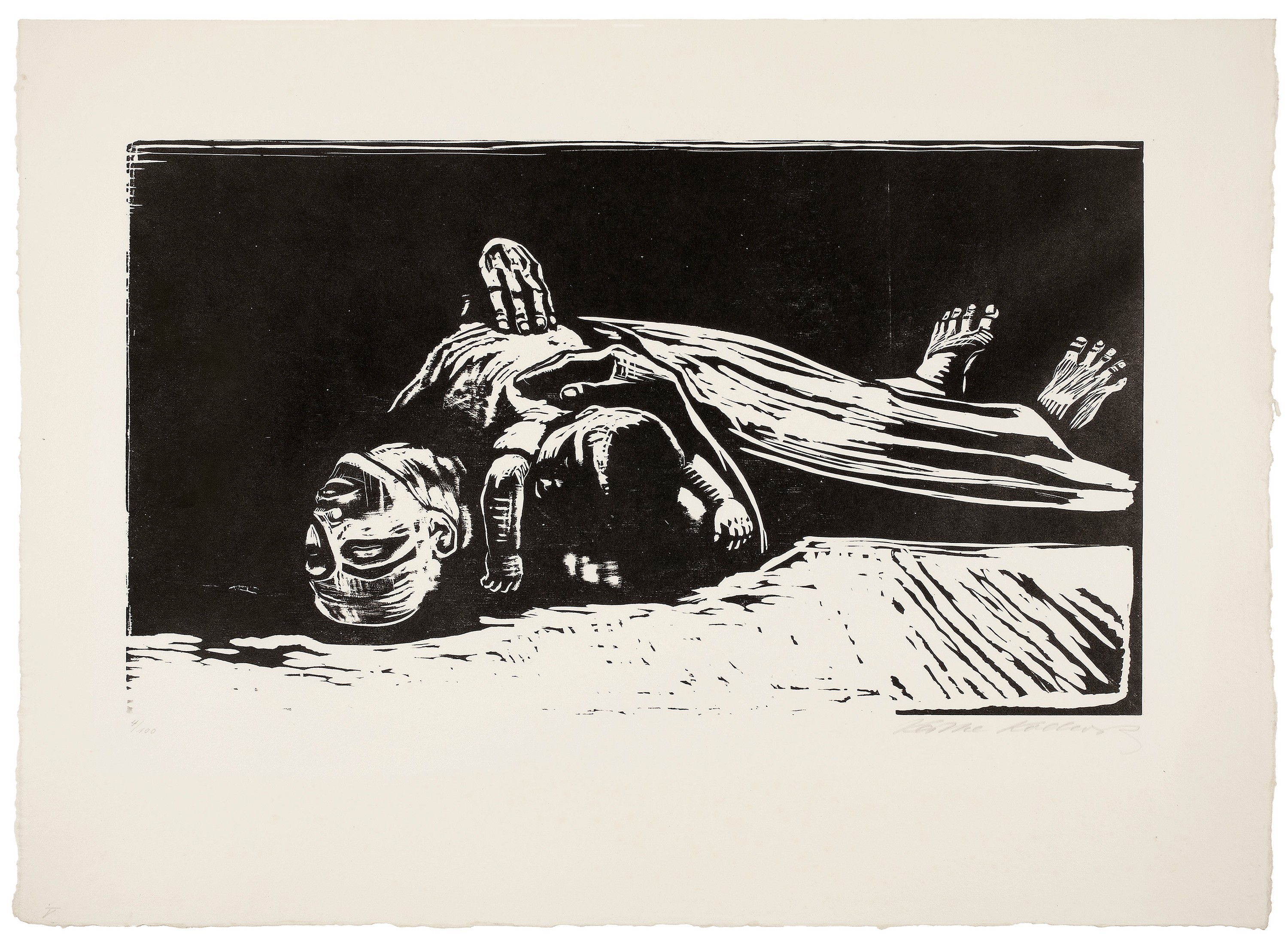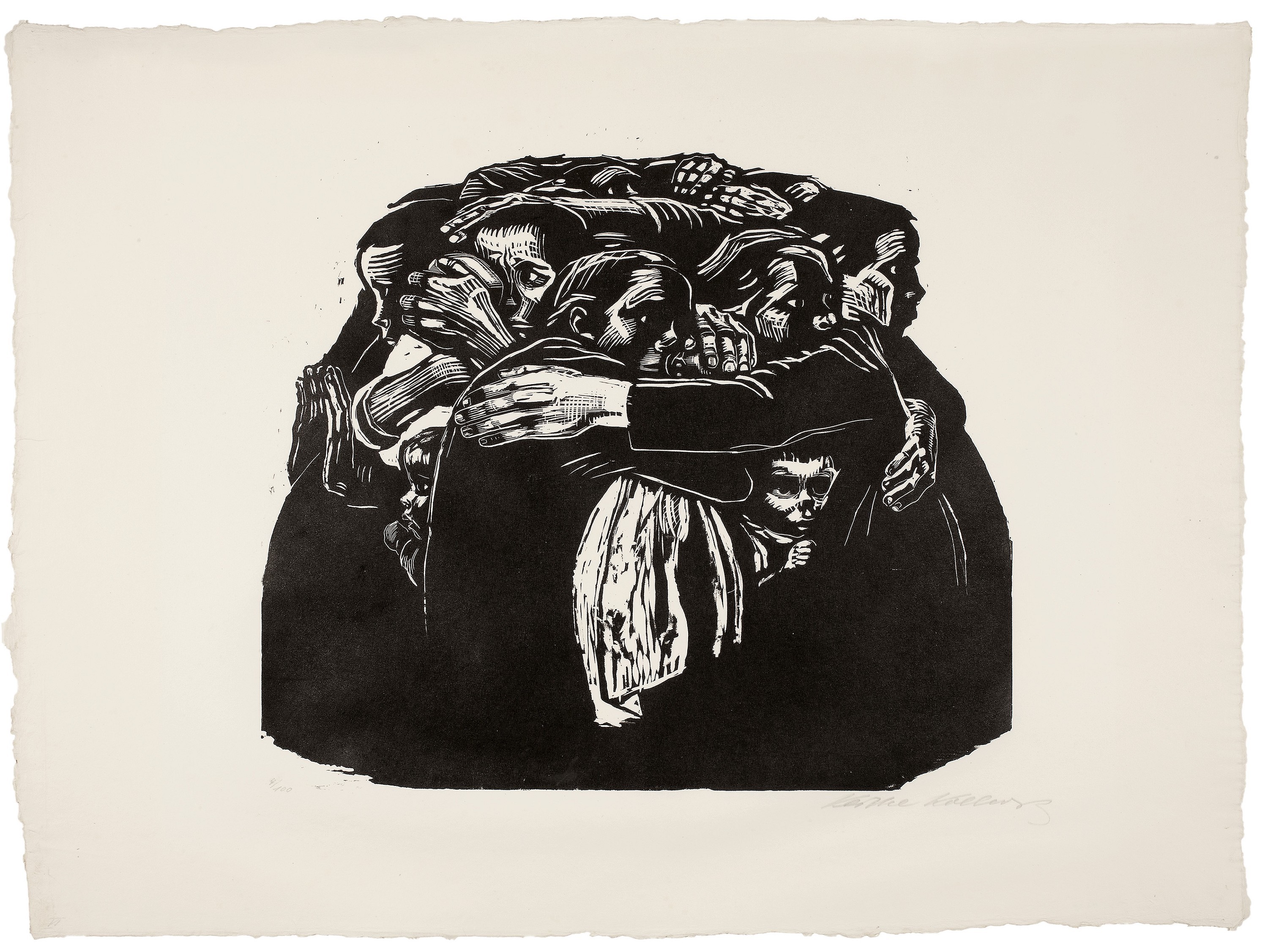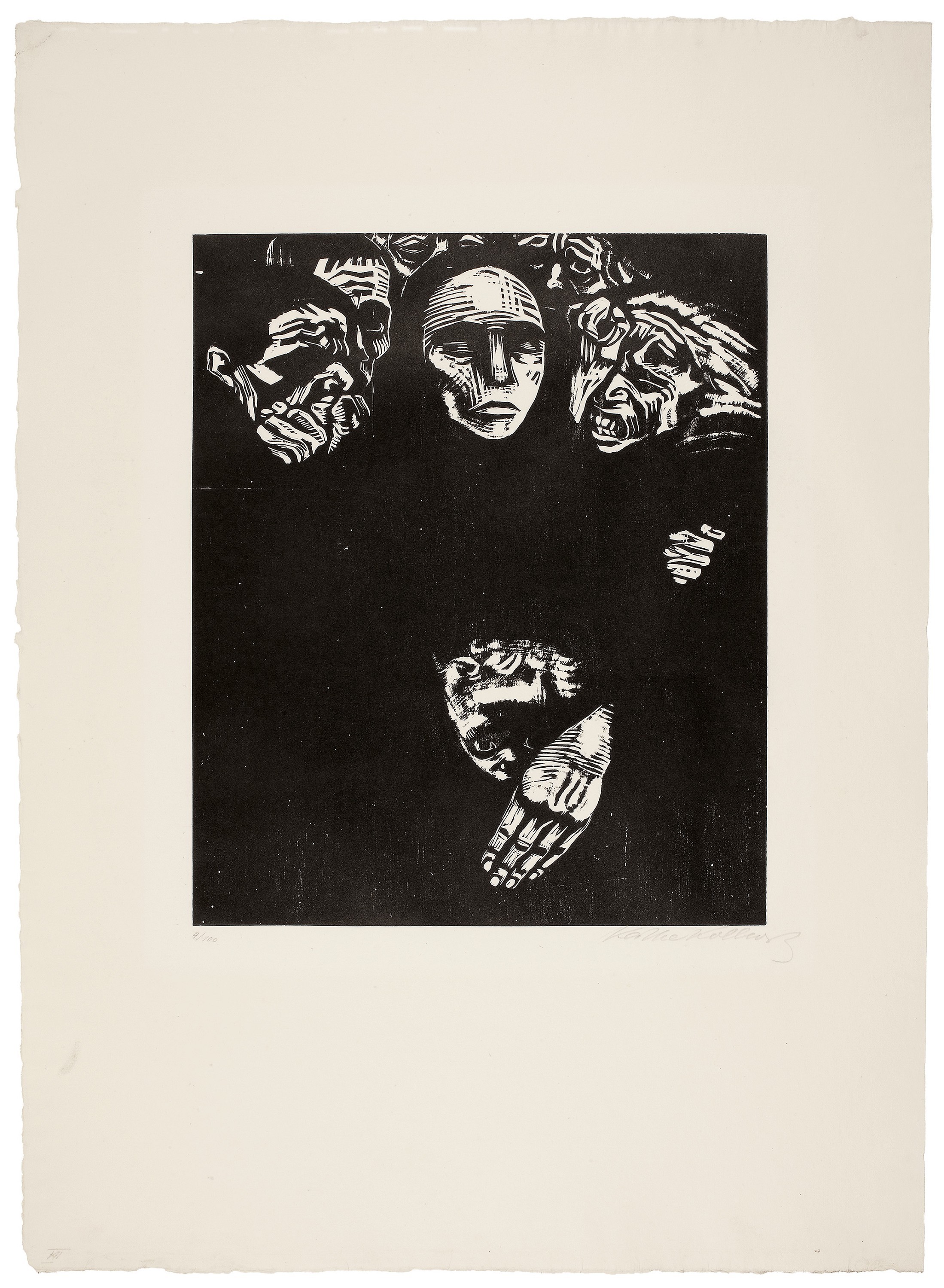
I have tried again and again to represent war. I was never able to capture it. Now, finally, I have finished a series of woodcuts that come close to expressing what I have always wanted to express. […] These prints should be sent all over the world and give everybody the essence of what it was like – this is what we all went through during these unspeakably hard times.«
As hardly any other artist, Käthe Kollwitz examined the First World War and its repercussions after her younger son Peter fell as a volunteer on 22 October 1914. Her war series, finished in 1923, has autobiographical traits and illustrates the change in her attitudes during First World War.
After initially fearing the war, but regarding it as legitimate, she gradually adopted a pacifist stance and rejected any further wars.
She wrote to her fellow-artist Erna Krüger in December 1922:
»I have almost finished the woodcut cycle on the war. […] Nobody would assume that these seven medium-sized woodblocks stand for the work of many years. And yet, this is exactly the case. These works contain my examination of the years 1914-1918, and these four years were very hard for me.«
Käthe Kollwitz, Letters of Friendship
Just how difficult these years were for the artist is shown in her struggle to find the right technique for the war cycle. Before she eventually opted for the woodcut technique, she started out using her preferred technique, etching, from 1918, and from 1919 she experimented with lithography. None of these experiments, however, led to satisfactory results. It was only by using the challenging technique of woodcuts that she found an appropriate medium to give expression to this atrocious period and the horrific events she experienced.
The »War« series consists of seven sheets. In 1923 – nine years after the beginning of the war – the portfolio was published by Emil Richter in Dresden in various different editions.